Best compact phones 2026 - buyer’s guide
Last updated: October 18, 2026 (Changelog)
The trend towards growing displays seems to be plateauing, but even in the current state of things, most phones are just too big for easy handling with one hand. This is why we always enjoy it when we come across the occasional competent compact handset. In this section of our buyer's guide, we'll try to point out the ones we think deserve your attention.
Editors' choice
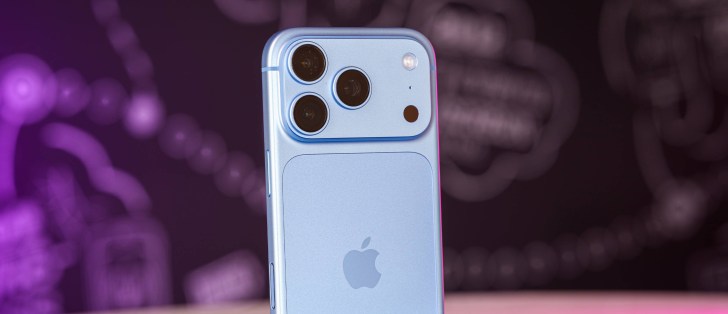
Apple iPhone 18 Pro
| 256GB 12GB RAM | £ 1,199.00 |
€ 1,448.00 |
| 512GB 12GB RAM | £ 1,399.00 |
€ 1,629.00 |
- Compact and premium design with a smaller Dynamic Island
- Bright and feature-packed LTPO OLED display
- Improved battery life and faster charging
- Awesome speaker quality
- Cutting-edge performance
- Solid photo quality across the board
- Great video capture quality
- Somewhat heavy
- Hardly any upgrades in the camera department
- European users are not getting Siri AI for now (if ever)
The regular iPhone Pro remains one of the few premium compact offerings on the market as a whole. While the 18 Pro Max swims in a sea of Android competitors, the 18 Pro has only a handful to contend with.
And within Apple's own roster, this one may seem like quite an incremental update over the iPhone 17 Pro. And yes, it kinda looks like last year's model, but isn't that how Apple has long approached product design? If you look past that, you may see that while it's not a huge jump forward, it's a meaningful step toward refining the formula.
With the iPhone 18 Pro, Apple has created an incredibly balanced compact smartphone with hardly any shortcomings (except perhaps its rather substantial weight). It has a great display, long battery life, improved charging speed, awesome speakers and an overall very good camera experience. The new chipset's performance is perhaps the biggest surprise this year, delivering a true generational upgrade.
It does come with a hefty price tag, though, so it's certainly not the best deal out there. But if the budget allows and you are looking for a premium compact phone, the iPhone 18 Pro is definitely one of the best you can get right now.
Read full review
Motorola Razr 70 Ultra
| 512GB 16GB RAM | $ 1,499.99 |
£ 1,199.00 |
- Standout color/material options
- IP48 rating for survival in case of water submersion
- Large, bright and fully functional cover display
- IP48 rating for survival in case of water submersion; standout color/material options
- Great battery life, fastest-charging clamshell
- Hello UI is both clean and full-featured; the cover screen functionality is wide-ranging
- Great camera system for photos
- Heavy CPU throttling, GPU overheating at maximal loads
- Peak main screen brightness doesn't seem competitive
- Speaker quality is worse than last year's model
- Main cam video stabilization leaves more to be desired
Even though the Razr 70 Ultra has few real competitors, it feels like Motorola is really trying to produce a competitive device. The Razr 70 Ultra offers one of the best battery endurances for a flip phone, has unique design options, charges quite fast, snaps excellent stills with all of its cameras, as far as flip phones go, and offers a fully functional cover screen with some neat features..
The Razr 70 Ultra leaves room for improvement - the main display's HDR brightness is somewhat disappointing, and the 165Hz refresh rate is strictly conditional. Also, just 3 major OS updates no longer cut it for a flagship phone with a premium price tag.
All things considered, as small-size foldables go, the Motorola Razr 70 Ultra is quite the enticing proposition.
Read full review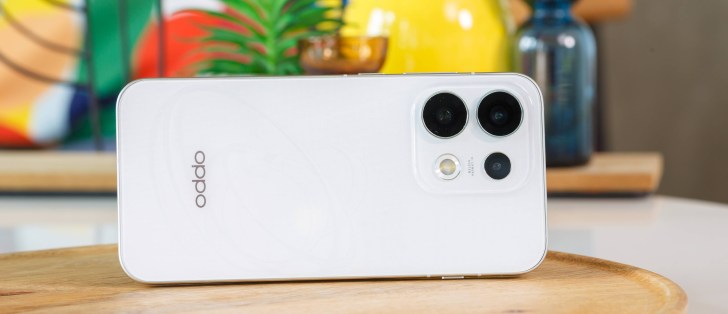
Oppo Reno16 Pro
| 512GB 12GB RAM | £ 719.00 |
€ 859.00 |
- Impeccable build, compact dimensions, IP66/IP68/IP69/IP69K certifications
- Bright OLED, HDR10+
- Impressive battery life (as reviewed with 6,700 mAh)
- Flagship-grade photos and videos from all four cameras, AF on the ultrawide too
- Convenient new hardware button, objectively useful AI features
- Throttles heavily under heavy load
- The European model gets a smaller battery than before
- Charging speed has been effectively downgraded
The Oppo Reno16 Pro feels like a premium phone and offers a bunch of premium features, too. It checks almost all boxes, especially for compact smartphone fans. It has an impeccable build, impressive battery endurance for the size, a complete and potent camera hardware and a solid display. The handset also adds a useful remappable hardware key.
The Reno16 Pro delivers a balanced image performance. You can expect generally very good results from all three rear cameras in daylight. Low-light performance is also without dealbreakers, but the detail is also leaving us a bit unimpressed. The selfie camera remains a major selling point thanks to its unusually wide lens and great photo quality. Video quality is very good from all three cameras in daylight, and the main and telephoto carry that into the night as well, where the ultrawide is a bit less convincing.
Overall, the Reno16 Pro is a well-built and lightweight premium phone with a commendable camera kit and quality. It does deliver across the board – display, battery life, design, charging. The performance is solid, too, just not on par with other phones in the same price bracket, though.
Read full review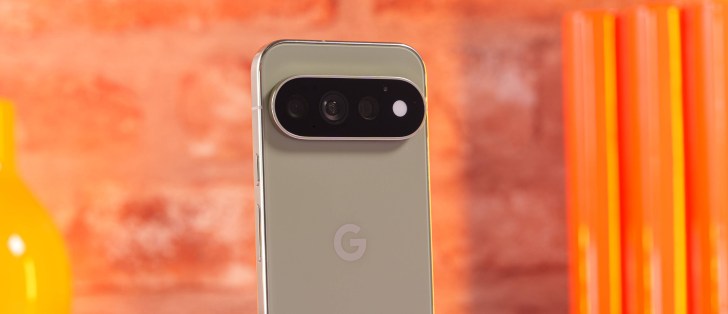
Google Pixel 11 Pro
| 256GB 12GB RAM | $ 1,069.00 |
£ 958.99 |
| 512GB 16GB RAM | $ 1,219.00 |
£ 1,108.99 |
- Premium look and feel, recognizable design
- Class-leading max display brightness
- Battery life is finally on par with Samsung and Apple
- Android 17 with Pixel-exclusive smarts, 7 years of updates
- Very good camera quality across the board
- Ultrawide selfies
- Heavy for its compact size
- Wired charging speed is still one of the slowest around
- No improvement in graphics performance; still not gaming-oriented
- Telephoto can't focus close, and its video stabilization could be better
- HiLight has very limited functionality
The Pixel 11 Pro may look like another incremental update, but Google has actually addressed some of the weaknesses of its predecessor. Battery life has finally caught up with the likes of Samsung and Apple, wireless charging is now faster at 25W, and the already excellent display is even tougher thanks to its new scratch-resistant coating while retaining its class-leading maximum brightness. Speaker quality has improved, too, even if it's still not quite up there with the best.
There are also a couple of advantages that are easy to overlook when comparing spec sheets. The built-in magnets make the Pixel 11 Pro one of the very few Android phones that can offer an iPhone-like MagSafe experience without a special case, while Google's satellite SOS service remains something most Android competitors can't match.
Camera-wise, the Pixel 11 Pro does well. It delivers very good photos and video from all of its cameras, but it's hardly the industry-leading package the Pixel name used to signify. There is no properly good solution for close-ups, for instance, and the telephoto camera's video stabilization leaves something to be desired. Rivals can offer more versatile and, in some cases, outright better camera hardware.
Unfortunately, some long-standing Pixel weaknesses haven't gone anywhere. The Pixel 11 Pro is unusually heavy for such a compact phone, outweighing Android rivals, some of which even manage to fit larger batteries. Wired charging remains slow despite the new Extreme charging mode, and while CPU and AI performance have improved, graphics performance has barely moved and is still closer to a 2023 flagship than a current one.
That leaves software as one of the strongest reasons to buy the Pixel 11 Pro. Google's polished, sometimes barebones take on Android, the Pixel-exclusive features, and long-term software support remain compelling. And unlike previous generations, you no longer have to accept mediocre battery life to get them. The problem is that Google is asking flagship money for a phone that still makes quite a few hardware compromises.
Ultimately, the Pixel 11 Pro is the best version yet of Google's compact flagship formula, but it isn't the best compact flagship. Yet, it’s worth getting if you want a Pixel experience in a compact size.
Read full review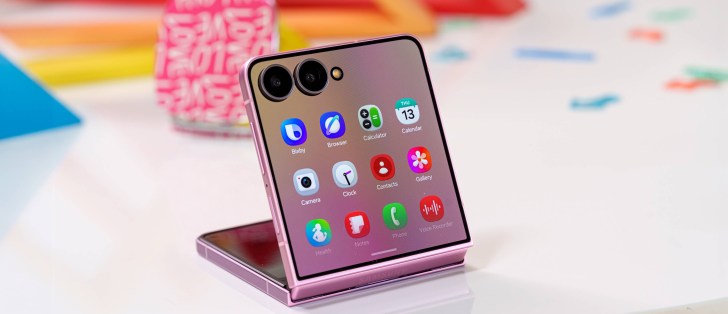
Samsung Galaxy Z Flip8
| 256GB 12GB RAM | $ 849.95 |
£ 799.00 |
| 512GB 12GB RAM | $ 1,249.99 |
£ 1,225.95 |
- Compact foldable
- Compact and lightweight, IP48, Victus 2 cover panels
- Bright displays, HDR
- Improved hinge
- Great battery life
- Dependable cameras
- Powerful hardware
- Barely any major upgrades compared to the Z Flip7
- Heavy thermal throttling prevents the chipset from showing its best performance
We liked the Galaxy Z Flip8. It's a premium clamshell foldable with a comfortable grip, intuitive ergonomics, and a satisfying, snappy feel whenever you open or close it.
The Z Flip8 delivers a great user experience, complete with top-tier displays, a refined hinge mechanism, robust connectivity, solid battery life, and powerful silicon.
However, Samsung left the camera hardware largely untouched. While image quality remains decent, it falls short of being impressive. Low-light performance and video stabilization still show obvious room for improvement - issues that have persisted for a couple of generations without meaningful upgrades.
While the 2026 chipset is a welcome addition, Samsung's chip segmentation remains frustrating. Furthermore, the compact clamshell form factor makes efficient heat dissipation nearly impossible, leading to noticeable thermal throttling.
Ultimately, despite these shortcomings, the Galaxy Z Flip8 is very well positioned against the competition with its recent price drops and is a great foldable that's definitely worth considering.
Read full review
vivo X300
| 256GB 12GB RAM | $ 1,649.00 |
£ 741.40 |
- Compact, lightweight, premium smooth design, IP68/IP69
- Bright OLED, high-res, 120Hz, HDR
- Class-leading performance
- Consistently great photo quality, day and night
- Top-notch selfies
- Great daylight videos and outstanding stabilization
- Properly good OriginOS, 5 major updates incoming
- Compatible with vivo's optional telephoto extender
- So-so speaker quality
- Speakers can be better
- Low-light videos could have been better
- Prone to heavy throttling and getting hot
- Lower battery capacity in Europe
The vivo X300 turned out to be an exemplary phone in pretty much every department - size, design and build, battery life, screen quality, camera experience, and OriginOS got a massive upgrade that made vivo's phones on par with all recent Androids. And that's just great!.
The vivo X300 impressed us with its smooth design and its super bright screen that has an impressively dynamic refresh rate. The battery life is a blast, too.
The X300 is part of the vivo's photography flagship series and it does not disappoint - all four cameras deliver superb photo and video quality during the day. While the low-light photos remain impressive, the videos are somewhat average and that's our only remark here.
We are glad that vivo has worked a lot on OriginOS and the underlying Android, and it has made some impressive improvements. The iOS and macOS integration were surprising, or were they given how much vivo has taken from iOS 26? Still, iOS inspired or not, we liked OriginOS very much.
There are few compact flagships out there, and fewer compact cameraphones. But vivo X300 is amazing in both categories and we think it will easily find many fans out there looking for either option.
Read full review
Samsung Galaxy S26
| 256GB 12GB RAM | $ 524.95 |
£ 610.00 |
| 512GB 12GB RAM | $ 737.99 |
£ 670.58 |
- Premium build quality, compact design
- Bright LTPO OLED panel
- Better battery life and faster charging times than the Galaxy S25
- Seven years of Android updates and security patches
- Excellent selfie camera with autofocus
- Versatile video recording features with LUTs and Horizon Lock
- Elite chipset
- Very minor upgrade over the Galaxy S25 overall
- Base level IP68 rating - other Androids get IP69
- Display is missing 10bit depth, high-frequency PWM and Dolby Vision support
- Video recording lacks 4K120 and APV codec support found on the S26 Ultra
- Unintuitive Night mode implementation
- Charging speeds still lag behind many competitors (even the other S26 models
It would be unfair not to highlight Samsung's efforts to optimize for the existing hardware. Compared to last year's Galaxy S25, there are certainly some improvements. We see a notable gain in battery life, a tad faster charging, and a bunch of new AI and video recording features that may sound enticing enough to the right crowd.
On the other hand, it's becoming increasingly hard for Samsung to sugar-coat the minor upgrades offered by the new generation. The Galaxy S26 still feels like the flagship underdog next to the Plus and Ultra. Even the mid-range Galaxy A57 gets 45W fast wired charging. The vanilla S26 is also more than a few laps behind the competition in terms of camera hardware, battery technology and charging.
At the end of the day, Galaxy S26 is a solid all-rounder. It doesn't stand out, but it's somehow "good enough", especially if you are looking for a compact Samsung flagship. That's pretty much your only choice. You can rest assured that the display is excellent, performance is on point, the camera experience is just okay and battery life is dependable.
In keeping with tradition, the Galaxy S26 continues to be a mighty yet surprisingly compact package. It is one of the few small flagships left out there, and that alone will ensure its popularity with buyers. Also, as usual, it is the cheapest way to get into Samsung's latest flagship line and for better or worse, that appeals to a particular crowd.
Read full review
Apple iPhone 17
| 256GB 8GB RAM | $ 733.38 |
£ 760.00 |
| 512GB 8GB RAM | $ 852.00 |
£ 879.99 |
- 6.3" LTPO 120Hz OLED with Always-On, HDR10 & Dolby Vision support
- 256 GB base storage (NVMe) at unchanged starting price
- PD3.2/AVS wired charging and up to 25W Qi2/MagSafe wireless; reverse wired supported
- Light, comfortable build with thinner bezels and IP68 protection
- Great battery life for the size; efficient A19 platform
- Excellent video quality and stabilization across all cameras; Dolby Vision up to 4K60
- Dependable main and ultrawide cameras
- 18MP selfie with OIS & PDAF delivers outstanding results; flexible multi-aspect capture
- Modern connectivity: Wi-Fi 7, UWB (gen2), satellite SOS/Find My, DP video out over USB-C
- No dedicated telephoto camera
- Gets hot and throttles under sustained load; no vapor-chamber cooling
- Display's peak brightness boost is very short-lived; sustained auto brightness ~1,000 nits, below iPhone 16, let alone class leaders
Apple finally gave the most compact iPhone – the iPhone 17 - the two upgrades that matter most day-to-day: a premium 120 Hz LTPO display (with thin bezels) and usable base storage. A meaningfully better selfie camera, an upgraded 48 MP ultrawide (with AF for macro) and finally some progress in terms of charging speed make this the best rounded vanilla model Apple has ever made. It is also by far the easiest iPhone to recommend in the 2025 lineup.
It's not like it's flawless, but none of the downsides are actually deal-breakers. The A19's lack of a vapor chamber means noticeable heat and throttling under sustained load, but how often are you even going to push it that hard. The stereo speakers are quieter than last year's, the USB port still operates at 2.0 speeds, and Apple has effectively capped the brightness to 1,000 nits in what we assume is an attempt to extend battery life. iOS 26 brings Liquid Glass, but lacks polish.
Thus the overall package is very compelling: a phone with traditional Apple aesthetics, Pro-grade screen and performance, a capable camera and usable storage capacity was never this cheap. We'd be amazed if it's not by far the most popular option in Apple's 2025 lineup. Read full review

Xiaomi 17
| 512GB 12GB RAM | $ 1,020.00 |
£ 885.66 |
| 256GB 12GB RAM | £ 670.00 |
- One of the few compact flagship phones, excellent build and design
- Bright and smooth 120Hz, LTPO OLED display
- Exceptional battery endurance for the class
- Dependable cameras, upgraded selfie
- Feature-rich HyperOS 3 with promised 5 years of major upgrades
- Ultrawide camera is downgraded - poor quality, narrower FoV, still no AF
- The telephoto camera could be at least 3x
- CPU throttles heavily under load
The Xiaomi 17 is a solid all-around flagship phone with no critical flaws in any aspect, despite its size and overall portability. It's the perfect choice for users looking to buy into the premium Android experience, without having to deal with today's humongous screens.
The ultrawide camera may not be the phone's strongest suit, and the zoom camera has a modest focal length, but it gets everything else right. The display is flawless, the battery life is chart-topping, charging is more than decently fast, and the simple and elegant build is easy to like. We just wish the telephoto camera had a longer optical zoom like most competitors and a nicer ultrawide camera that's as wide as its name suggests.
Overall, despite the couple of shortcomings, the Xiaomi 17 is one of the best compact flagships you can get right now.
Read full review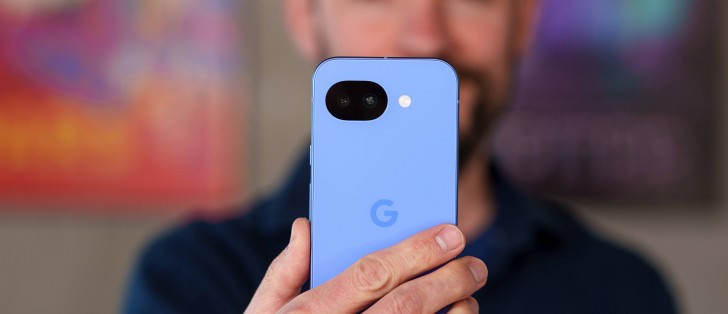
Google Pixel 10a
| 128GB 8GB RAM | $ 409.99 |
£ 371.54 |
| 256GB 8GB RAM | $ 699.00 |
£ 399.90 |
- Compact and sturdy design, no camera bump
- Bright HDR-capable screen, 120Hz
- Great battery life
- Stock Android with plenty of AI tricks and 7 years of software support
- Great all-around camera performance
- Same as the Pixel 9a, but more expensive
- Thick bezels, plastic back
- Basic refresh rate control
The Pixel 10a is incredibly compact, with great camera, screen, and performance capabilities. We also loved the stock Android and its AI options, the good speakers, and the excellent battery life.
It is a great little phone despite the lack of any upgrades over the Pixel 9a. It was not meant to please the Pixel 9a owners, but more like those having a Pixel 6 or Pixel 7, maybe even Pixel 8. And it should work for them nicely if they can stomach the high launch price.
Our advice is quite simple - if the feature set and the price tag work for you, you will not regret getting the Pixel 10a..
Read full reviewMost recent updates
October 18, 2026: Replaced the iPhone 17 Pro with iPhone 18 Pro (new top), Pixel 10 Pro with Pixel 11 Pro, Oppo Reno15 Pro with Reno16 Pro, Razr 60 Ultra with Razr 70 Ultra. Removed the Edge 60 Neo.
May 3, 2026: Added the Pixel 10a. Replaced the Galaxy S25 with the S26 and the Xiaomi 15 with Xiaomi 17.
February 6, 2026: Added the Oppo Reno15 Pro (mini) and vivo X300.
October 19, 2025: Replaced the Pixel 9 Pro with Pixel 10 Pro, iPhone 16 Pro with iPhone 147 Pro, Galaxy Z Flip6 with Galaxy Z Flip7, Motorola Edge 50 Neo with Edge 60 Neo. Added the iPhone 17.
June 28, 2025: Replaced the Razr 50 Ultra with the Razr 60 Ultra. Mentioned the Pixel 9a. Replaced the Xiaomi 14 with Xiaomi 15. Removed the Xiaomi 14 Civi.
February 23, 2025: Replaced the Galaxy S24 with the Galaxy S25. Removed the Sony Xperia 5 V.
October 19, 2024: Replaced the Pixel 8 with the Pixel 9 Pro. Added the iPhone 16 Pro and the Motorola Edge 50 Neo.
August 27, 2024: Replaced the iPhone 13 mini with the Motorola Razr 50 Ultra as new top. Replaced the Galaxy Z Flip5 with the Galaxy Z Flip6. Added the Xiaomi 14 Civi. Removed the Motorola Razr 40.
April 13, 2024: Replaced the Galaxy S23 with the Galaxy S24. Added the Xiaomi 14. Removed the Zenfone 10 and the Oppo Find N3 Flip.
November 7, 2023: Replaced the Pixel 7a with the Pixel 8, the Zenfone 9 with the Zenfone 10, Xperia 5 IV with the Xperia 5 V and the Galaxy Z Flip4 with the Z Flip 5. Added the Motorola Razr 40 and the Oppo Find N3 Flip. Removed the Motorola Edge 30 Neo and the Xiaomi 12X.
June 13, 2023: Added the Pixel 7a.
March 13, 2023: Replaced the Galaxy S22 with the Galaxy S23.
November 2, 2022: Replaced the Asus Zenfone 8 with the Zenfone 9. Replaced the Xperia 5 III with the Xperia 5 IV. Added Motorola Edge 30 Neo, Samsung Galaxy Z Flip4, Xiaomi 12X. Removed the Xperia 10 IV.
June 29, 2022: Replaced the iPhone SE (2020) with the iPhone SE (2022). Replaced the Galaxy S21 5G with the Galaxy S22 5G. Added Sony Xperia 10 IV. Removed the Pixel 5.
Oct 20, 2021: Replaced the iPhone 12 mini with the iPhone 13 mini. Replaced Xperia 5 II with the Xperia 5 III. Replaced the Pixel 4a with Pixel 5. Removed the Galaxy A41.
Aug 02, 2021: Added the Pixel 4a. Removed the 'Almost There' suggestions.
Nov 27, 2020: Replaced Galaxy S20 with Galaxy S21. Added the Asus Zenfone 8. Removed the Galaxy S10e.
Best phones by category







Best compact phones 2026 - buyer’s guide - Reader comments
- Delusional
- m@%
Was about to say the same. These would have been called large just a while ago.


Tip us
2.1m 180k
RSS
EV
Merch
Log in I forgot my password Sign up