Xiaomi 17T review
Telephoto upgraded to the Pro's 5x
The Xiaomi 17T inherits most of its camera hardware from last year's 15T, though it does upgrade one of the modules - the telephoto is now the same as that of the Pro model and it's an upgrade from 2x zoom to 5x zoom. The main camera remains a notch below the Pro's, while the ultrawide and the selfie camera are also shared between both models.
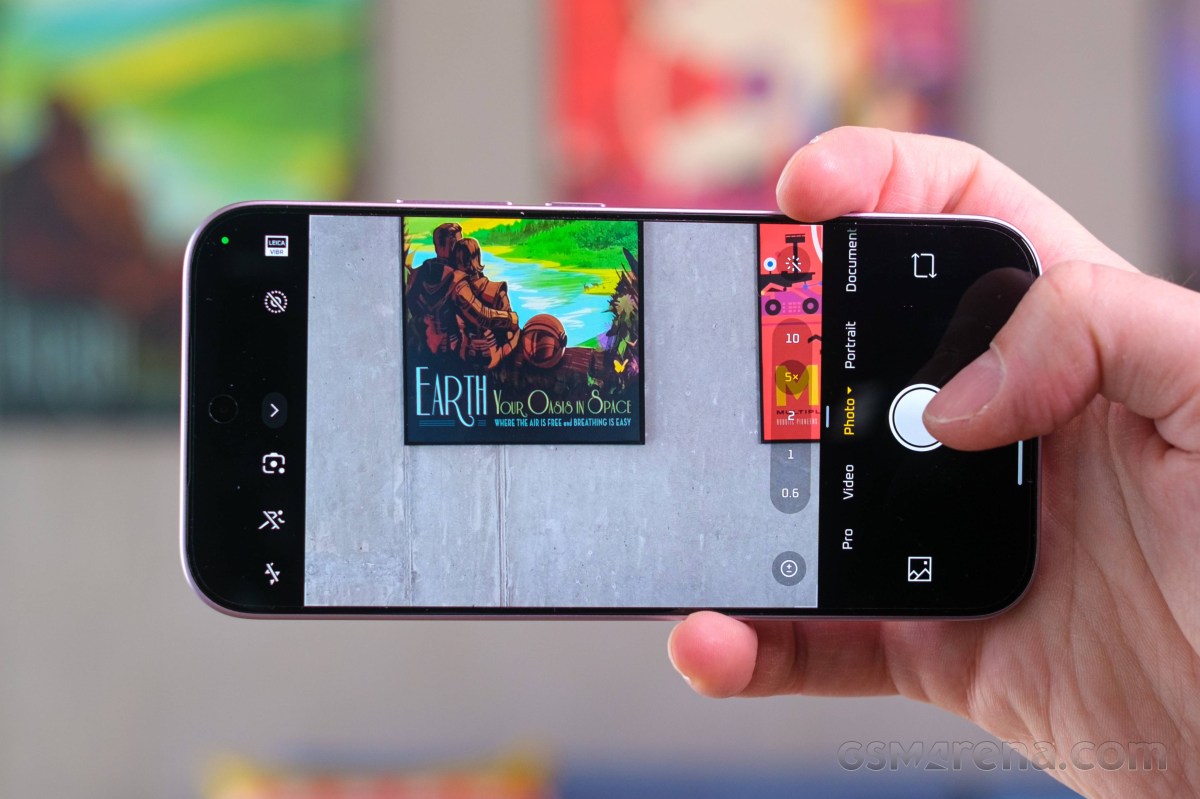
The 17T's main camera is based on the Light Fusion 800 sensor - it may have been Light Hunter 800 last time, though we doubt that really matters. It's seemingly the same exact sensor as on the 15T, unlike the 17T Pro vs. 15T Pro situation (Light Fusion 950 vs. 900). Fusion or Hunter, it's the OVX8000 by OmniVision, which may or may not be a version of the OV50E - either way, it's a 50MP 1/1.55" imager, so it's not as good as as the 17T Pro's 1/1.3" Light Fusion 950.
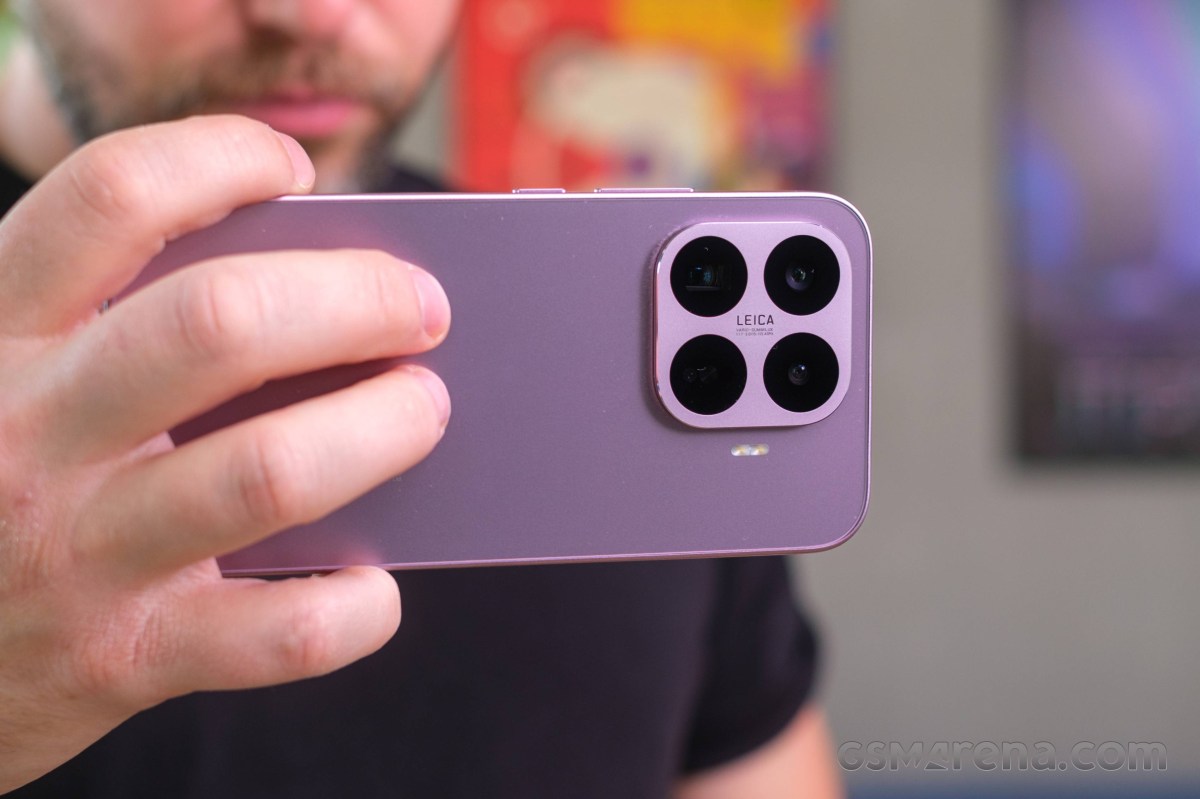
What is just as good as on the Pro is the telephoto camera - a degree of parity that didn't exist on the previous generation where the 15T had 2x zoom, and the 15T Pro stood at 5x. A tried and tested 50MP Samsung JN5 sensor with a 115mm equivalent lens sounds like an excellent setup for the class, even more so than on the Pro.
Also identical between the two models in this generation are the ultrawide camera on the back and the selfie camera on the front. The ultrawide uses a conventional RGB sensor (as opposed to a Quad Bayer type) with a 13MP resolution that outputs 12MP stills. It's got a fixed-focus lens - this is more fitting for the 17T, while it could be argued that the 17T Pro's more upmarket position warrants at least AF capability, if not a more advanced sensor.
Both the 17T and the 17T Pro have moved from the Samsung KD1 sensor on the selfie camera to KDS - we're not exactly sure what the difference is (and if there's any at all). Either way, it's the same 32MP sensor on both models, coupled with a fixed-focus lens).
- Wide (main): 50MP Light Fusion 800 (OmniVision OVX8000, likely OV50E, 1/1.55", 1.0µm-2.0µm); 23mm, f/1.7, OIS, multi-directional PDAF (9cm - ∞); 4K60 video recording.
- Telephoto: 50MP Samsung JN5 (S5KJN5, 1/2.76", 0.64µm-1.28µm); 115mm, f/3.0, OIS, multi-directional PDAF (30cm/28cm - ∞); 4K60.
- Ultrawide: 13MP (12MP effective) OmniVision OV13B (1/3.0", 1.12µm); 15mm, f/2.2, fixed focus; 4K30/1080p60.
- Front camera: 32MP Samsung KDS (S5KKDS, likely a variation of S5KKD1, 1/3.42", 0.64µm-1.28µm); 21mm, f/2.2, fixed focus; 4K30/1080p60.
Daylight photo quality
Main camera
The 17T's main camera takes great photos in daylight. You can expect plenty of contrast and vivid colors making for an overall expressive look that is hard to argue with. Detail is very good with well presented random textures. Essentially it's as good as the Pro in these conditions.








Daylight samples, main camera (1x)
It's not half bad for portraits capturing pleasing skin tones and good facial detail, though there is a hint of a skin smoothing effect that we didn't observe on the Pro - it's very subtle though. The Portrait mode blur level is quite reasonable too.








Human subjects, main camera (1x): Photo mode • Portrait mode
We're seeing any extra detail in the full-res 50MP shots.




Daylight samples, main camera (1x), 50MP
2x zoom shots are very good too, with well preserved detail in outdoor scenes and only a bit of a softening in dimmer indoor conditions.








Daylight samples, main camera (2x)
2x zoom photos of people are also looking great for the most part. Detail, while good overall, has a bit of a coarse rendition - the Pro is more refined in its 2x portraits.








Human subjects, main camera (2x): Photo mode • Portrait mode
Telephoto camera
The big step up for the plain T model, compared to the previous generation, is the telephoto camera, the new 5x module bringing a ton more reach. The photos are super sharp, possibly even sharper than on the Pro, somehow. Colors are vibrant, contrast is great.












Daylight samples, telephoto camera (5x)
Portraits are superb too, even if the 115mm focal length might be a bit too long for some. Sharpness is great, detail rendition is excellent, skin tones are looking nice. Portrait mode will help melt away busier backgrounds though you might want to tone down the blur level.








Human subjects, main camera (5x): Photo mode • Portrait mode
Here's a handful of samples shot in the nominal 50MP resolution - they're not the worst we've seen, but we'd still normally steer clear of that mode.




Daylight samples, telephoto camera (5x), 50MP
The 10x zoom photos are also great, and we'd once again say that the non-Pro has an edge in sharpness over the Pro at this level. Who'd have thunk.












Daylight samples, telephoto camera (10x)
Ultrawide camera
Modest as the ultrawide's hardware may be, the photos still turn out very good. Sharpness is great, the color rendition is likeable, dynamic range is very good.








Daylight samples, ultrawide camera (0.6x)
Close-ups
We got the phone's telephoto camera to focus as close as 28cm (Xiaomi specifies 30cm), which isn't too impressive in absolute terms. Still, with the 115mm focal length you can get a decent reproduction ratio. The 10x zoom level makes the reproduction a lot more impressive and quality is pretty solid on a pixel level. Then there's the 2x zoom from the main camera, which is somewhere in between in terms of reproduction and it delivers good quality.




Closeup samples, main camera (2x)




Closeup samples, telephoto camera (5x)




Closeup samples, telephoto camera (10x)
Low-light photo quality
Main camera
In the dark, the 17T main camera does quite respectably too. It exposes well and the photos have a wide dynamic range, though it can be a little harsher at the extremes than the Pro. Shadows can be a bit gloomier than we'd like - the Pro livens them up a bit more, and highlights are also better preserved on the higher-end model. The auto white balance is dialed in and colors show no weird tendencies, while saturation is a bit more reserved than on the Pro. Detail is very good, with only the deepest shadows getting a little murky.








Low-light samples, main camera (1x)
The 2x photos aren't particularly great in isolation, but within the realm of main camera 2x results, they're pretty okay.








Low-light samples, main camera (2x)
Telephoto camera
The telephoto captures very good low-light photos at 5x. It just might be a little heavier on the sharpening than the one on the Pro, but it's not too offensive and detail is great. There are slight differences in dynamic range and color reproduction too - we do prefer the Pro's livelier colors, and the 17T's shadows can be even darker than the already not too bright rendition of the Pro, but both phones are good in their own way.








Low-light samples, telephoto camera (5x)
10x photos are almost surprisingly good with plenty of detail. Sharpening is more aggressive here than on the Pro, but well within reason.








Low-light samples, telephoto camera (10x)
Ultrawide camera
The ultrawide's low-light photos are decently sharp, dynamic range is alright and colors are good - it's not a groundbreaking performance, but it's not half bad either.








Low-light samples, ultrawide camera (0.6x)
Selfies
Selfies are alright, as long as you're not expecting all 32MP worth of detail when you examine them at 1:1. Colors are lively, dynamic range is wide, no major issues, but not really exciting performance. The lack of autofocus is also limiting if you're into close-ups of your face.








Selfie samples
Photo quality verdict
The Xiaomi 17T is about as good a stills camera as its more esteemed Pro sibling, perhaps even slightly better here or there. We got great results from the main camera in daytime at 1x and 2x, and low-light photos were also very good at 1x, and decent at 2x. The telephoto is a major upgrade for the vanilla T model and is excellent at 5x, and pretty good at 10x. The ultrawide is slightly less exciting, but it's certainly good for the money. We'd take a better selfie camera, but this one will do too.
Video quality
The Xiaomi 17T can record video at up to 4K60 with its main camera and the telephoto - the 8K30 and 4K120 modes remain exclusive to the 17T Pro's main camera. The ultrawide camera and the front-facing one max out at either 4K30 or 1080p60, depending on whether you prioritize resolution or frame rate.
As usual, you can choose between the h.264 and h.265 (HEVC) codecs. HDR10+ recording can be enabled globally from the camera settings menu and applies to all resolution/frame rate modes. There's no 24fps option, not even in the Pro mode.
In Pro video mode you get audio levels monitoring and mic volume adjustment, as well as a histogram or waveform for exposure monitoring. Log recording is available, with four built-in live preview LUTs and an option to import your own.
Stabilization is always on in all quality settings. There's a Shoot Steady mode that works at up to 1080p60 on the main and the telephoto cameras, and up to 1080p30 on the ultrawide. In Pro mode you can disable the electronic stabilization.
You can hit '> play' below and use the '>| next' button to advance through the playlist of all video samples, or you can watch the full playlist on YouTube.
You can expect some very good 4K footage from the 17T's main camera at 1x. Contrast is great, colors are vivid but not too vivid, detail is very good. Even the 2x clips are quite usable.
The telephoto returns sharp and detailed clips at 5x, and even the 10x results are solid, with footage at both zoom levels being that little bit sharper than what we got from the Pro. Similarly, the ultrawide's 4K videos are a notch sharper than those from the 17T Pro, which makes the 17T look even better in its context.





Video screengrabs, daylight: 0.6x • 1x • 2x • 5x • 10x
At night, the 17T's main camera captures well exposed footage - the Pro's overexposure tendencies aren't observed here. Detail is good, white balance is accurate, and colors are on point. It's no surprise that the 2x zoom clips are pretty soft (as they are on the Pro).
The telephoto manages to maintain its composure at 5x better than that of the 17T Pro and the footage is quite good - it's pretty sharp actually, and it's also great from a global perspective. 10x is stretching it though. The ultrawide's low-light footage is pretty bad on the 17T Pro, but not quite as bad on the 17T - the lesser model is doing better in terms of dynamic range and color.





Video screengrabs, low light: 0.6x • 1x • 2x • 5x • 10x
The stabilization shows some minor hiccups but it's very good overall. Shooting from a stationary position will yield mostly stable footage - not perfect, but pretty great still. Walking shake is ironed out decently, though there's some tremor remaining, which is nowhere near annoying, but you can see it if you look for it.
Video quality verdict
The Xiaomi 17T can record video up to 4K60 with the main and telephoto cameras, supports HDR10+ capture, and has a reasonably capable Pro mode. Quality is very good out of the main and telephoto cameras, in both good light and at night. The ultrawide, meanwhile, does decently during the day, and puts up an acceptable performance at night. Stabilization is mostly fine too.


Tip us
2.1m 180k
RSS
EV
Merch
Log in I forgot my password Sign up