Xiaomi 17T review
Display
The Xiaomi 17T has a 6.59-inch AMOLED display. It's far from the biggest display diagonal we've encountered, but also nowhere near what would currently be considered a "compact" device. We personally find this "middle ground" pretty great, but that's going to be entirely a personal matter.

The pretty high 2756 x 1268-pixel display resolution is a lot harder to "dislike" for any particular reason. It makes for a very sharp picture at this diagonal without being too "excessive" or "over the top" and puts any real strain on the GPU while gaming at native resolution.
Another pretty hard-to-dislike aspect is the 12-bit color depth. Xiaomi has been providing that for a while now, and on much cheaper devices too. This particular display is certified for both Dolby Vision and HDR10+, and it has the colors, contrast and brightness to back that up.
Speaking of brightness, Xiaomi claims the 17T should be able to achieve 3,500 nits peak, and we have no reason to doubt that. Our own measurements confirm that on a 10% window, our review unit did around 3,358 nits. Having said that, Xiaomi does handle brightness in its own particular way, so not all of our standardized measurements necessarily paint a great picture here. For instance, in manual mode, maxing out the slider resulted in just shy of 600 nits, which is not enough to be comfortable outdoors in sunlight.
If you dislike automatic brightness adjustment for some reason (it works great on the 17T, by the way), Xiaomi does have the sunlight mode toggle, which will boost brightness after the ambient light reaches a certain threshold. Honestly, though, you are much better off just letting the auto toggle do its thing. This way, you can get around 1,035 nits in sunlight on a 75% window, which, again, might not sound enough. However, it's still plenty to be comfortable in outdoor use and is mostly a byproduct of how Xiaomi handles its brightness regulation. In all actuality, the panel is more than capable of pushing more nits of a 75% patch. It will also happily do so under the right conditions, like while playing HDR video.
Max display brightness test
White test pattern (nits)
- Manual (75% fill)
- Auto (75% fill)
- Peak Auto (10% fill)
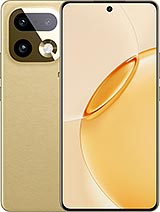
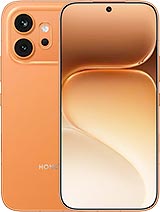
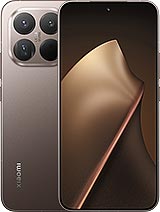


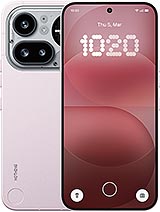
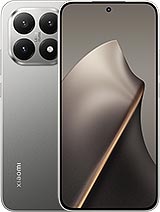
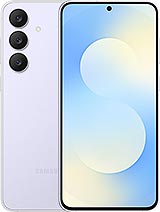
 Pixel 10 Pro
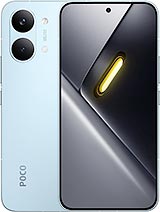 Poco X8 Pro Max
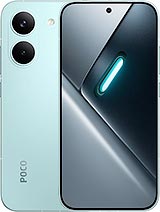 Poco X8 Pro
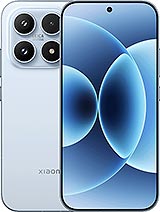 Xiaomi 17
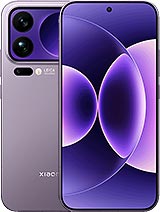
 Xiaomi 17T
 Xiaomi 17 Pro Max
 iPhone 17
Speaking of HDR, as we mentioned, the Xiaomi 17 is certified for both Dolby Vision and HDR10+. The phone itself offers decoder support for every popular HDR format out there: HDR10, HDR10+. HLG and Dolby Vision. The phone also has the highest possible Google Widevine L1 DRM certification, allowing services like Netflix to offer up FullHD streams.
Xiaomi is particularly proud of all of the TüV Rheinland certifications it has acquired for the Xiaomi 17T. These include Intelligent Eye Care Certified, Low Blue Light (Hardware Solution) Certified, Flicker Free Certified and Circadian Friendly Certified. Xiaomi calls the whole set, including its own internal efforts on the matter, Xiaomi Vision Care.
Refresh rate
The Xiaomi 17T has a 120Hz display of the simpler LTPS variety. That means that you can't expect super dynamic switching. The OS reports that the phone can operate at 30Hz, 60Hz, 90Hz and 120Hz. Frankly, we couldn't get the phone to refresh at 30Hz, no matter what we tried. Even 30fps videos get played back in 60Hz mode both in the native Gallery app and in third-party apps like YouTube.

In terms of settings, there are two refresh rate modes to choose from. Default does automatic switching to as high as 120Hz while you are interacting with the display, and down to 60Hz when nothing is happening on screen. Then there is Custom mode, which lets you choose between a locked 60Hz mode and a 120Hz mode, which still doesn't lock at 120Hz but does automatic switching. If you specifically want to force a given app or game to run at 120Hz, there is a per-app settings menu, which surprisingly seems to work rather well. We succeeded in forcing the YouTube app into 120Hz through it and also managed to play most of our test games at 120Hz. Still not all of them, though, which makes for an ultimately imperfect system.
Battery life
The Xiaomi 17T has a pretty large 6,000 mAh battery. It uses modern silicon-carbon chemistry. Since this is the same battery as inside the Poco X8 Pro and the two devices also share the same chipset and probably the same display as well, we expected pretty similar battery scores across the two. That is indeed the case.
The Xiaomi 17T managed a pretty amazing Active Use Score of over 17 hours in our standardized testing. That's definitely more than plenty to get you through a full day and probably a second one as well, depending on your usage.
Charging speed
Unfortunately, while the Xiaomi 17T has the same battery capacity as the Poco X8 Pro, it does not have the same 100W charging. Instead, Xiaomi has decided to pair the 17T with 67W Xiaomi HyperCharge tech.

It is definitely not as fast as its 100W counterpart. In our testing, the Xiaomi 17T got from 1% to 31% in 15 minutes and then to 55% in 30 minutes. A full charge took exactly one hour on the dot. That's not ideal, especially when compared to other Xiaomi devices, including the Xiaomi 15T, which has the same charging support but a smaller battery to charge.
Charging speed
- in 15 min
- in 30 min
- Time to full charge (from 0%)
 Motorola Signature
 Galaxy S26
 vivo V70
 Pixel 10a
Xiaomi 17T
 Pixel 10 Pro
 Redmi Note 15 Pro 5G
Unfortunately, the Xiaomi 17T lacks wireless charging as well. It does offer reverse wired charging at up to 22.5W.
There are some fairly simple battery protection options. For instance, you can set a hard charging cap at 80% and only top off the battery when scheduled. The alternative is to use smart charging, where the phone again stops at 80% charge and then decides on its own when to top off to 100%.
Speakers - loudness and quality
Just like its Xiaomi 15T predecessor, the 17T has a hybrid stereo speaker setup with an amplified earpiece acting like the second channel. However, for some unknown reason, Xiaomi decided to get rid of the secondary speaker outlet on the top of the phone. It really helped with the output balance, which is, indeed, a bit worse on this model.

Other than that, the speakers on the Xiaomi 17T are still pretty loud, with a VERY GOOD loudness rating in our testing. The output is pretty clean with a nice and rich sound stage. There is little distortion in the highs. Overall, a solid speaker system.
Use the Playback controls to listen to the phone sample recordings (best use headphones). We measure the average loudness of the speakers in LUFS. A lower absolute value means a louder sound. A look at the frequency response chart will tell you how far off the ideal "0db" flat line is the reproduction of the bass, treble, and mid frequencies. You can add more phones to compare how they differ. The scores and ratings are not comparable with our older loudspeaker test. Learn more about how we test here.
The Xiaomi 17T offers a pretty comprehensive set of audio enhancements. There is a full-featured graphical equalizer with presets as well as a choice between two sound engines - Dolby Atmos and Xiaomi Sound. There is also a rather cryptic "Immersive sound" toggle that, you guessed it, promises to make your audio more immersive.
Connectivity
The Xiaomi 17T is a dual-SIM device with SA/NSA Sub-6 5G simultaneous support on both of its Nano-Sim slots. There is eSIM support as well, and you can use any combination of physical and digital SIMs as long as you have a maximum of two active at a time.

Location services include GPS (L1+L5), BDS (B1I+B1c+B2a), GALILEO (E1+E5a), QZSS (L1+L5), NavIC (L5) and GLONASS.
Wi-Fi 6E covers local connectivity. Unfortunately, it is only dual-band, so you don't get access to the still largely untapped 6GHz spectrum. Bluetooth is version 6.0, with LE support. There is NFC on board as well as an IR blaster. No 3.5mm audio jack and no FM radio receiver, though.
A simple USB 2.0 data connection backs up the Type-C port on the Xiaomi 17T. That means a theoretical maximum data transfer rate of 480 Mbps. There is nothing really fancy beyond that, like video output over USB Alt mode, but you do still get USB OTG/Host support.
The list of onboard sensors includes a TDK ICM45621 accelerometer and gyroscope combo, a memsic mmc5603 magnetometer and compass, an ams tcs3720 light sensor and what is curiously being identified as a Xiaomi-branded virtual proximity sensor. The curious part, however, is that the phone behaves as if it has a regular hardware proximity sensor. Third-party apps can reliably read the state, and it does not require an awkward motion of actual skin contact to trigger an event. Whatever Xiaomi has done here seems to have none of the drawbacks of a virtual sensor, from what we can see, so it's good on them. There is no barometer.


Tip us
2.1m 180k
RSS
EV
Merch
Log in I forgot my password Sign up