vivo X Fold6 review
Single hardware upgrade, thoroughly better cameraphone
The vivo X Fold6 iterates on the previous model's camera system, keeping the setup's basic configuration intact, but also bringing a bit of an upgrade. The triple camera on the back now has a larger and higher-res main unit, next to the unchanged ultrawide and 3x telephoto, while two identical (and mostly unremarkable) selfie cameras complete the picture.
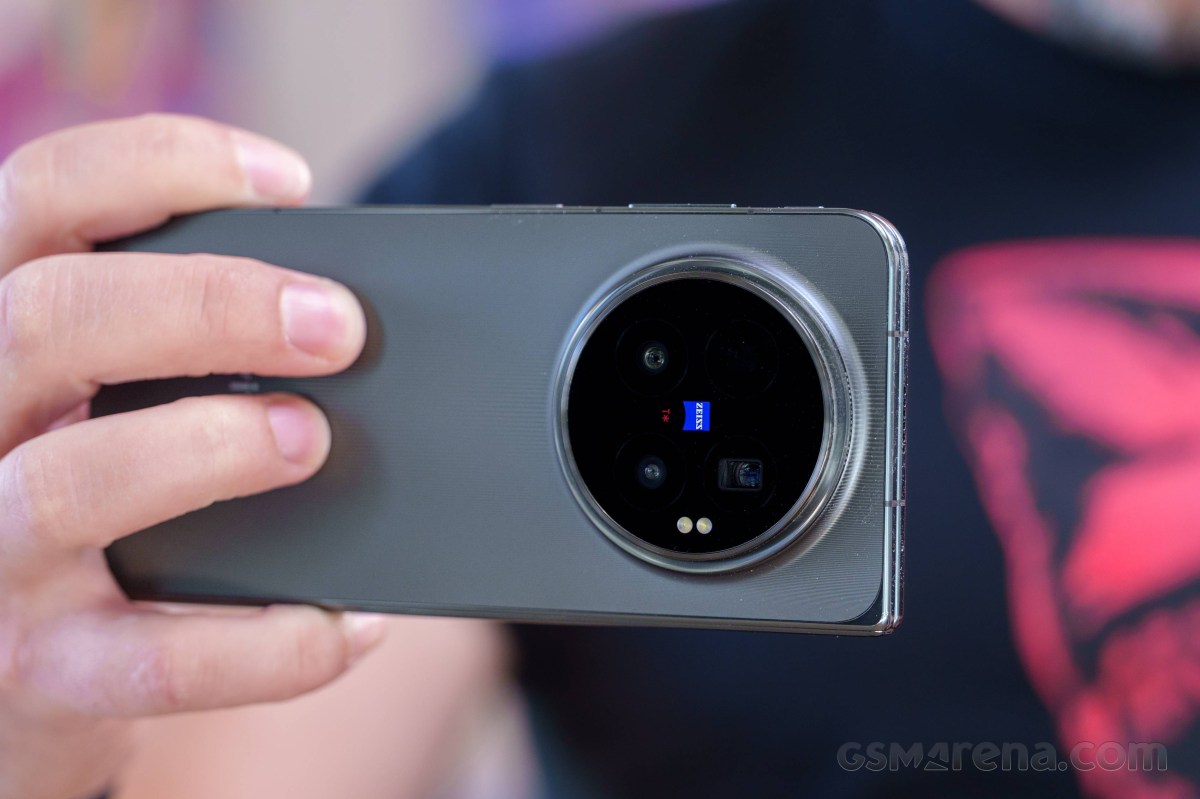
The main camera has been upgraded from the mainstream 50MP 1/1.56" sensor on the X Fold5 to a more upmarket 200MP 1/1.4" imager. It's a vivo-specific HPB version of the Samsung HP9 (which we're pretty fond of) - we've seen the HPB on the X300 Pro's telephoto while the latest X500 Pro Max is using what should be a closely related HP0 on its main camera (that same one is supposedly on the X300 Ultra's telephoto as well). Either way, it's looking like a meaningful step up for the vivo foldable lineup. That said, the X Fold3 Pro that came out in 2024 did have a 1/1.3" sensor on its main camera.
We say the telephoto is unchanged, but that may not be entirely true. While the numbers are all the same and you'd be getting a 3x zoom lens with a 70mm equivalent in front of a 50MP 1/1.95 Sony sensor, the sensor just might be an refreshed version of the one used before - it's now a vivo-specific Lytia 602 (IMX 885) in place of the 'generic' Lytia 600 (IMX 882) found on the previous model. Just how different the SKUs actually are is above our paygrade.
The ultrawide camera, on the other hand, is entirely the same - a Samsung JN1 sensor is paired with a lens that's reported as 15.4mm in hardware apps, while the photos' EXIF field says 15mm in 50MP and 16mm in 12.5MP. Either way, it's not the widest of ultrawides. You do get autofocus, which is always appreciated.
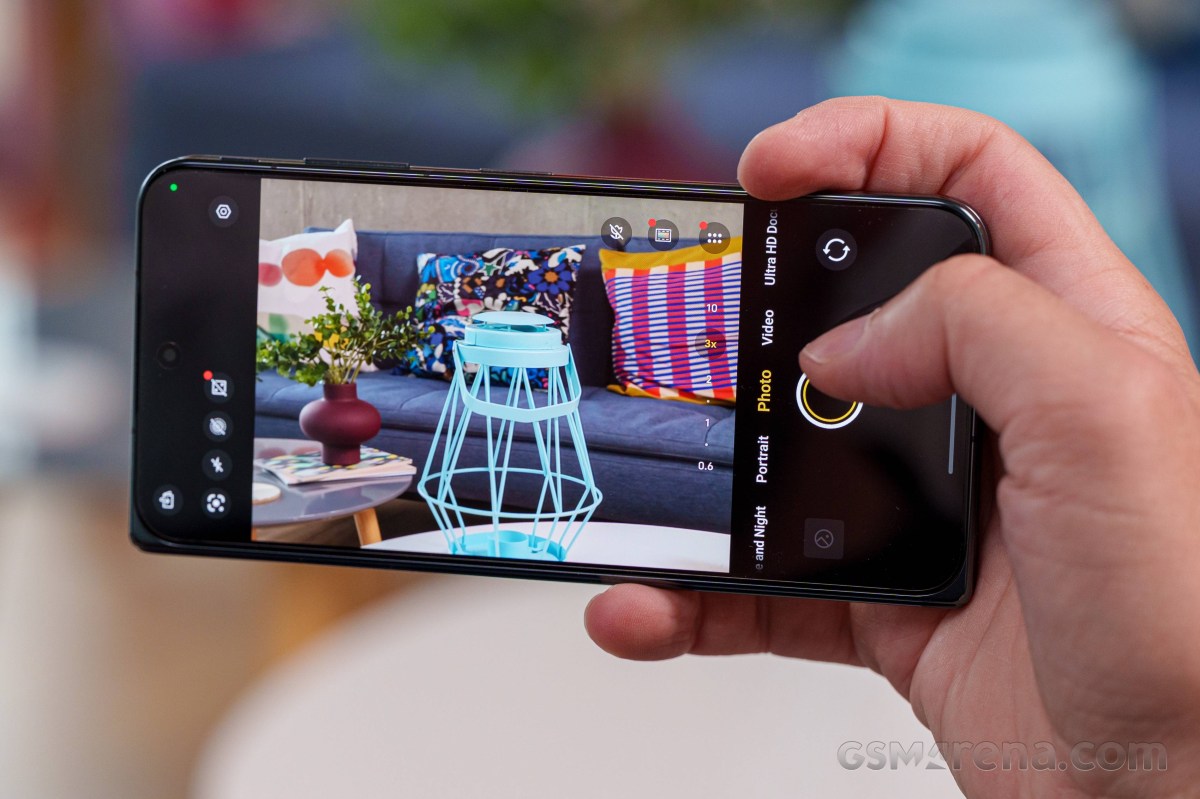
Each display gets a punch hole cutout for a selfie camera and both selfie cameras are specced at 20MP, but the sensors underneath are actually 32MP OmniVision units. It's not unheard of - the X Fold5's arrangement is the same, as is the one on the Oppo Find N6 though it's a slightly larger sensor that's used on the Find. Both these cameras have wide-angle fixed-focus lenses.
- Wide (main): 200MP Samsung ISOCELL HPB (HP9, 1/1.4", 0.56µm-2.24µm); 23mm, f/1.68, OIS, multi-directional PDAF (11cm - ∞); 8K30/4K120 video recording.
- Telephoto: 50MP Sony Lytia 602 (IMX 885, 1/1.95", 0.8µm-1.6µm); 70mm (3x zoom), f/2.57, OIS, multi-directional PDAF (14.5cm - ∞); 4K60.
- Ultrawide: 50MP Samsung ISOCELL JN1 (1/2.76", 0.64µm-1.28µm); 15mm, f/2.05, PDAF; 4K60.
- Cover/Internal camera: 20MP effective, 32MP OmniVision OV32D (1/3.6", 0.61µm-1.22µm); 21mm, f/2.4, fixed focus; 1080p30.
Daylight photo quality
Main camera
The X Fold6's main camera photos at 1x zoom are very good, but somehow a little odd. Detail is excellent - everything is super sharp and it's rendered in a really nice and fine way, as vivo has apparently cracked the right settings to bin and downscale the data from this sensor. The white balance shows no undesirable tendencies and colors are generally good, though they do seem to suffer collateral damage from what the phone's processing isn't doing quite right. The combination of exposure, dynamic range and tone curve is rubbing us the wrong way, with images looking desaturated, flat, and overexposed (or at least with poorly controlled highlights).
Now, that's the default color profile, and it's what vivo calls 'Refined', but much as we'd be embarrassed to admit it, we apparently don't qualify for the same label. We can't really agree that's the appropriate processing to be... suggested to the user out of the box - sure, they can have any combination of tone curve and color and whatnot in various presets, but maybe keep a more universally likeable one as the default. Like the 'Vivid' one we adopted for the rest of the samples you'll see here (with a brief exception in the 1x low-light gallery, for completeness sake).




Daylight samples, main camera (1x), Refined (default, for some reason)
The 'Vivid' mode's colors stay true to the profile's name, in more or less the best possible way that we've come to expect from high-end vivo cameraphones. Highlights get reined in too. Detail rendition gets altered a bit, with an uptick in sharpening showing in random textures, but it's still looking plenty fine and reasonably natural. This should be an easy pick for a default color profile.












Daylight samples, main camera (1x)
Vivid looks pretty great on human subjects too, giving them lifelike and lively skin tones, without going overboard with warmth. Facial detail is excellent too. Portrait mode at 23mm has a very subtle added blur while the 35mm setting makes it a bit more noticeable.












Human subjects, main camera: Photo mode (1x) • Portrait mode (23mm) • Portrait mode (35mm)
The 50MP versions of these scenes are also very sharp and detailed and it's only in complex backlit scenes that you can see dynamic range is not as wide as in the 12.5MP versions. Still, shooting in 50MP on the main camera makes a lot of sense if you want to extract the most out of a scene.




Daylight samples, main camera (1x), 50MP
The 200MP mode, on the other hand, isn't necessarily going to bring you extra resolved detail - random textures look pretty digital and not too well defined.




Daylight samples, main camera (1x), 200MP
You won't be surprised to see that regular resolution 2x shots are super sharp and detailed as well and the rendition of that detail is also pretty likeable - no signs of aggressive processing.








Daylight samples, main camera (2x)
Headshots at 2x do show a bit more of a hint of loss of detail, but they're still properly good, even when accounting for that. The Portrait mode versions are slightly less sharp, more visibly so, though yet again they're pretty solid.








Human subjects, main camera (2x): Photo mode (2x) • Portrait mode (50mm)
Telephoto camera
The X Fold6 continues to deliver with its telephoto, capturing sharp images at 3x with well defined detail. Contrast is excellent, dynamic range is great, colors are just right (right being Vivid mode's vivid rendition, if we didn't make that clear before).
















Daylight samples, telephoto camera (3x)
You can also count on excellent people shots at 3x, with likeable colors and great detail, in addition to the 70mm native focal length being a great option for head and shoulders framing.
vivo does what vivo does and you don't get Portrait mode at 70mm, but you do get 85mm and 100mm options for those that are fans of tighter framing or shooting from a bit more of a distance. It's worth keeping in mind that you'll be likely to lose some sharpness going from 70mm Photo mode to either of the Portrait mode zoom levels, particularly in dimmer conditions.












Human subjects, telephoto camera (3x): Photo mode (3x) • Portrait mode (85mm) • Portrait mode (100mm)
The 3x 50MP photos are alright in broad daylight and less so in dimmer indoor scenes, but even in ideal conditions it's not like you'll be getting a whole lot more detail than what the binned images offer.




Daylight samples, telephoto camera (3x), 50MP
The 6x zoom level is accessed by tapping on the 3x button and it will get you pretty good results - typically superior on a pixel level than the 3x 50MP shots in terms of detail, and with better contrast.












Daylight samples, telephoto camera (6x)
At 10x, the phone shifts its approach from picture-taking towards image generation but does produce mostly believable results - your mileage will vary with subject matter of course. Straight lines tend to be finer at 10x than at 6x, but at 10x you'd be able to spot mesh-like patterns of fake detail if you look closely. Mind you, that's with the Super telephoto enhancement set to Extreme, which is the default state, and vivo openly warns that "some scenes may seem unnatural".










Daylight samples, telephoto camera (10x)
Ultrawide camera
The ultrawide camera punches well above its weight, capturing excellent detail - maybe it's the not-quite-so-ultra-wide 15mm lens that's helping. Either way, the shots are sharp, they have great colors and wide dynamic range, and the autofocus means you can get nearby subject in sharp focus just as well.










Daylight samples, ultrawide camera (0.6x)
The full-res shots are pretty soft and dreamy though - not something that you'd want to use.




Daylight samples, ultrawide camera (0.6x), 50MP
Close-ups
Having said that, the ultrawide is one of the avenues for action if you want to take close-ups and the phone will switch to a digitally zoomed in view from the ultrawide if you're at 1x and get too close to a subject for the main camera to be able to focus. These are fairly decent as such implementations go, but on the X Fold6 you have superior alternatives.




Close-up samples, macro mode, ultrawide camera (1x)
2x zoom from the main camera is one way to go.




Close-up samples, main camera (2x)
The close-focusing telephoto is an even better option, already offering a larger reproduction ratio than the main camera's 2x and better detail - very good detail too, we might add.




Close-up samples, telephoto camera (3x)
The 6x zoom level makes the reproduction more impressive, but pixel-level detail is compromised.




Close-up samples, telephoto camera (6x)
Which brings us to the 10x zoom. As you already know, at this zoom level the phone will try and make things up alongside the detail that it captures and for some subject matter that might work miracles. For example, here's one of the most impressive renditions to date, real or fake, of the yellow pencil tip.




Close-up samples, telephoto camera (10x)
Low-light photo quality
Main camera
The main camera's low-light results are excellent. The auto white balance is on point and colors have plenty of pop - almost a bit too much, even, if you're shooting in Vivid mode (as most people probably should and would, we insist), though we'd still prefer it that way. Dynamic range is excellent and exposures are well judged. Detail is great as well.










Low-light samples, main camera (1x)
The dedicated Night mode brings little difference.




Low-light samples, main camera (1x), Night mode
Now, detail in particular is actually a little better in the default Refined color style - it's finer, more natural, like we observed in the daytime shots. There's less contrast and saturation too, which could be the preferred look for some folks. Still, though, we're leaning heavily towards the more expressive output of Vivid mode.




Low-light samples, main camera (1x), Refined (default, for some reason)
2x zoom photos are very good, though the phone does prefer the better lit scenes - shadows and generally particularly gloomy scenes can be notably softer. The great global properties remain unchanged though, so that's nice.








Low-light samples, main camera (2x)
Telephoto camera
The 3x zoom shots are also pretty great, though we could complain about the heavier sharpening in darker scenes - the X Fold6 is not the worst offender, but we've seen more natural renditions too. The vibrant colors and wide dynamic range are most welcome, of course.












Low-light samples, telephoto camera (3x)
The dedicated Night mode processing might give sharpening a boost in the scenes otherwise rendered more conservatively, but it's not a dramatic difference. There are no meaningful gains to be had in terms of dynamic range or anything, but there was not much more to ask for anyway.




Low-light samples, telephoto camera (3x), Night mode
At 6x, when you examine the photos at 1:1, you start to see softness, aggressive sharpening, and maybe some made up detail in the form of mesh patterns (the concrete wall in the third sample). Stand back a little, and the photos are still solid globally.








Low-light samples, telephoto camera (6x)
At 10x, the meshes become more easily visible in more situations, and the AI detail 'enhancement' algorithms can do some creative brickwork, though they do also make some straight edge detail appear finer than the 6x counterparts.






Low-light samples, telephoto camera (10x)
Ultrawide camera
The ultrawide doesn't disappoint either. It returns pretty much the same vibrant colors and contrast for an impactful look, and it's also got the dynamic range to render the extremes well. Detail can be a little sketchy in the shadows and even in better lighting you'd be looking at some pretty liberal sharpening, but it's all easily good enough, particularly as foldables go.










Low-light samples, ultrawide camera (0.6x)
There's little to no difference if you shoot in the dedicated Night mode - the phone is applying its low-light processing on its own in the regular Photo mode.




Low-light samples, ultrawide camera (0.6x), Night mode
Selfies
The two in-display selfie cameras are identical and they shoot identical images, though using the internal one to take a photo isn't a one-handed endeavor. The one one the cover is a lot easier to operate and will likely be used for quick snaps where image quality isn't really important (or some sort of a video call which is what the internal one is almost certainly exclusively for).








Selfie samples, cover selfie camera
The really good selfies come from the rear cameras, with a couple of extra steps to unfold the device and switch the UI to the cover screen, now viewfinder. Image quality is properly excellent, though you could have gathered that already from a few paragraphs above.








Selfie samples, rear main camera (1x)
Of course, you also get to shoot ultrawide selfies, and even if the 16mm lens isn't exactly extreme, it still offers expanded coverage for group shots and more surroundings. Image quality is pretty stellar in this use case too - significantly better than on key competitors.




Selfie samples, rear ultrawide camera (0.6x)
Photo quality verdict
The X Fold6 is a relatively small step forward in terms of hardware compared to the previous generation, with vivo only upgrading the main camera. It has turned out to be a significant upgrade in photo quality, however, and not just on the main camera - we're looking at great photos across the board, where the X Fold5 offered middling results throughout.
The main camera is properly excellent in daytime and at night, and it's also pretty great at 2x. The ultrawide camera does a nice job in good light and is still solid at night, and that's also true of the telephoto, which is also not too shabby at 6x, and decent at 10x (though it just might be the 'AI' that is doing the heavy lifting there). Portraits are nice, close-ups are great as well, rear-camera selfies are top-class. The two internal selfie cameras aren't much good, but they don't really need to be any better.
One fairly large caveat is that vivo has made a perplexing choice of default color profile - the out-of-the-box 'Refined' setting may have its fans for its relatively purist rendition, but it's anything but universally likeable, and we'd switch to Vivid first thing, every time.
Video quality
The X Fold6 can record video up to 4K120 or 8K30 with its main camera, while the telephoto and the ultrawide on the back max out at 4K60. The internal and the cover cameras are capped at 1080p30. Dolby Vision is available in all resolution/frame rate settings other than 4K120 and 8K30. PAL options are available too (25fps and 100fps) if you enable them from the camera settings first.
The Pro video mode adds 50fps for the PAL folk, but also 24fps for the film-loving crowd. Weirdly enough, in Pro mode you don't get Dolby Vision and there's no apparent HDR or Log option either - so no 24fps Dolby Vision then. You do get much higher bitrates - 72Mbps Standard, 120Mbps High vs. the regular mode's 38Mbps for 4K30. In addition to the usual exposure, white balance and focus controls, you also get zebras for exposure monitoring and focus peaking, but no histogram or waveform.
Stabilization is always on. There's an additional level of stabilization labeled Ultra stabilization that works at up to 2.8K60 on the main camera and up to 2.8K30 on the telephoto.
You can hit '> play' below and use the '>| next' button to advance through the playlist of all video samples, or you can watch the full playlist on YouTube.
Daytime videos from the X Fold6 look properly excellent from afar, showing great contrast, wide dynamic range and vibrant but not cartoonish colors. We're not so sure about the sharpness, though - while the telephoto is quite respectable, the main camera is showing heavy sharpening and mostly unremarkable detail, and the ultrawide is also pretty meh in its own context.





Video screengrabs, daylight: 0.6x • 1x • 2x • 3x • 10x
At night, the main camera is doing a solid job, exposing well and having excellent dynamic range and actually good sharpness for these quite different circumstances. The telephoto's footage is pretty sharp, but also quite noisy. The ultrawide clips aren't remotely clean either, but they're also on the soft side, though the bright exposure makes them strangely approachable if not technically sound.





Video screengrabs, low light: 0.6x • 1x • 2x • 3x • 10x
There's pretty much nothing we'd like to see improved in terms of stabilization though. When shooting from a stationary position, all three rear cameras produce super stable footage, nearly tripod-like. Pans are smooth too, with no abrupt transitions at either end. Walking shake is well corrected for as well.
Video quality verdict
Our excitement over the X Fold6's photo performance doesn't entirely translate into video, but it's not disappointing stuff either. In terms of capabilities, the phone does offer 4K60 on all rear cameras, complete with Dolby Vision support, and there's even 4K120 and 8K30 on the main camera, but on the other hand, the Pro mode is somewhat limited (no Dolby Vision there, and no Log capability).
The actual video quality is pretty good in daylight on all three cameras, with sharpness lacking somewhat, but otherwise no grounds for complaint, and a shoutout for the great stabilization. At night, we're looking at solid main camera footage and mostly alright results from the ultrawide and telephoto. As a whole then, it's neither a pro, nor a con.


Tip us
2.1m 180k
RSS
EV
Merch
Log in I forgot my password Sign up