vivo X Fold6 review
Display
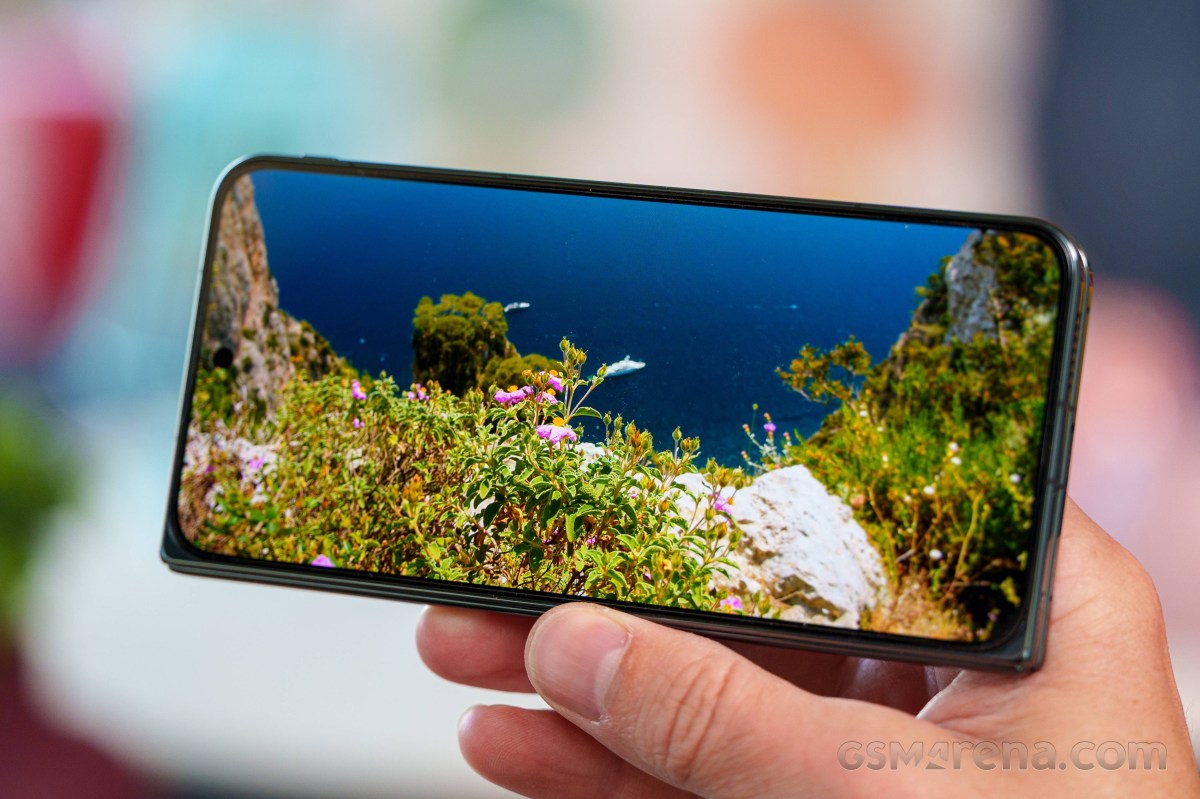
We already went through the implications of the slightly different sizes and aspect ratios of both displays on the X Fold6. To sum up, we think vivo tweaked things for the better. Moving on to some more technical display details.
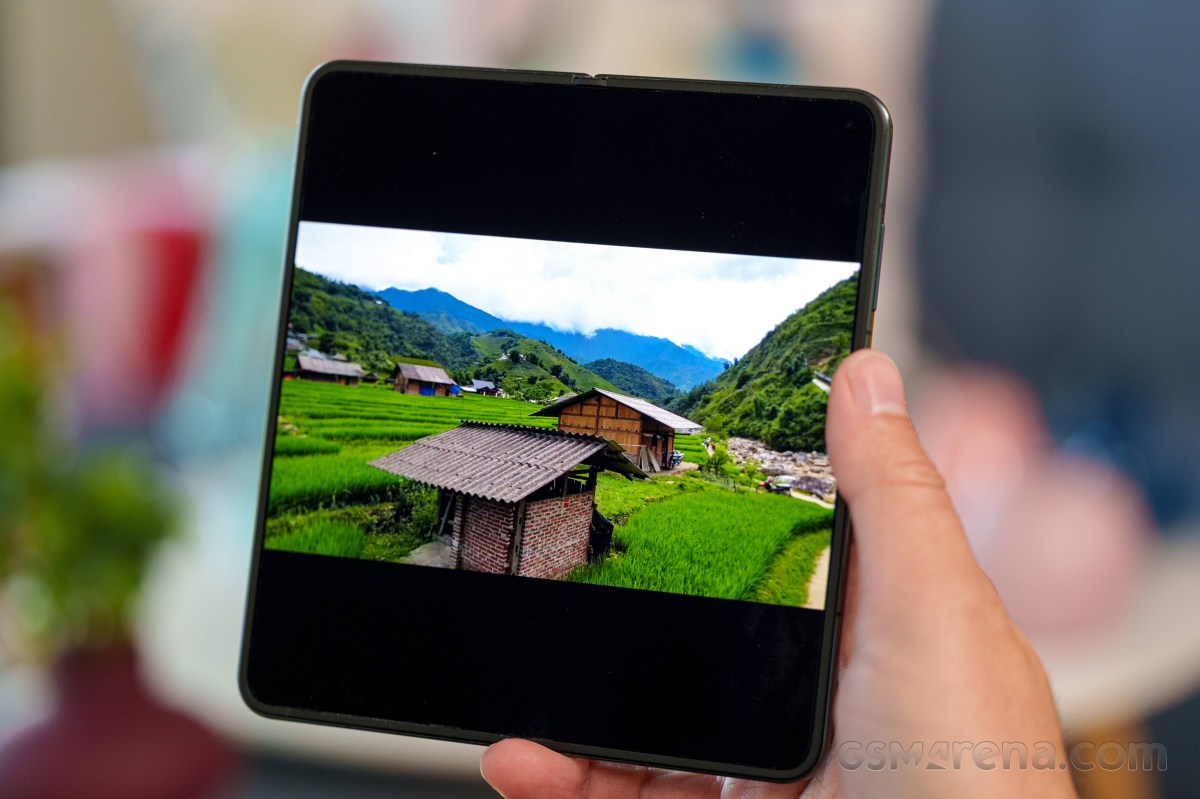
The foldable 8.02-inch display has a 2504 x 2312-pixel resolution, which works out to around 424 ppi of pixel density. vivo officially advertises 5,000 nits peak brightness for this display, which is ever so slightly higher than the 4,500 nits of its predecessor. Let's see if that somehow translates to our standardized brightness measurements.
Max display brightness test
White test pattern (nits)
- Manual (75% fill)
- Auto (75% fill)
- Peak Auto (10% fill)

 vivo X Fold3 Pro
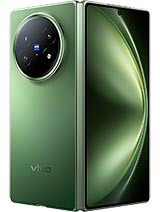 vivo X Fold5
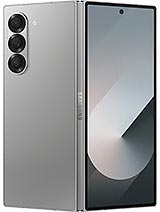 Galaxy Z Fold6
 Galaxy Z Fold8
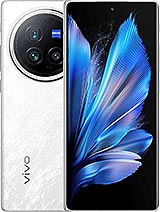
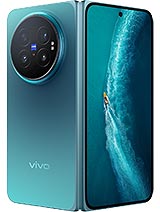 vivo X Fold6
 Motorola Razr Fold
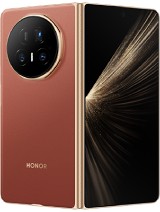
 Honor Magic V3
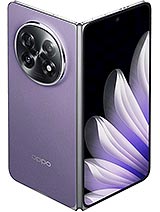
 Oppo Find N6
In our test the X Fold6 actually achieved slightly lower brightness figures in the 75% window test than the X Fold5. Of course, at over 1,500 nits, the X Fold6 is perfectly comfortable outdoors even in sunlight, but some competitors go a bit higher.
We measured peak brightness of over 2,400 nits with 10% of the screen lit up window. The minimum brightness we measured at point white was just 0.9 nits. The inner foldable display uses Samsung Display's M14-generation OLED panel, which dates back to 2024 and is shared with devices in the iPhone Pro and Samsung's own Galaxy Ultra series.
The cover display is 6.51 inches in diagonal this year with a 20:9 aspect, instead of 21:9. This display is also officially advertised as outputting 5,000 nits, same as the inside panel, but interestingly, lower than the X Fold5's cover display, which claimed 5,500 nits last year.
Max display brightness test
White test pattern (nits)
- Manual (75% fill)
- Auto (75% fill)
- Peak Auto (10% fill)
 Pixel 9 Pro Fold (Cover display)
vivo X Fold5 (Cover display)
Motorola Razr Fold (cover)
Galaxy Z Fold8 (cover)
vivo X Fold6 (Cover display)
 Galaxy Z Fold8 Ultra (cover)
Oppo Find N6 (cover)
 Huawei Mate X6 (Cover display)
Our measurements are almost identical to the external screen and again, the X Fold6 is slightly less bright than its predecessor, but that kind of difference can well be due to how it's tuned. And the two displays on the X Fold6 are pretty close in brightness output to each other, which is nice for consistency.
High refresh rate handling
The refresh rate behavior is very similar on both displays. You get dynamic refresh rate switching behavior and refresh rates as low as 1Hz when there is no movement on the screen.
There are three refresh rate modes to choose from in settings: Smart Switch, Standard and High. High and Smart Switch can both reach up to 120Hz, but High seems to favor it slightly more.
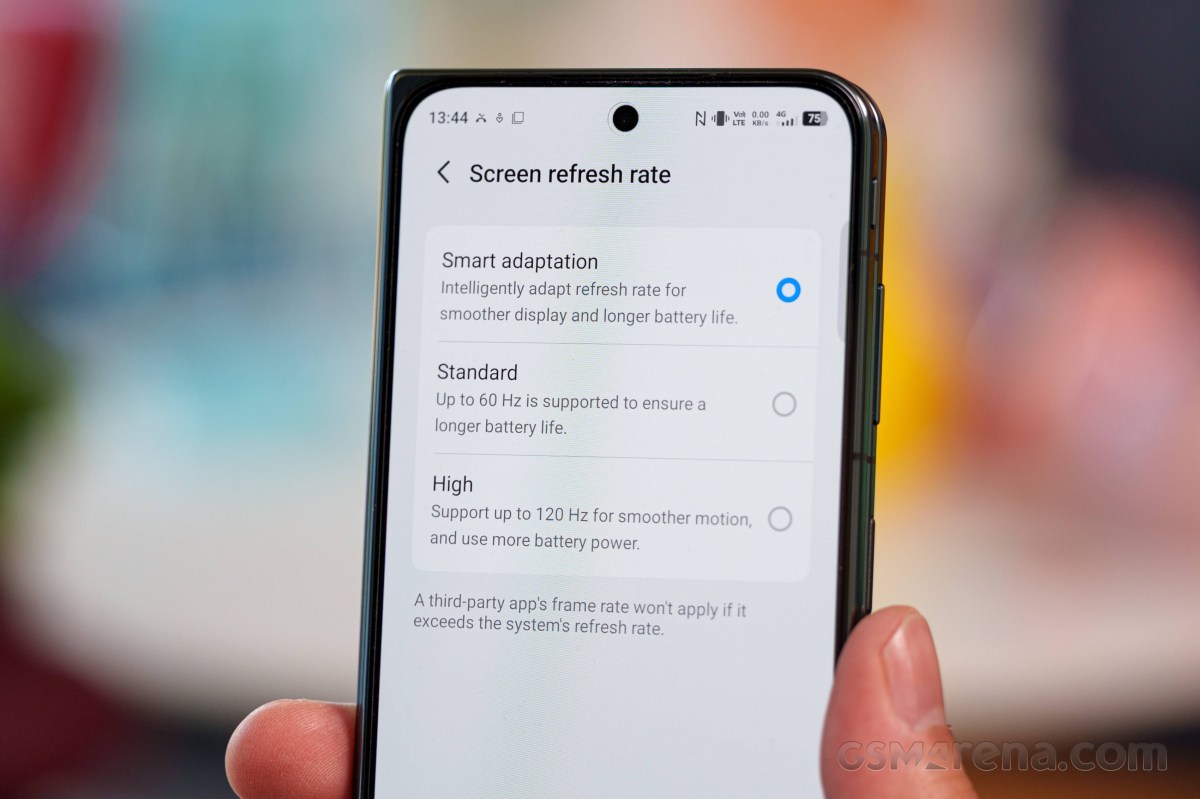
Both panels use an LTPO backplane to achieve this dynamic refresh rate switching. vivo says the LTPO backplane is of the "8T" variety, also commonly known as 8T1C LTPO. That means 8 thin-film transistors + 1 capacitor per subpixel/pixel circuit, as opposed to some other implementations that use seven or even six transistors. Without getting too technical, this allows the display to theoretically have cleaner 1Hz or very-low-refresh rate operation, holding more steady voltages and preventing things like brightness fluctuations. It also helps make refresh rate transitions smoother and display better grayscale at low brightness. And in turn, depending on the implementation, it could also lower the panel's power consumption.
HDR
The X Fold6 is certified for HDR10+ and Dolby Vision on both of its displays, same as last year's model. Technically, it also has an HDR Vivid certification as well, but unless you are particularly keen on Chinese streaming services, chances are that one won't see any use.
The phone reports decoder support for all popular HDR formats: HDR10, HDR10+, HLG and Dolby Vision. It also has the highest possible Widevine L1 DRM certification.
Battery life
The Chinese vivo X Fold6 has a 7,000 mAh battery, but the global version goes a tad lower at 6,900 mAh. As usual it's a two cell solution, connected in parallel.
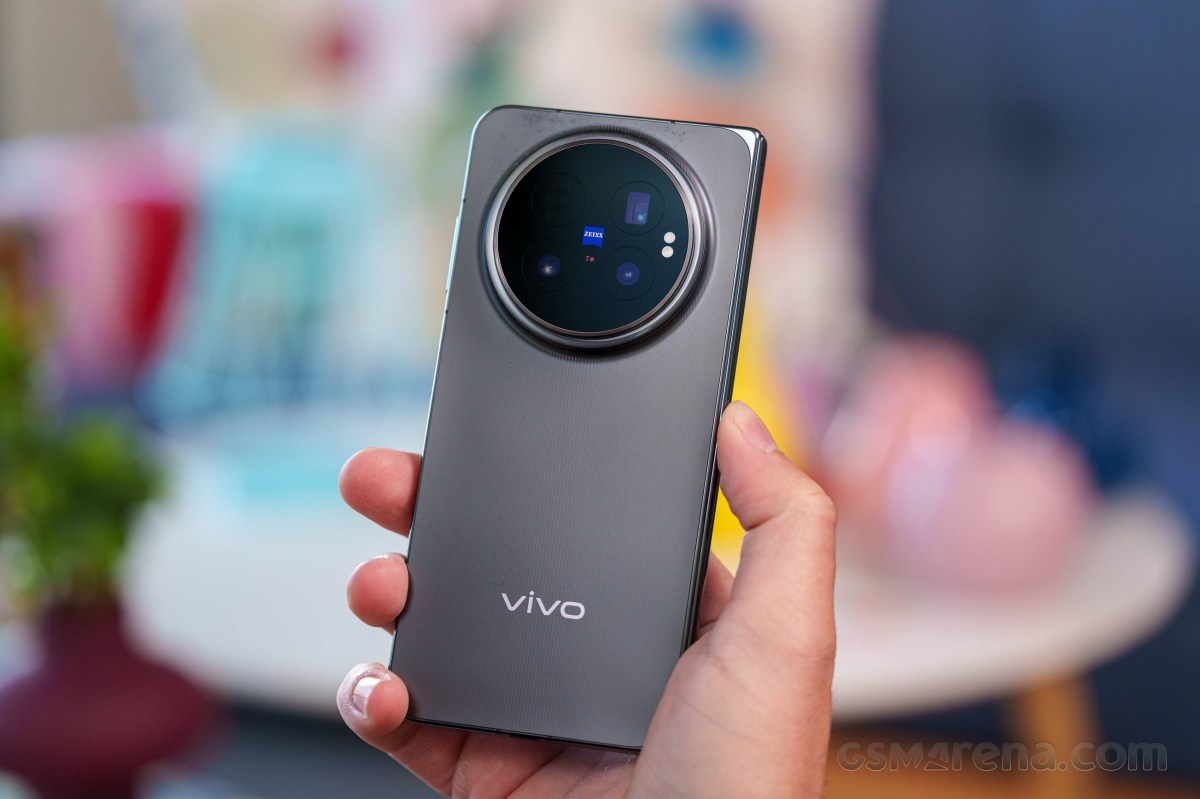
vivo clarifies the split to be 3997 mAh vs 2903 mAh, adding up to the 6900 mAh total capacity. The company used 5th-generation silicon anode technology that promises both higher density and longer battery lifespan. This particular battery setup is actually a 3rd-gen semi-solid-state battery that promises a stable discharge even in extreme cold.
In a bit more practical terms, the X Fold6 with its "Blue Volt" battery should last between 23% and 47% longer than the X Fold5 in vivo's own tests.
After running our standardized tests we were impressed, but not blown away. The X Fold6 certainly does better than its predecessor, but is fails to top the foldable pack in Active Use Score.
It's a similar picture when performing the test with the phone folded - it easily outdoes its predecessor, but comes just short of the best out there despite the capacity advantage.

In terms of battery health features, the X Fold6 has the basics covered. You can set a charging threshold: 80%, 85%, 90%, 95% or the full 100%. You can set that with or without enabling the additional smart charging that optimizes the charging schedule based on your sleeping schedule. You can also disable fast charging if you wish, and there is easy access to bypass charging as well.
Charging speed
The X Fold6 is rated for 80W charging. It uses vivo's FlashCharge technology, which is technically just USB Power Delivery with PPS on top. Technically, there is nothing stopping you from using a regular Type-C to Type-C cable, but you do at least need an eMarked one to push higher wattages. Also, the cable in the box says "9.2A" on it, and the charger could potentially reach it, so you are probably better off with the original charger and cable combo. That's what we used - the in-box cable and 100W vivo FlashCharge brick.
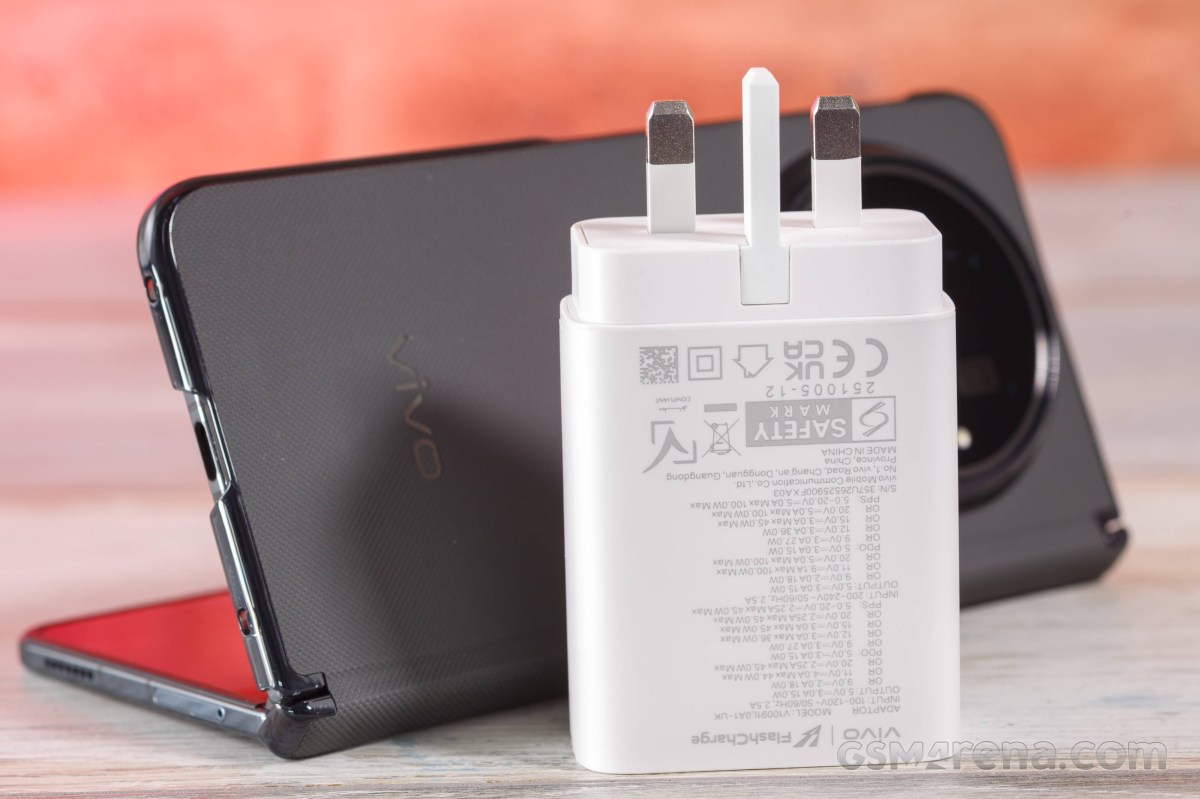
We did measure the particular charging curve of the X Fold6, and it peaked at about 63W and only very briefly at the lowest charge percentages. It then settles to around 40W for the majority of the run, before tappering to 35W and 32W towards the end.
The X Fold6 is among the slower charging foldables these days. Not too far behind though - it gets 32% in fifteen minutes, then 62% in thirty minutes, and a full charge at around the hour mark.
Charging speed
- in 15 min
- in 30 min
- Time to full charge (from 0%)
Oppo Find N6
vivo X Fold5
Motorola Razr Fold
Galaxy Z Fold8
vivo X Fold6
 Galaxy Z Fold7
Galaxy Z Fold6
Pixel 9 Pro Fold
Speakers - loudness and quality
The speaker setup on the X Fold6 consists of two units, both in the cover screen half of the device. One of them directs the sound through a dotted opening on the bottom, while the other has an outlet in the frame at the top, as well as a slit above the cover display to serve as an earpiece.
Each speaker plays its own channel - the top speaker gets the left track in portrait mode, with auto-switching in place to account for the phone's orientation in landscape mode. This is essentially the same speaker setup as the X Fold5 and X Fold3.
Despite its apparent lack of internal space, the X Fold6 managed a Very Good loudness score, which is admirable.
Quality-wise, things aren't too bad, but there is practically no bass, and highs can get somewhat distorted.
Use the Playback controls to listen to the phone sample recordings (best use headphones). We measure the average loudness of the speakers in LUFS. A lower absolute value means a louder sound. A look at the frequency response chart will tell you how far off the ideal "0db" flat line is the reproduction of the bass, treble, and mid frequencies. You can add more phones to compare how they differ. The scores and ratings are not comparable with our older loudspeaker test. Learn more about how we test here.
Connectivity
The vivo X Fold6 is a 5G device. It can do SA/NSA Sub-6 simultaneously on both of its two physical Nano-SIM slots. Alternatively, you can opt to disable one of the SIM slots and use eSIM instead. Location services include GPS, BeiDou, GLONASS, Galileo, QZSS, NavIC and A-GPS.
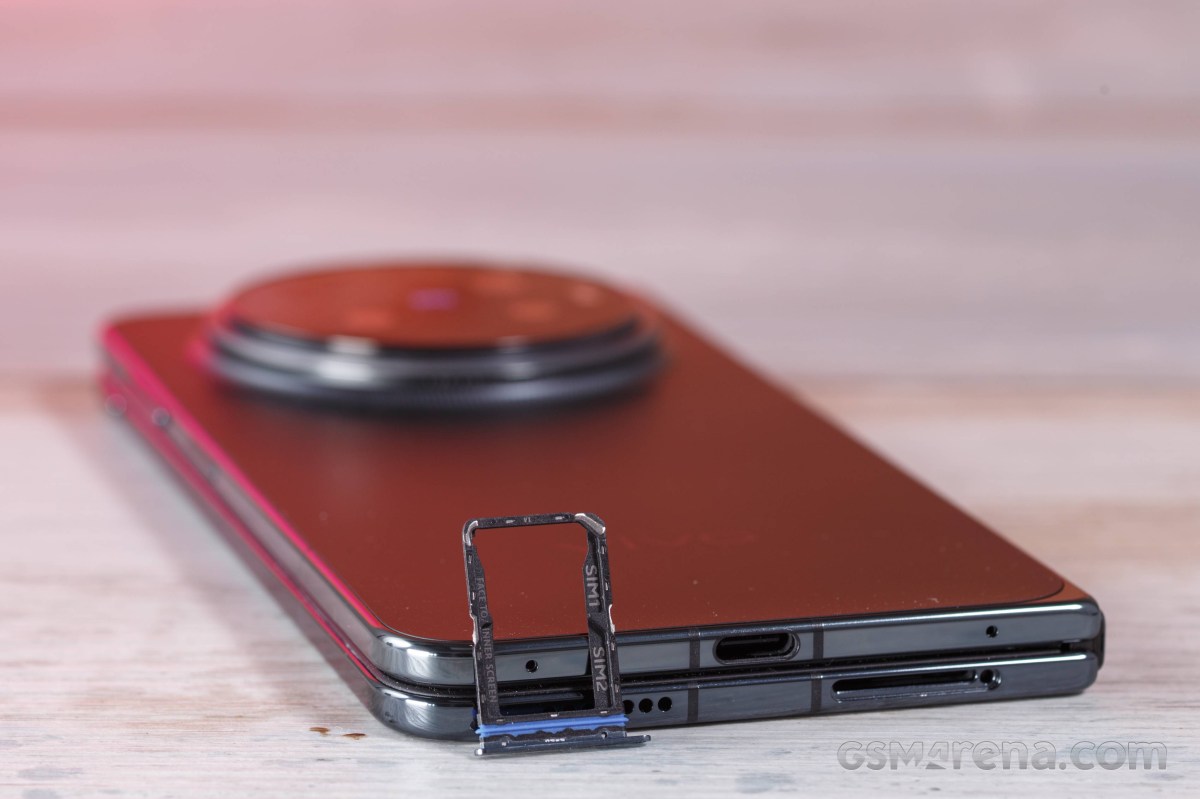
Local connectivity includes Wi-Fi 7 of either the dual-band or tri-band variety, depending on the market. Our review unit, which as far as we can tell is meant for the UK market, does have tri-band Wi-Fi and access to the still uncongested 6 GHz spectrum. Bluetooth is version 6.0 with LE support as well as aptX HD and LHDC 5. There is, of course, NFC on board. It even supports reader/writer mode and card emulation. You also get an IR blaster, which is quite convenient for universal remote purposes. It is hidden in the camera island on the back. No 3.5mm audio jack or FM radio, in case you were wondering.
The Type-C port on the X Fold6 is backed by a USB 3.2 Gen2 data connection. That means a blazing-fast throughput of up to 10 Gbps. The port also naturally has OTG/Host capabilities. But more than that, it can do DisplayPort video output. Plus, vivo actually has nicely polished desktop environment. You can, of course, choose to ignore it and simply mirror your screen wirelessly, but the desktop environment is actually quite pleasant with floating windows and powerful multi-tasking capabilities. Kind of akin to Samsung DeX.
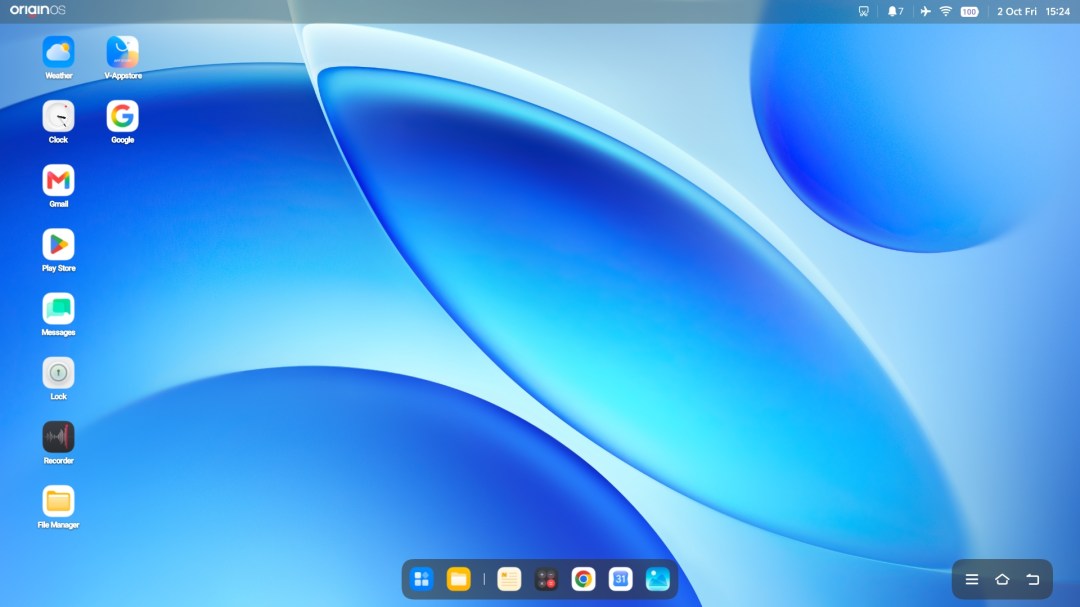
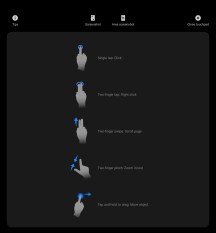
OriginOS desktop UI
The X Fold6 has the lsm6dsvq accelerometer and gyroscope combo, a qst qmc6309 magnetometer and compass combo, a mistery light sensor or rather a pair since there is one on the cover display and one on the main one. This combination is probably abstracted in software, and is why we can't determine the exact hardware. There is a hardware proximity sensor on the cover display - an AMS TCS3743 unit. There is a barometer on board as well: an LPS22DF unit. You also get front and back color temperature sensors, a flicker sensor and a hall sensor.


Tip us
2.1m 180k
RSS
EV
Merch
Log in I forgot my password Sign up