RedMagic 12 Pro review
Underdisplay selfie camera now with AI, 2x50MP sensors on the back
The RedMagic 12 Pro's camera system is looking a lot like the one on the 11S Pro, though there might be some changes underneath the surface. Either way, you'd be getting two 50MP cameras on the back and an underdisplay selfie camera - a staple of the lineup.
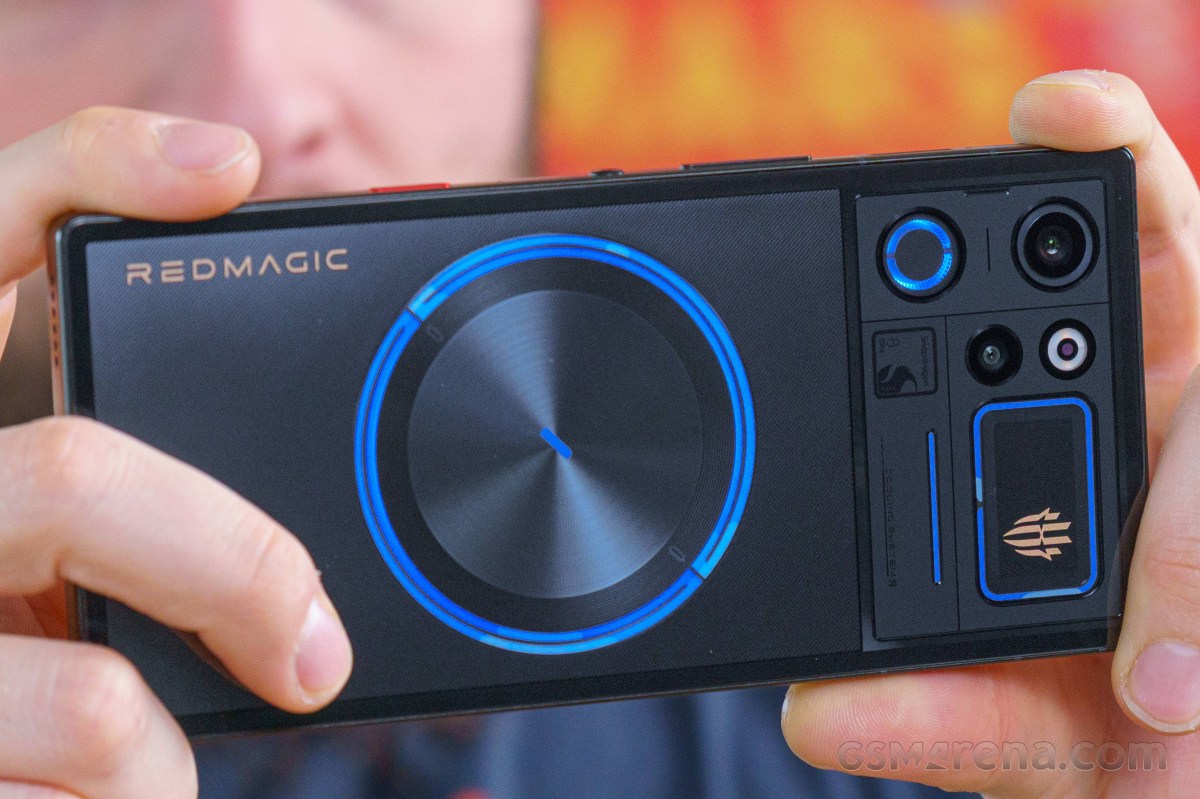
The main camera uses a 1/1.56" sensor, and the ultrawide employs a 1/2.88" unit, both from OmniVision. The OV50D is the one used on the ultrawide camera, as was the case with previous RedMagics, while the OV50J replaces the OV50E found in older models' main cameras.
The OV50J is entirely new to us and the internet doesn't know a whole lot about it either - OmniVision doesn't have a product page out (yet?). Also new is the lens to go with it - we're looking at a reported 5.00mm actual focal length and a 22mm equivalent vs. the 5.43mm/23mm of yesteryear, and the aperture value has also changed (not drastically, but still - from f/1.89 to f/1.88).
The 11S Pro had an additional 2MP macro camera, but the 12 Pro omits that. With the apparent lack of AF on the ultrawide, closeups will need to be handled by the main camera.
The selfie camera has a 16MP sensor that's really meant to capture 4MP shots, its pixels alternating with the display's pixels. It's the same sensor as before, only now they've employed "AI-powered glare, ghosting, and haze reduction algorithms" - we'll see what the images have to say.
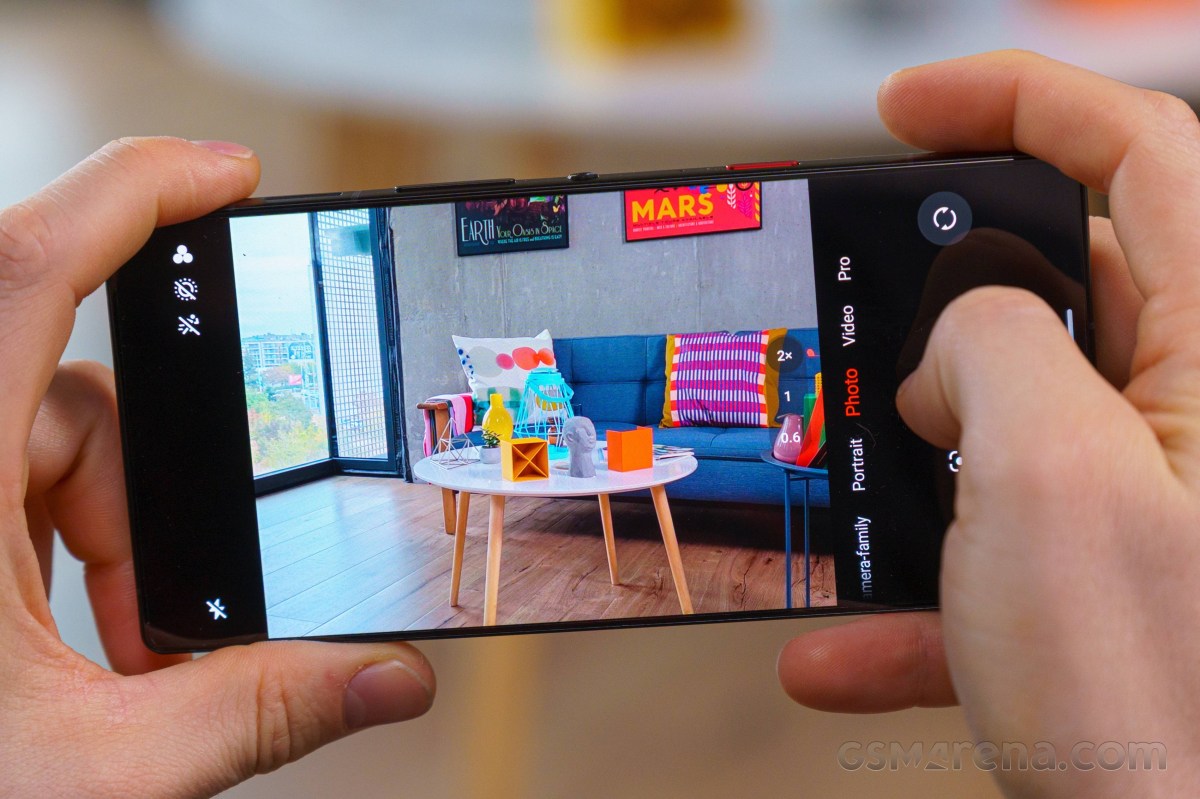
- Wide (main): 50MP OmniVision OV50J (?) (1/1.56", 1.0µm-2.0µm); 22mm, f/1.9, OIS, PDAF; 8K30/4K120 video recording.
- Ultrawide: 50MP OmniVision OV50D (1/2.87", 0.61µm-1.22µm); 14mm, f/2.2, fixed focus; 8K30/4K60.
- Front camera: 16MP OmniVision OV16A (1/3.06", 1.0µm-2.0µm); 26mm, f/2.0, fixed focus; 1080p30.
The ZTE nubia family of phones has plenty of additional hardware controls that in the case of the RedMagic are geared towards gaming, but you can also set the red Magic key to launch the camera instead of the gaming utility. The lower/right shoulder trigger can also act as a shutter release, with a provision for burst shooting if you hold your finger on it (which, as we observed on previous instances, can be a little too trigger-happy).
Daylight photo quality
Main camera
The main camera of the RedMagic 12 Pro does a good job at 1x in daylight, even if we had to simulate daylight for some of its scenes - we're in the middle of a pretty dreary stretch of fall weather. Even so, the phone managed to extract very good dynamic range out of overcast scenes and also found color where everything we thought existed was grayness.
Detail is generally good, but it's not the finest or most natural rendition - foliage can look digital, the brickwork is pretty heavily sharpened. Overall though, for a phone that barely specifies its cameras, it's looking a solid showing.












Daylight samples, main camera (1x)
The full-res photos aren't much good though - they have limited dynamic range, dull colors and soft detail.




Daylight samples, main camera (1x), 50MP
The 2x photos aren't particularly detailed - they're soft and overly sharpened at the same time, but they're still just about acceptable for a non-cameraphone. The global properties are easier to like, matching the colors and dynamic range of the 1x binned files, so at least we're not seeing the desaturation of the 50MP 1x images.








Daylight samples, main camera (2x)
The 2x main camera shots are the closest you'll get to decent close-ups with the RedMagic 12 Pro. Again, nothing too exciting, but alright for a gaming phone. The macro camera is now gone and the phone will try and push a macro mode, where it defaults to a 3x zoom from the main camera, which isn't really a great idea.




Close-up samples, main camera (2x)




Close-up samples, main camera: 2x • 2x • 3x • 3x
Ultrawide camera
The ultrawide does respectably in terms of dynamic range and it too likes to capture vibrant colors, making for a strong first impression. Examined from up close, the photos are a little on the soft side, plus you'll never be able to get nearby subjects in sharp focus with the camera's fixed-focus lens that's geared towards more distant subject matter.












Daylight samples, ultrawide camera (0.6x)
With that in mind, don't go expecting much from the 50MP versions of these images.




Daylight samples, ultrawide camera (0.6x), 50MP
Low-light photo quality
Main camera
In the dark, the RedMagic's main camera produces underexposed, downright dark images. Admittedly, it does protect its highlights well, which is welcome, but it's in pretty dire need of a shadows boost. We're looking at pretty strong sharpening too. On a positive note, the white balance does well and colors maintain the vivid take on reality we saw in the daytime output.






Low-light samples, main camera (1x)
The 2x zoom level results remain much too dark and detail isn't good either.






Low-light samples, main camera (2x)
Ultrawide camera
The ultrawide camera's exposures are somewhat better balanced, though we'd still take some extra light on top of what's being offered. Colors remain likeable and there's no white balance issues. Detail is pretty soft overall though.






Low-light samples, ultrawide camera (0.6x)
Selfies
With an underdisplay camera you're always going to be sacrificing photo quality in the name of that uninterrupted display experience, and the RedMagic's selfies aren't exactly great. For what it's worth, they are substantially better than on previous iterations, showing some semblance of facial detail, though there's a bit of dreaminess still remaining. Low-light selfies do appear to have better controlled flare, which is what RedMagic promo materials promise.






Selfie samples
Photo quality verdict
The RedMagic 12 Pro takes good daytime shots at 1x, and usable 2x zoom stills. The ultrawide photos are relatively good too, though the lack of autofocus is limiting. At night, the main camera's underexposure tendencies are hurting it, and the ultrawide photos are too soft. Selfies aren't as good as those from even a basic punch-hole camera, but they are a significant step up from the old model.
Video quality
Both of the RedMagic 12 Pro's main rear camera can record video up to 8K30 or 4K120, while the ultrawide maxes out at 8K30 and 4K60. The underdisplay selfie camera's top mode is 1080p30. There's no 24fps option, not even in the Pro video mode.
There's HDR10 recording on the main camera up to 4K60 but not on the ultrawide (much less the selfie camera). You also get to choose which codec to use - the more efficient h.265 (HEVC) or the more widely-compatible h.264.
You can hit '> play' below and use the '>| next' button to advance through the playlist of all video samples, or you can watch the full playlist on YouTube.
The RedMagic's 4K videos from the main camera are very good, almost surprisingly so. They exhibit very mature processing in random detail and man-made objects alike, with plenty of definition - it's an unusually nice look that's hard to find in even the best of camera-centric handsets' footage. Dynamic range and colors are great too. The 2x footage isn't quite as praiseworthy, but it's usable. The ultrawide videos are pretty good too, matching the global properties of the main camera, but not quite up tehre in terms of sharpness.



Video screengrabs, daylight: 0.6x • 1x • 2x
Nighttime videos at 1x are quite sharp, though much like the photos, they're way too dark, and dynamic range is lacking. Similarly, the ultrawide clips are well detailed, but noisy and with limited dynamic range (though at least they're exposed more brightly).



Video screengrabs, low light: 0.6x • 1x • 2x
Stabilization is a mixed bag. Walking shake isn't ironed out well, with plenty of shake remaining in the end result. Shooting from a stationary position, on the other hand, will result in remarkably steady clips, though panning tends to be jumpy in those instances.
Video quality verdict
The RedMagic 12 Pro's no-frills video recording feature set does boast 4K120 on the main camera, so it's not entirely without standout functionality. Daytime 4K30 videos from the main camera are actually quite excellent and the ultrawide is doing alright. At night, the main camera struggles with exposure and the ultrawide is on the noisy side, but both produce usable results. Stabilization could use some work when there's actual movement involved, but is great if you just point the phone in one direction.


Tip us
2.1m 180k
RSS
EV
Merch
Log in I forgot my password Sign up