RedMagic 12 Pro review
Redmagic OS 12 on top of Android 17
The RedMagic OS 12 is the first iteration in a while that introduces significant visual changes and also adds a new emulator feature that allows you to play Steam games, but more on that later.
The company promises just 2 major OS updates, which is a bit underwhelming given that most manufacturers offer at least 3 at minimum, even for their lower-end devices. You can expect up to 5 years of security patches in the EU and UK, though, and only 3 in the US and the rest of the world.
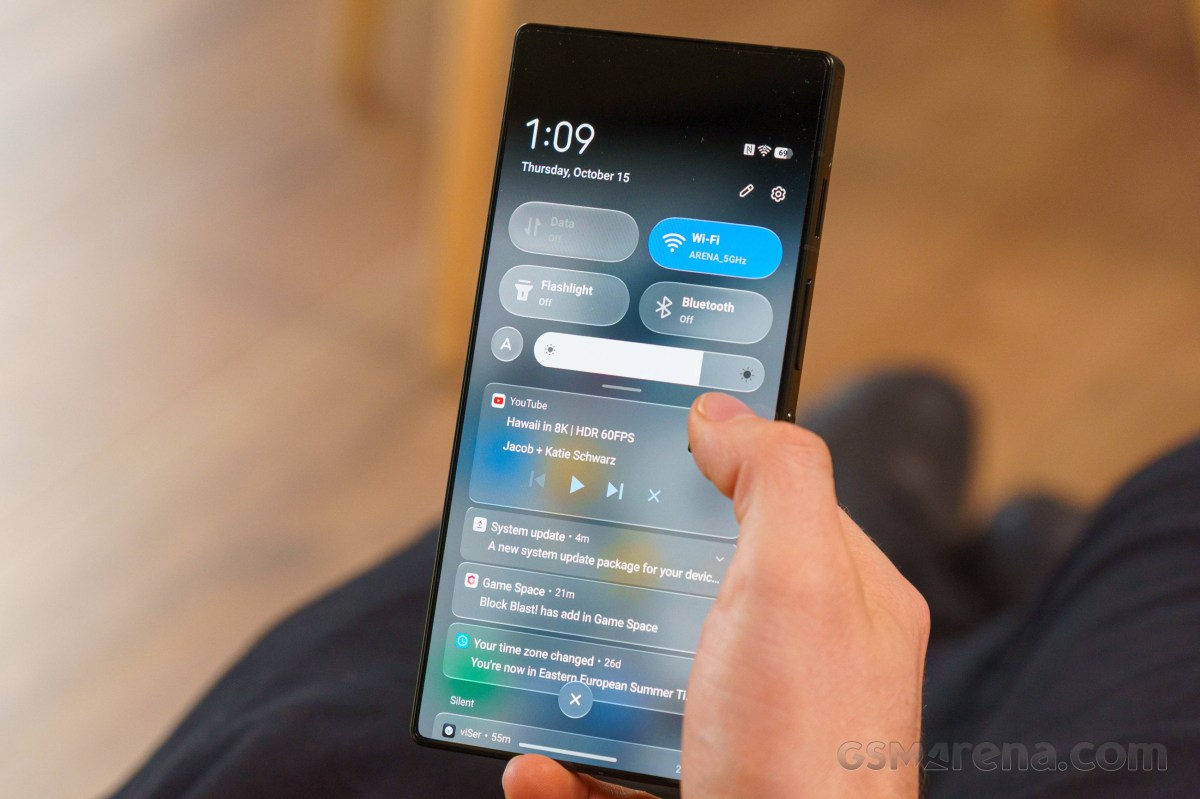
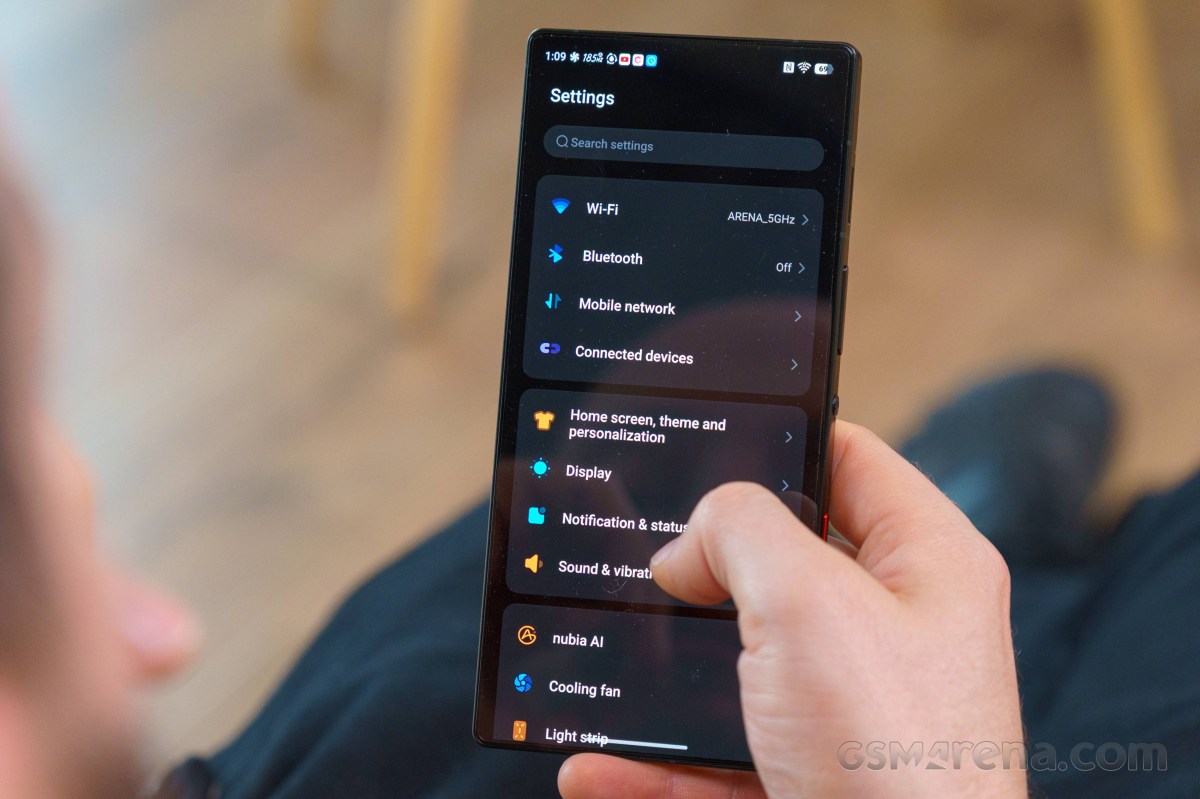
Back to Redmagic OS 12's novelties, the software team tried to make the UI look more modern and in line with the current design trends. It now adopts a Liquid Glass-like look, replacing the flat and simple design from before.

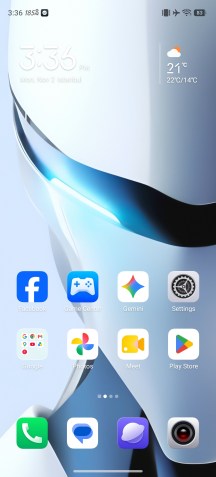
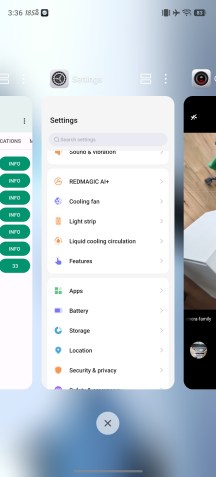
Lock screen • Home screen • Recent apps
The main UI design elements, dialogues, buttons, etc. still look familiar and there are no major changes to navigation. Some nicer animations are at hand, though.
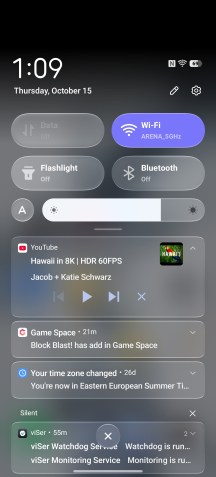
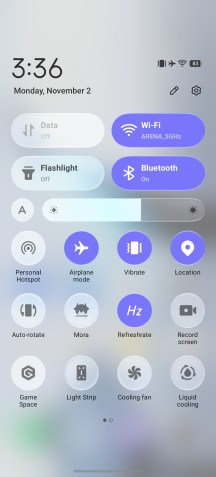
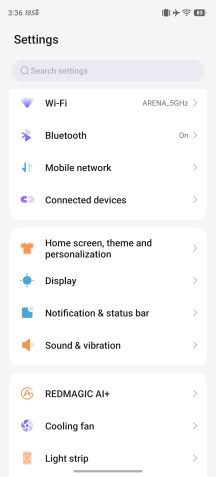
Notification shade • Quick settings • Settings menu
As for the new features, the ability to play Steam games on your phone is perhaps the centerpiece functionality on the RedMagic 12 Pro. You can find the option in Game Space, and it will require you to sign in with your Steam account, and then you are free to download any game from your library. Of course, not all games will run smoothly, as some triple-A titles require quite a bit of horsepower to run properly.

Game Space
Connecting the phone to your PC and using external peripherals like a keyboard, mouse or a joystick isn't something new for RedMagic phones, but combined with the Steam functionality, it turns the RedMagic 12 Pro into a portable gaming machine, even if your laptop or PC isn't suitable for games.


GameHub
To be completely fair, though, this feature isn't exactly unqiue. RedMagic co-developed the functionality in partnership with GameSir, but it will work on pretty much every phone, as long as it's powerful enough, of course. GameSir has released a standalone app on the Play Store called GameHub, which delivers the exact same functionality.
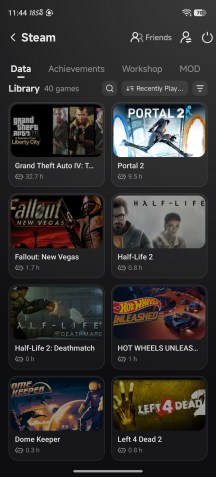
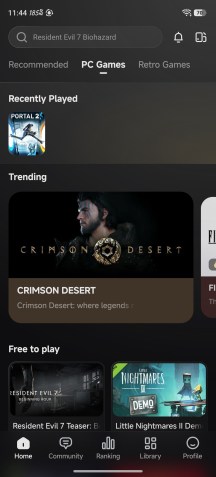
GameHub
We tried Portal 2, and it ran fairly smoothly at around 60fps.
Portal 2
There are a whole bunch of other gaming-related features and customizations ported from the previous versions of Game Space, so you can check out our RedMagic 11S Pro review to explore the most interesting and useful ones.
Benchmark performance
The RedMagic 12 Pro is powered by Qualcomm's latest and greatest, the Snapdragon 8 Elite Extreme Gen 6. This is a chipset based on a 2nm manufacturing process and features an updated octa-core CPU and a powerful Adreno 850 GPU.
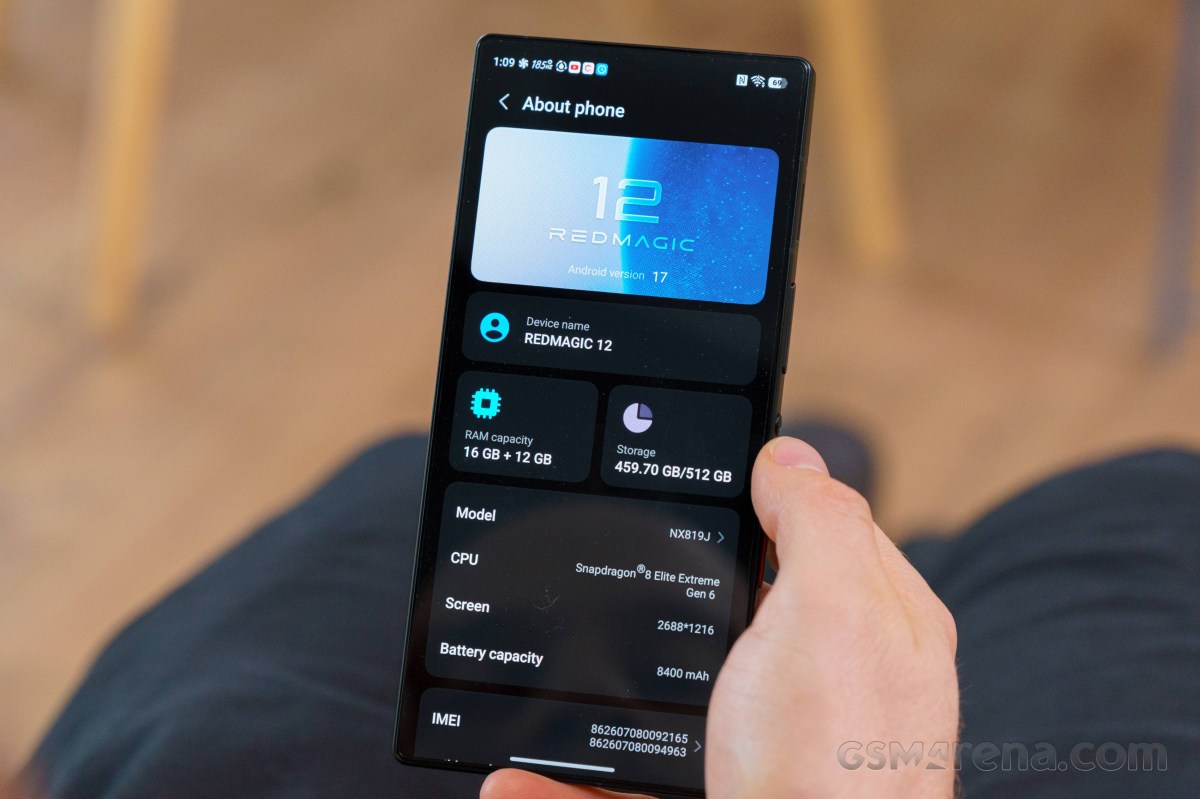
The CPU has a slightly unorthodox architecture, though. Unlike the previous generation, the newer chip has a 2+3+3 CPU core configuration, instead of 2+6. The two Prime cores are clocked at 5.01 GHz, while the middle Performance cores are running at 4.03 GHz, and the last three Performance cores tick at 3.74 GHz.
In addition to the higher clock speeds, the chip boasts improved efficiency, especially in the NPU department where the SD8EE Gen 6 offers a 33% improvement in AI calculations per watt over its predecessor.
Another centerpiece feature is the support for LPDD6 memory, although the device at hand has LPDD5X memory.
The new Snapdragon chipset also brings significant improvements to video recording. It can now support 8K video recording at 60fps and 4K slow motion at 240fps.
As for the memory options, the RedMagic 12 Pro comes in 12GB/256GB, 16GB/512GB and 16GB/1TB configurations. However, the Transparent Silver variant can't be found with 256GB storage, while the Skyfrost will become available at a later date only in 16GB/512GB memory.
GeekBench 6
- Single-core
- Multi-core
 RedMagic 12 Pro
 Galaxy S26 Ultra
 RedMagic 11 Pro
 Xiaomi 17 Ultra
 Oppo Find X10 Pro Max
 vivo X500 Pro Max
 Pixel 11 Pro XL
GeekBench 7
- Single-core
- Multi-core
RedMagic 12 Pro
Galaxy S26 Ultra
vivo X500 Pro Max
Oppo Find X10 Pro Max
Pixel 11 Pro XL
AnTuTu
- v11
- v12
RedMagic 12 Pro
 RedMagic 11S Pro
vivo X500 Pro Max
Galaxy S26 Ultra
Xiaomi 17 Ultra
 Galaxy S26+
Pixel 11 Pro XL
3DMark
- Wild Life Extreme (Highest)
- Wild Life Extreme (Lowest)
- Solar Bay (Ray Tracing)
RedMagic 12 Pro
RedMagic 11S Pro
vivo X500 Pro Max
Oppo Find X10 Pro Max
Galaxy S26+
Xiaomi 17 Ultra
Pixel 11 Pro XL
As we expected, the Snapdragon 8 Elite Extreme Gen 6 is a chart-topper. Since this is the first device running the SD8EE Gen 6 we received in our office, we don't have another unit to compare, but it's evident that it outperforms not just its predecessor, but pretty much every direct competitor as well. The gap widens in the GPU-intensive tests like 3DMark Wild Life Extreme and Solar Bay. The combined AnTuTu 11 and 12 tests also show significant performance gains.
Sustained performance
RedMagic's active cooling system has always been one of the key selling points, but with the last few generations, the company stepped up its game by adding a liquid cooling system in addition to the 25,500 RPM cooling fan. The 12 Pro updates the liquid cooling system to a dual-loop one, meaning it now has upper and lower loops to fully cover the heat source area.
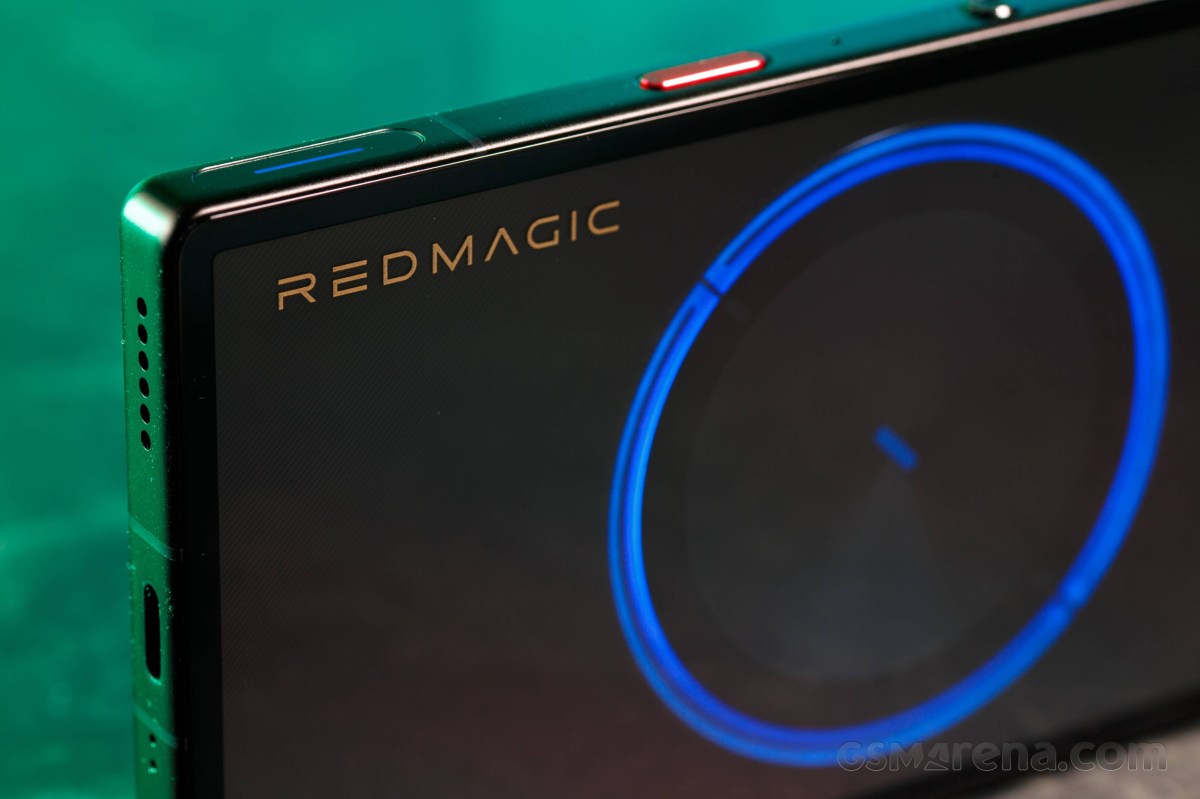
When you activate the liquid cooling, you can see the coolant circulating, thanks to the transparent back.
Some passive cooling solutions are also at hand. A vapor chamber and heat-dissipation sheets made of liquid metal composite help take the heat away from the SoC.
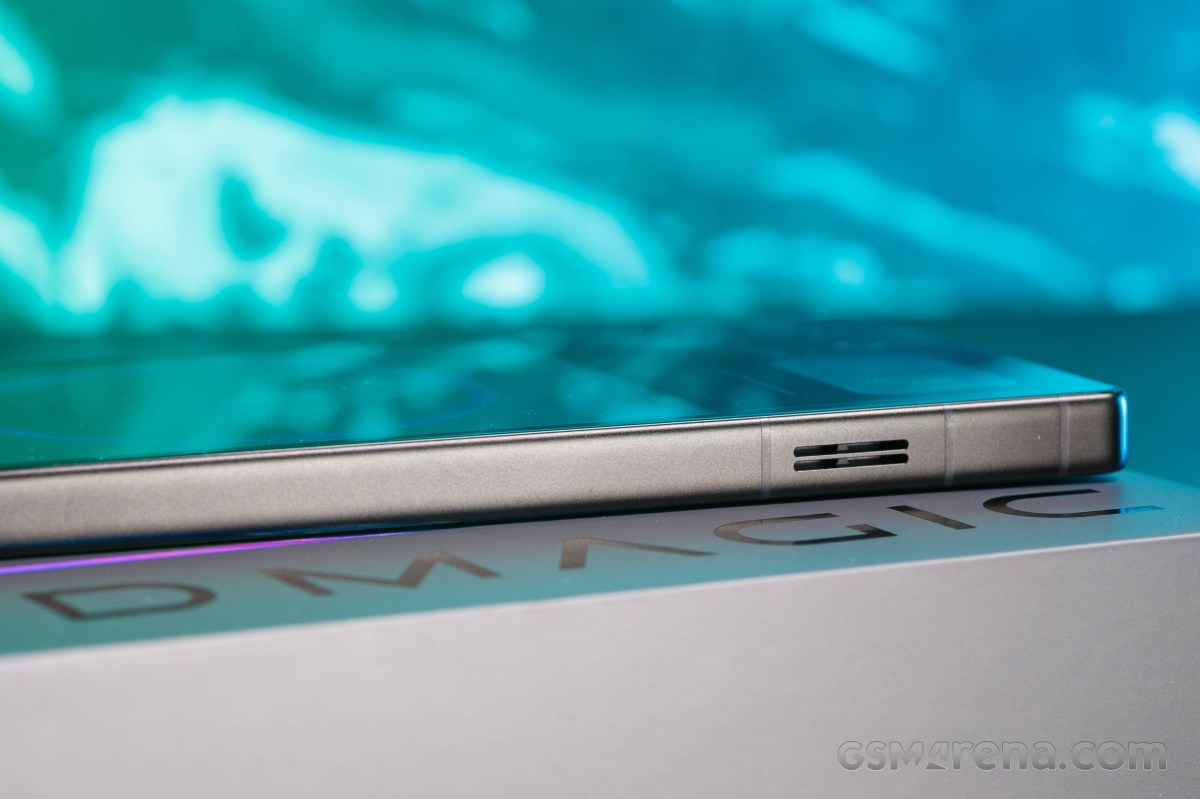
Unfortunately, much like on previous generations, the active cooling system doesn't seem to do much for sustained performance. We ran our CPU and GPU stress tests with and without the cooling fan, as well as with the liquid cooling system, and found no meaningful difference in thermal throttling. If anything, the active cooling may help keep the phone's exterior slightly cooler under load.
In both tests, the CPU and GPU throttled considerably, which isn't surprising for a modern flagship running such a powerful chipset.
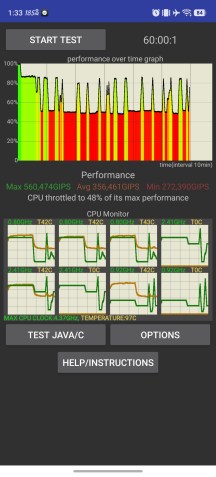
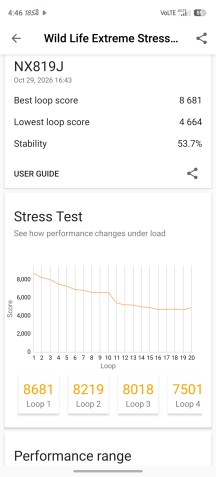
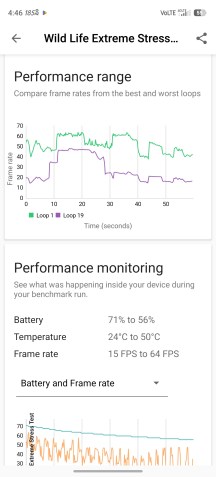
CPU and GPU stress tests (fan & cooling off)
On the positive side, the RedMagic 12 Pro can sustain near-peak performance for longer than most mainstream flagships. In our CPU stress test, it maintained high performance for roughly 8 minutes before significant throttling kicked in.
However, the erratic performance fluctuations throughout the stress test are less encouraging. We would much rather see a lower but more consistent level of sustained performance than the repeated dips and brief recoveries observed here.
As for GPU performance, the RedMagic 12 Pro's lowest score in the 3DMark Wild Life stress test (4,664 points) puts it almost exactly on par with the Xiaomi 17 Ultra (4,650 points), while the Galaxy S26 Ultra trails behind (3,779 points).
Interestingly, its predecessors, the RedMagic 11 Pro (6,153 points) and 11S Pro (6,442 points), managed to sustain considerably higher performance in their worst runs of the same test.
However, the 12 Pro also finished the test at a considerably lower reported temperature of 50°C, compared to 59°C and 58°C on its predecessors, respectively. This suggests that RedMagic may have adopted more conservative thermal management this generation, prioritizing lower temperatures over sustained GPU performance. Alternatively, our review units of the previous models may have simply been tuned more aggressively, as no other phones in our test database have yet managed to match their sustained GPU performance in the 3DMark Wild Life stress test.


Tip us
2.1m 180k
RSS
EV
Merch
Log in I forgot my password Sign up