Realme 16 Pro+ review
Brings back the telephoto, becomes a Portrait Master
The Realme 16 Pro+ is equipped with a triple rear camera system that features three real cameras - a large-sensor high-res main unit, a well-specced telephoto, and an ultrawide (albeit fairly basic). These are joined by a nice selfie camera too, forming a pretty solid package on paper.

The main camera has been upgraded from the 50MP imagers of previous generations to a 200MP resolution sensor, though the sensor size has remained the same at 1/1.56". While that should mean no major improvement in low-light performance, we can probably expect better results at 2x zoom during the day, for example. The lens has a 23mm equivalent focal length and an f/1.8 aperture, and features OIS. We measured a minimum focusing distance of around 10cm (perhaps a millimeter or two less, but 10cm has a nicer ring to it).
The telephoto camera uses a 50MP 1/2.76" Samsung sensor. With no telephoto on the Realme 15 generation (there was no Pro+ model, which is where telephotos come on Realme numbered series), we'd look further back for comparison, and you could think of the 16 Pro+ as a downgrade in this respect - the 14 Pro+ featured a larger 50MP 1/1.95" imager, as did the 13 Pro+, while the 12 Pro+ had a 64MP 1/2.0" camera. Still, while not having the biggest sensor around, we'd say the 16 Pro+'s telephoto is good enough for the class. Plus, it's got a shorter minimum focusing distance (35cm vs. 60cm on the 14 Pro+).
The flipside to having a telephoto camera in the Realme realm is getting a modest ultrawide - Pro+ models have historically had a 8MP ultrawide module and that's also the case with this generation. A somewhat important development is the introduction of autofocus - previous gens had fixed-focus ultrawides.

The 16 Pro+ appears to have inherited the selfie camera from the 15 Pro, and that's no bad thing. While it's missing autofocus, it's got a nice 50MP sensor paired with a wide 22mm lens - high resolution and wide coverage is most welcome.
- Wide (main): 200MP Samsung ISOCELL HP5 (S5KHP5, 1/1.56", 0.5µm-2.0µm); 23mm, f/1.8, OIS, multi-directional PDAF(10cm - ∞); 4K60 video recording.
- Telephoto: 50MP Samsung ISOCELL JN5 (S5KJN5, 1/2.76", 0.64µm-1.28µm); 80mm, f/2.8, OIS, multi-directional PDAF(35cm - ∞); 4K60.
- Ultrawide: 8MP OmniVision OV08D (1/4.0", 1.12µm); 15mm, f/2.2, AF; 1080p30.
- Front camera: 50MP OmniVision OV50D (1/2.88", 0.61µm-1.22µm); 22mm, f/2.4, fixed focus; 4K60.
Realme has put a lot of effort into the 16 Pro+'s camera software (and/or its marketing) to tailor it to a young crowd, branding it a Portrait Master. There are numerous film simulation color profiles, simulated lighting modes, different specular highlights effects (bokeh balls), beautification options, as well as portrait mode presets that combine a focal length with a specific color/tone profile.
Also, nothing says 'how do you do, fellow kids?' quite like the rebranded Master mode (where you'd normally find the 'Pro' exposure controls on ColorOS and its derivatives), which goes by 'Vibe' on the Realme 16 Pro+. There's yet more color profiles in here as well.
Daylight photo quality
Main camera
The Realme 16 Pro+ captures excellent daytime photos with its main camera at 1x. They're nicely detailed and that detail has a natural look, while noise is nowhere to be seen. Dynamic range is great and exposures are on point - whether it's bright sunlight, the all too prevalent overcast skies we've been having, or indoor settings. White balance is also dependable, and saturation levels are well judged so the output is easily likeable without being cartoonish. Pretty great stuff, altogether.



















Daylight samples, main camera (1x)
We're also rather liking the full-res 50MP images too. Admittedly, highlight dynamic range in contrasty scenes suffers somewhat, but detail is looking great. That's with the exception of certain textures that get inexplicably soft like the white stones and the icy pavement in the fifth sample, but it's a behavior we also observed on the Oppo Find X9 Pro, for example, so it's apparently a peculiarity of the ColorOS camera processing algorithms.








Daylight samples, main camera (1x), 50MP
The 200MP shots, on the other hand, are little more than a waste of bytes - they're certainly not worth the file size.








Daylight samples, main camera (1x), 200MP
2x zoom shots are excellent too. Pixel-level detail is great - there are no signs that these are 'digitally' zoomed shots and we're looking at fine natural textures. In good light, at least - indoor results are a little less exciting, but still very good in general.
With the telephoto's relatively unremarkable close focusing and the main camera's short minimum focusing distance and 2x zoom quality, this is your best option for close-up photography. The phone may insist on using the ultrawide for its 'macro' mode, but just because it could focus close (and it doesn't do so too reliably), doesn't mean its resolution or perspective is remotely suited for the task. Use 2x on the main camera instead.












Daylight samples, main camera (2x)
Telephoto camera
The telephoto is otherwise doing a splendid job - with more distant subjects it captures sharp and detailed shots and it too presents detail in a likeable way. Dynamic range is excellent, white balance is generally on point (the faintest of green tinges in our indoor scenes), saturation is also well judged. Again, it's not ideal for closeups - the minimum focusing distance is pretty long at 35cm, and the results aren't particularly sharp there either.




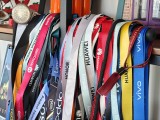











Daylight samples, telephoto camera (3.5x)
The telephoto's 50MP mode isn't too exciting - there's a lot of that paintbrush stroke effect going on.








Daylight samples, telephoto camera (3.5x), 50MP
The 10x zoom level is pushing the limits a little bit, but it can be good for quick snaps of distant subjects. Pixel-level results can be a little better than the 3.5x 50MP images too.



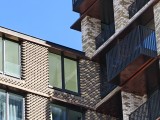




Daylight samples, telephoto camera (10x)
Ultrawide camera
The ultrawide's basic hardware produces basic results. Detail is relatively soft - we've seen better sharpness from other unassuming 8MP cameras. The autofocus is a welcome sight, but it can be a little jumpy and truth be told, even when it does focus on your subjects, the shots are simply not particularly crisp. Dynamic range and colors are good though, no complaints there.








Daylight samples, ultrawide camera (0.6x)
Portraits
The 'Portrait Master' (that the Realme 16 Pro+ is lauded to be) comes with a ton of zoom levels in its Portrait mode - the 1x, 2x, and 3.5x magnifications you also get in Photo mode are now joined by 1.5x (35mm) and, for some reason, 4x (92mm) - as if the native 3.5x (80mm) is that far off.
In addition to the zoom level selectors that are in plain sight, there's also another button that acts as a shortcut to combo pre-sets - zoom level and color tuning, all in one. There's the 1x Environmental, 1.5x Street, 2x Classic, 3.5x Headshot, and 4x Close-up. Of course, you can use the regular zoom buttons and pick color filters from a multitude of color filters from the other menu, it's just that here, the choices are made for you.
In general, Photo mode does very well rendering skin tones and facial detail, with the telephoto maybe being a notch less sharp than we'd like, but nowhere near being an issue. The 'regular' Portrait mode results aren't too bad either, while the named portrait modes are a bit over-the-top in their color and tonal tuning.









Human subjects, main camera (1x): Photo mode • Portrait mode (regular) • Portrait mode 'Environmental'






Human subjects, main camera (1.5x, 35mm): Portrait mode (regular) • Portrait mode 'Street'









Human subjects, main camera (2x): Photo mode • Portrait mode (regular) • Portrait mode 'Classic'









Human subjects, telephoto camera (3.5x): Photo mode • Portrait mode (regular) • Portrait mode 'Headshot'






Human subjects, telephoto camera (4x): Portrait mode (regular) • Portrait mode 'Close-up'
Selfies
The Realme's selfie camera may lack autofocus, but for photos at reasonable shooting distances it performs admirably. Sharpness is excellent, dynamic range is very good, and skin tones are accurate (though colors are a bit bland as a whole).








Selfie samples
Low-light photo quality
Main camera
At night, the Realme's main camera is putting up a strong showing. Dynamic range is nice and wide, the white balance's faint tendency towards a bit of warmth isn't hurting anyone (and it's not struggling with amber street lights), so colors are pretty pleasing too. Detail is also very good, if not quite flagship-grade-sharp.







Low-light samples, main camera (1x)
2x zoom shots are harder to like - detail turns sketchy and highlights get harsher.







Low-light samples, main camera (2x)
Telephoto camera
The telephoto captures good photos at night without being truly exciting. Dynamic range is very good, and colors are generally looking nice (with some of that warmth we mentioned on the main camera). It's just that sharpness isn't quite up to scratch - not bad, but not particularly good either.








Low-light samples, telephoto camera (3.5x)
At 10x zoom, you get more of a suggestion of detail, though the phone's algorithms may be able to play nicely with straight lines and repeatable patterns.





Low-light samples, telephoto camera (10x)
Ultrawide camera
The ultrawide camera's output is best described as usable, though even that may be a stretch in particularly dim conditions - things are typically quite soft, especially so in darker scenes. That said, dynamic range and color rendition are still pretty solid.






Low-light samples, ultrawide camera (0.6x)
Photo quality verdict
The Realme 16 Pro+ boasts a capable main camera which does great in daytime at 1x and 2x (where it's also very good for closeups), and maintains its composure at night at 1x. The telephoto is very good during the day and alright at night at its nominal 3.5x zoom, while the 10x setting offers a quick shortcut when reach is more important than quality. People shots are very good without you needing to go into Portrait mode, which itself offers many (probably unnecessary) options. Selfies are excellent, if a little lacking in saturation.
Video quality
The Realme 16 Pro+ records video up to 4K60 with all of its cameras other than the ultrawide, which is capped at 1080p30. 24fps recording is available in the Pro Video mode (this one isn't 'Vibe').
As usual, you can choose between the h.264 and h.265 codecs with the more efficient h.265 being the default. You can also record in HDR in all of the quality settings.
Stabilization is optional and is off by default. It's available for all quality settings, but it doesn't make a world of difference turning it on though.
You can check out the playlist below, which includes multiple video samples.
4K clips from the main camera in daylight are very good, offering wide dynamic range and vibrant color output, though a bit higher sharpness would have been appreciated. For what it's worth, 2x quality is essentially the same on a pixel level, which is not something you can say very often when dealing with 'digital' (in-sensor?) zoom.
The telephoto's 4K footage is also very good, maintaining the excellent dynamic range and color rendition, but also being a notch below greatness in terms of sharpness and detail. The ultrawide's 1080p clips, on the other hand, are very soft, plus the fact that this camera is prone to focus hunting.




Realme 16 Pro+, video screengrabs, daylight: 0.6x • 1x • 2x • 3.5x
In the dark, the main camera offers great dynamic range and color rendition, together with good detail at 1x and usable results at 2x. The telephoto camera is also decent in terms of detail and pretty great on a global scale. In contrast, the ultrawide's lowlight footage is as good as nonexistent.




Realme 16 Pro+, video screengrabs, low light: 0.6x • 1x • 2x • 3.5x
We weren't thrilled with the stabilization of the Realme. Both the main camera and the telephoto return relatively nervous footage and the stabilization toggle doesn't seem to help. The ultrawide is more stable, but then its autofocus isn't, so it too isn't ideal.
Video quality verdict
The Realme 16 Pro+ is a fairly good video camera. All three rear modules capture excellent dynamic range and have great color rendition in video. In daylight, the main camera isn't as sharp as we'd like at 1x, but does pretty well at 2x in that context, while the telephoto is quite good at its native 3.5x. In the dark, the main camera and the telephoto are alright, which should be considered as sort of a complement in this class. The ultrawide is meh in all conditions. Video stabilisation certainly leaves more to be desired (or you could try and use a tripod/beanbag).


Tip us
2.1m 180k
RSS
EV
Merch
Log in I forgot my password Sign up