Realme 16 Pro+ review
Realme UI 7.0 and Android 16
The Realme 16 Pro+ runs on Realme UI 7.0 out of the box, based on the latest Android 16. Like before, expect 3 major OS upgrades and 4 years of security patches.
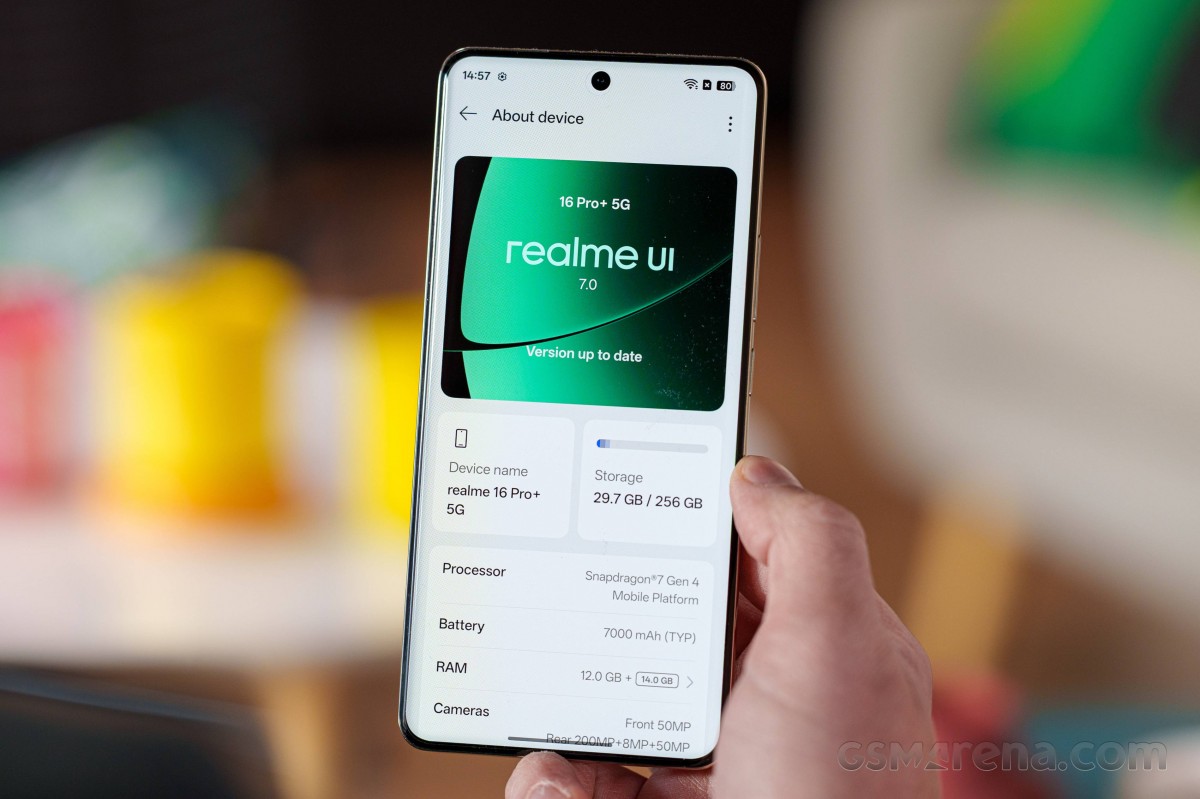
If you've used Oppo's ColorOS or OnePlus' OxygenOS, you will feel right at home. These three Android overlays are basically identical. Still, we've already reviewed the Realme GT 8 Pro, running on the same Realme UI 7.0 software, so we suggest you read the software section.

Stylistically, there are little to no changes to the new ColorOS 16, aside from some minor tweaks to some UI elements and animations. Two notable additions to the new ColorOS are category grouping in the app drawer and the option to rename apps, so you can find them more easily.

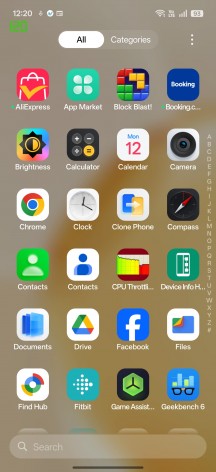
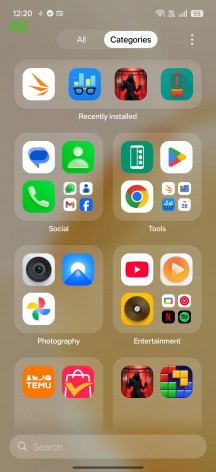
Home screen • App drawer
And while there are a handful of AI-powered features, there are some that you won't find on the Realme 16 Pro+. For instance, the Realme GT 8 Pro has AI Notify Brief and AI Search in the Next AI sub-menu, whereas the 16 Pro+ doesn't. The somewhat popular Mind Space feature that you would typically find on OnePlus devices and other higher-end Oppo and Realme phones is nowhere to be found either.
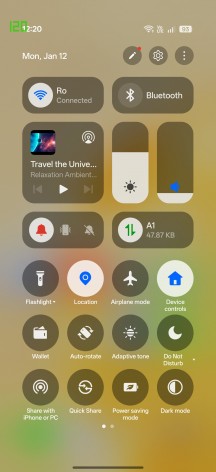
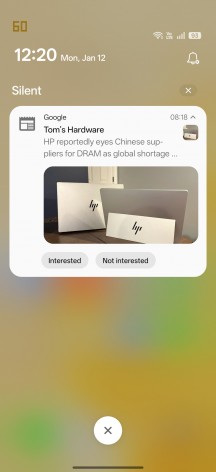
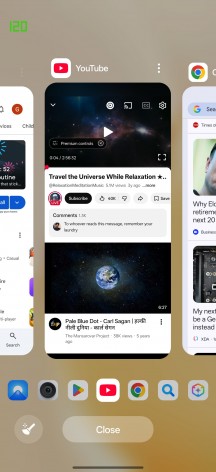
Quick toggles • Notification shade • Recent apps
The AI Studio app, which lets you leverage generative AI and generate images and animations, is also absent.
Still, AI Eraser, AI Unblur and other AI-powered photo editing tools are available in the default gallery app. The usual Google-supplied AI bits are also in place, like the Gemini Live and Circle to Search.
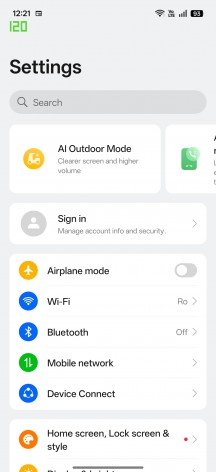
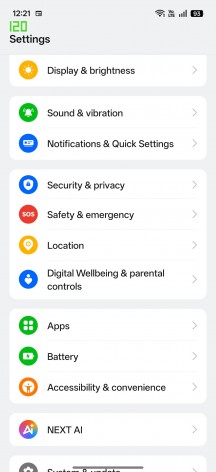

Settings menu • AI features
Last but not least, Realme UI 7.0 introduces the so-called Flux Engine, which is a system-level optimization engine. It's marketed to make the user experience feel smoother and snappier. It uses a Flux Animation Framework and Flux Scheduling Algorithm for faster response and more fluid visuals.
Benchmark performance
The Realme 16 Pro+ runs on the same Qualcomm Snapdragon 7 Gen 4 (4nm) chipset, featuring an updated Kryo CPU with a 1+4+3 configuration. There's a Cortex-A20 prime core clocked @ 2.8GHz, alongside 4x performance Cortex-720 cores @ 2.4GHz and 3x efficiency Cortex-520 cores @ 1.8GHz. Qualcomm claims 27% faster CPU performance over the SD 7 Gen 3.

The Adreno 722 GPU gets a 30% boost compared to the previous-gen chip. Qualcomm is also bringing select Snapdragon Elite Gaming features, including its Adaptive Performance Engine 4.0. The GPU also supports the HDR10, HDR10+, HDR Vivid and HLG codecs.
The updated Hexagon NPU inside the Snapdragon 7 Gen 4 offers a 65% boost in AI tasks with the ability to run Stable Diffusion 1.5 locally.
The available memory variants are 8GB/128GB, 8GB/256GB and 12GB/256GB, with all memory options offering UFS 3.1 chips. Our review unit is 12GB/256GB.
GeekBench 6
- Single-core
- Multi-core
 Poco F7
 OnePlus Nord 5
 Motorola Edge 70
 Realme 16 Pro+
 Realme 15 Pro
 Nothing phone (3a) Pro
AnTuTu
- v10
- v11
Poco F7
OnePlus Nord 5
Realme 16 Pro+
Motorola Edge 70
Realme 15 Pro
Nothing phone (3a) Pro
3DMark - Wild Life Extreme (Highest)
Poco F7
OnePlus Nord 5
Realme 16 Pro+
Motorola Edge 70
Realme 15 Pro
Nothing phone (3a) Pro
The Realme 16 Pro+ seems to utilize the Snapdragon 7 Gen 4 to the fullest and even outpaces the Realme 15 Pro from last year, running on the same chip. The Poco F7 stands out from the crowd with significantly better performance thanks to the significantly more powerful Snapdragon 8s Gen 4. Similarly, the OnePlus Nord 5 is also notably faster with the slightly older Snapdragon 8s Gen 3 Soc.
Sustained performance
The Snapdragon 7 Gen 4 isn't very demanding to begin with, so the system maintained near maximal performance of the CPU during the stress test. Moreover, we see a significant improvement in sustained performance over the previous generation.
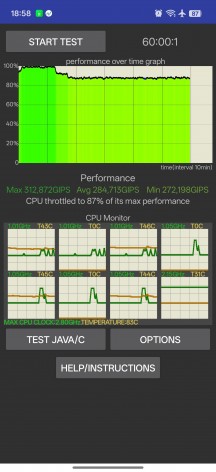
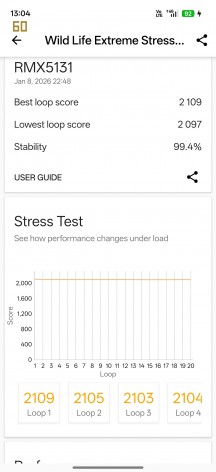
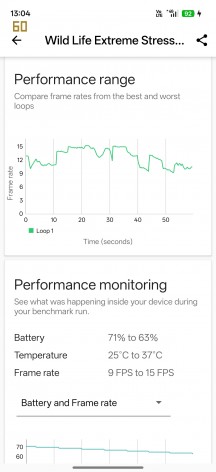
CPU and GPU stress tests
The GPU stress test also looks solid with virtually no performance loss throughout the test.


Tip us
2.1m 180k
RSS
EV
Merch
Log in I forgot my password Sign up