Realme 16 Pro+ review
A familiar 144Hz display
The Realme 16 Pro+ borrows the same display from its predecessor. That's a 6.8-inch OLED display of 1,220 x 2,800 pixels (453ppi). It has 10-bit color depth, supports up to 144Hz refresh rate, 4608Hz PWM dimming, and HDR10+ video support.
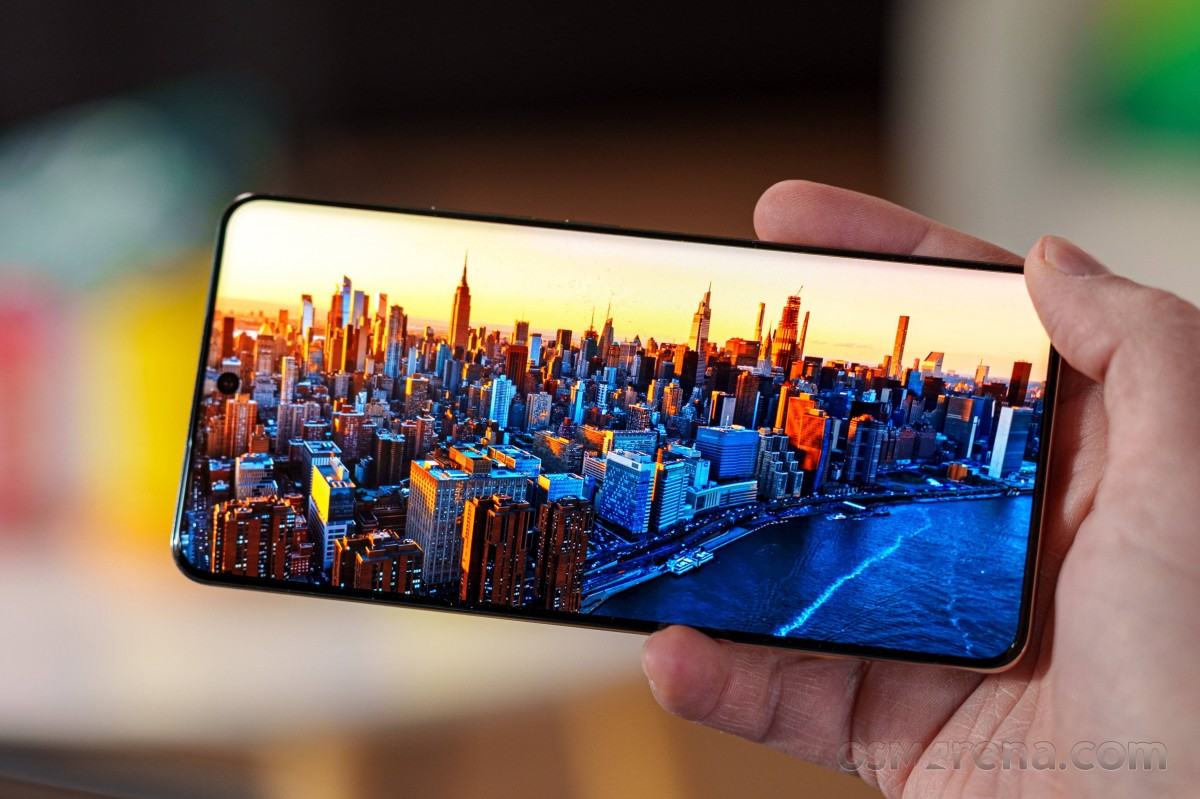
When it comes to brightness, Realme promises 1,800 nits in high-brightness mode and up to 6,500 nits of peak brightness on a small test patch.
We measured a notch below 1,800 nits on a 75% white fill, while on a 10% fill, the display boosted up to 1,973 nits. In manual mode with the Extra brightness setting turned on, the display reached almost 1,000 nits.
Max display brightness test
White test pattern (nits)
- Manual (75% fill)
- Auto (75% fill)
- Peak Auto (10% fill)
 Realme 15 Pro
 Realme 16 Pro+
 Poco F7
 Motorola Edge 70
 OnePlus Nord 5
 Nothing phone (3a) Pro
We'd say that's enough for a proper HDR experience, and it's definitely bright enough for comfortable outdoor use even on a bright sunny day.
As for minimum brightness, the panel can go as low as 1.7 nits in case you find yourself in a dark environments.
Refresh rate
The handset offers three refresh rate modes - Auto, Standard and High. The High option behaves like the Auto, but forces some third-party apps to run at 120Hz instead of 90Hz. For instance, most Google apps, including Chrome, are capped at 90Hz when using the Auto setting, so for the smoothest possible experience, keep it on High.
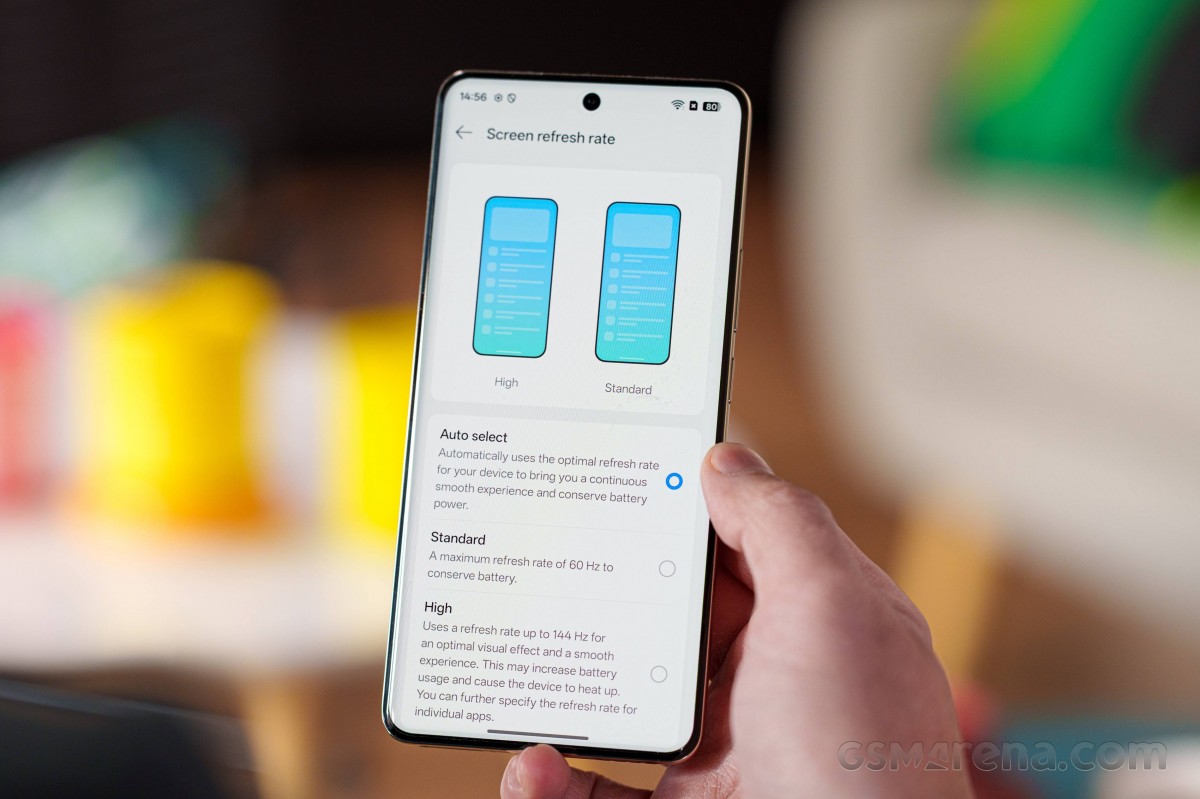
Sadly, we couldn't find a scenario where the display can boost up to 144Hz, except for a couple of games, such as Real Racing 3 or Sky Force: Reloaded, that have their refresh rate cap removed. Still, 144Hz is more of a gimmick than anything else.
Battery life
The Realme 16 Pro+ offers the same battery capacity as last year's Realme 15 Pro - 7,000 mAh and employs the same Snapdragon 7 Gen 4 SoC. The two handsets also share seemingly identical displays, so we wouldn't expect any significant changes to battery life.
However, the newer model achieved a significantly higher Active Use Score of 18:18h, mainly due to increased web browsing and video playback runtimes. We can only assume that the most recent Realme UI 7.0 is the reason for the longer runtimes.
Compared to the competition, the Realme 16 Pro+ easily overtakes most of its rivals.
Charging speed
The 16 Pro+ supports the proprietary SuperVOOC fast charging protocol at 80W, using the supplied charger in the box, although we suspect the European retail package (if there ever is one) will leave that one out.
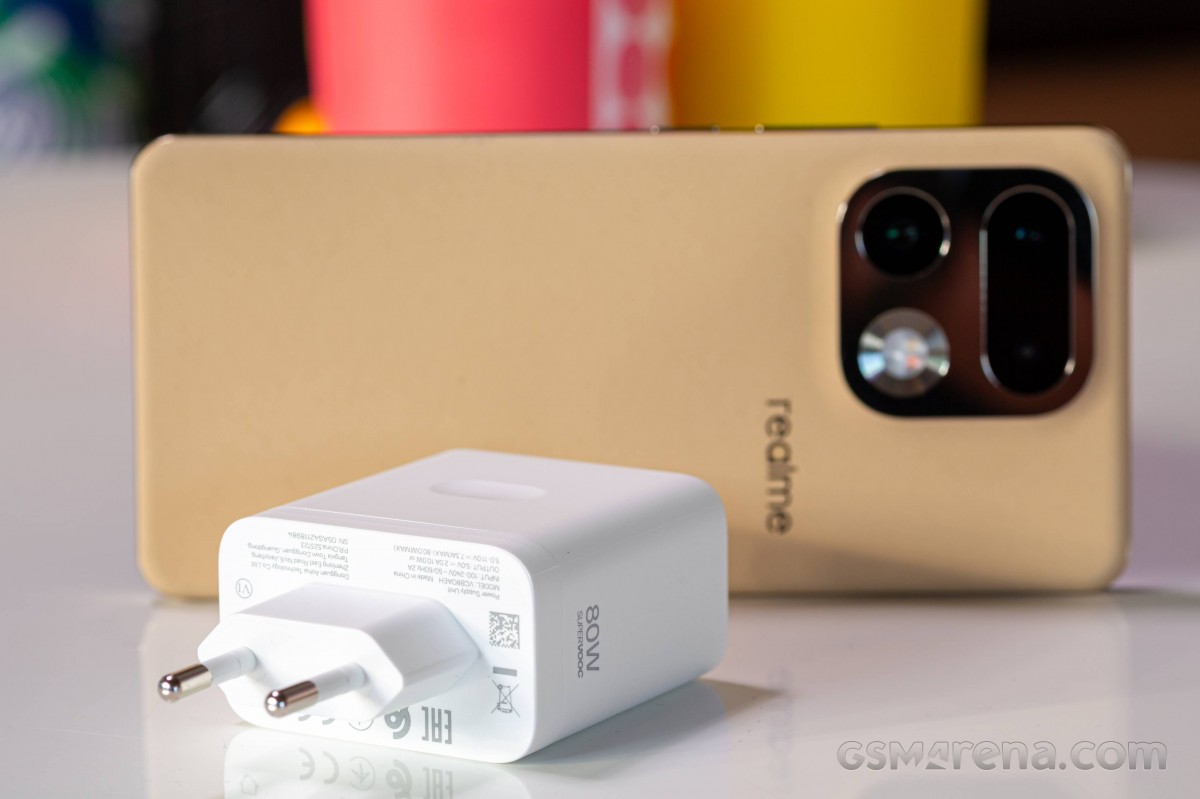
Interestingly, we recorded a charging speed comparable to that of the Realme 15 Pro, but not identical, despite the identical hardware. Both devices reach above 60% in the first 30 minutes, but for some reason, the newer Realme charges about 10 minutes slower to 100% than its predecessor. It took the phone 64 minutes to charge fully.
Charging speed
- in 15 min
- in 30 min
- Time to full charge (from 0%)
Poco F7
Motorola Edge 70
OnePlus Nord 5
Realme 16 Pro+
Realme 15 Pro
Nothing phone (3a) Pro
For those who worry fast charging may affect negatively their battery longevity, Realme offers a couple of features. You can either turn off fast charging altogether or limit charging to 80%, 85% or 90% as the majority of the damage to the battery happens when it's sitting for hours or days fully charged but still connected to the charger. Bypass charging is also supported.
Speakers
The Realme 16 Pro+ offers a hybrid stereo speaker setup, which means the top speaker also acts as an earpiece, while the bottom one is a full-fledged loudspeaker. The speakers are balanced okay, but the bottom one still sounds a tad louder. We also suspect that the newer Realme uses the same speakers as its predecessor, the Realme 15 Pro.
The device earned a "Good" -26.3 LUFS loudness score, but it's not very "good" quality-wise. Music tracks sound a bit too flat, while vocals are somewhat distant. Overall, most competitors provide better sound quality.
Use the Playback controls to listen to the phone sample recordings (best use headphones). We measure the average loudness of the speakers in LUFS. A lower absolute value means a louder sound. A look at the frequency response chart will tell you how far off the ideal "0db" flat line is the reproduction of the bass, treble, and mid frequencies. You can add more phones to compare how they differ. The scores and ratings are not comparable with our older loudspeaker test. Learn more about how we test here.


Tip us
2.1m 180k
RSS
EV
Merch
Log in I forgot my password Sign up