Poco X8 Pro Max review
HyperOS 3 on top of Android 16
The Poco X8 Pro Max runs on Xiaomi's latest HyperOS 3 platform (3.0.1.0 to be exact, as of writing this review), built on top of the latest Android 16.
The phone comes with the promise of 4 major OS updates and 6 years of security patches.

If you've used the last couple of iterations of HyperOS, you'll feel right at home here. Visually, Xiaomi hasn't changed much, and the interface remains largely identical, with only minor and barely noticeable tweaks.

That said, Xiaomi claims the development team has focused on refining system animations in order to make the overall experience feel snappier and smoother. In practice, though, HyperOS has already been quite fluid in previous versions, so we never really had any complaints in that regard.
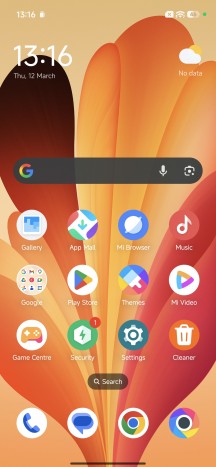
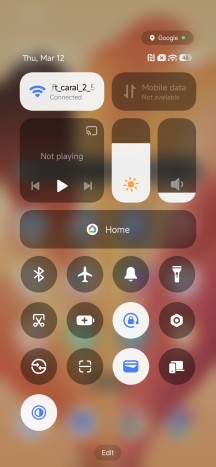
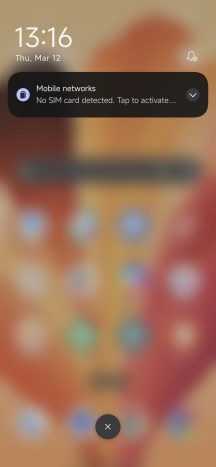
Home screen • Quick toggles • Notification shade
The most notable UI addition is the so-called Super Island, Xiaomi's take on Apple's Dynamic Island found in iOS. It offers contextual information and quick shortcuts to supported apps that are currently running in the background.
For example, the Super Island can show ongoing calendar events, an active timer, incoming calls, or the track that's currently playing on Spotify, all in a compact interface around the front camera cutout.
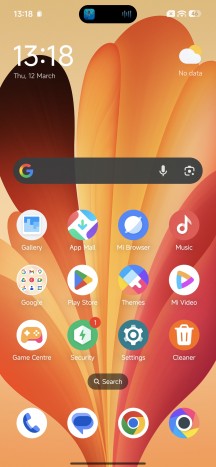
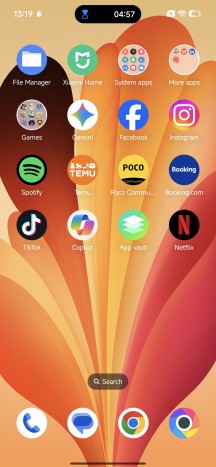
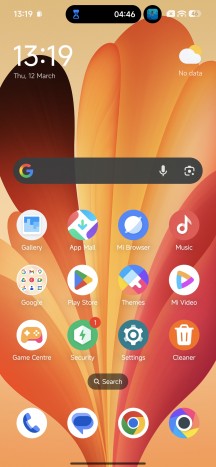
Hyper Island
System icons have also received a subtle redesign and now appear flatter and simpler by default, giving the interface a slightly cleaner look overall.
The main focus of HyperOS 3.0, however, seems to be connectivity and AI. Most of the AI improvements revolve around Xiaomi's in-house XiaoAI assistant, which replaces Gemini on devices sold in China. Aside from that, the rest of the AI toolkit remains largely unchanged and includes features such as AI wallpaper generation, live subtitles, transcription, translation, writing assistance, AI search, and more.
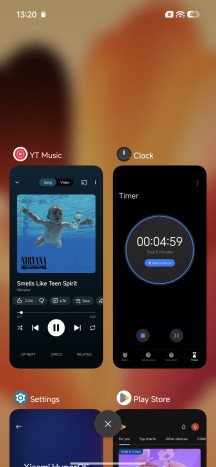
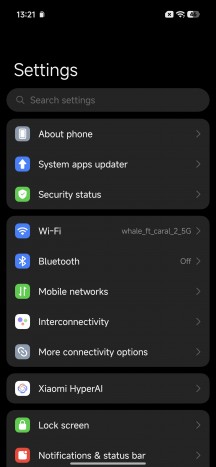
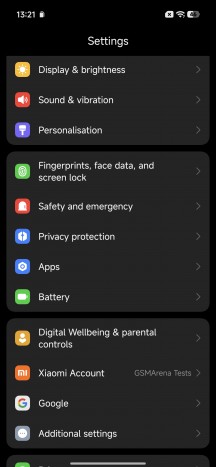
Recent apps • Settings menu • Settings menu
Most of the AI-related functionalities are tucked away under the Xiaomi Hyper AI sub-menu. You will also find settings on how to summon Gemini AI - Google's AI assistant.
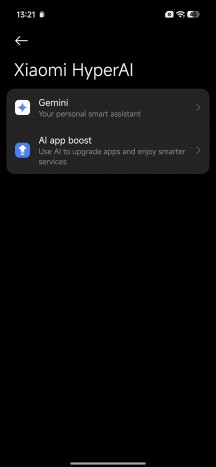
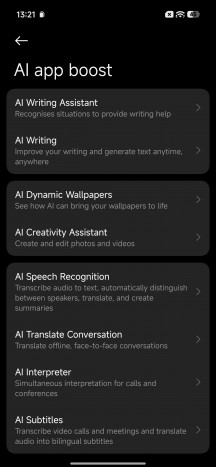
Xiaomi HyperAI features
On the connectivity front, Xiaomi is expanding the reach of its Interconnectivity features. Previously, options like Wi-Fi password sharing, file transfers, screen mirroring, calls, and notifications worked only between Xiaomi devices signed in with the same Xiaomi account.
With HyperOS 3.0, Xiaomi is opening things up a bit. Some of these features can now be shared with non-Xiaomi Android devices, as well as Apple devices such as iPhones and iPads. The ecosystem integration also extends to computers, allowing pairing with both Windows and Mac machines.
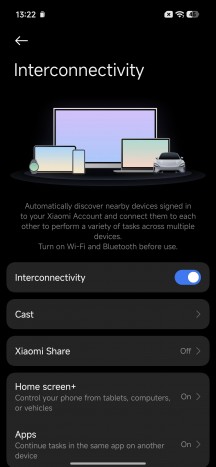
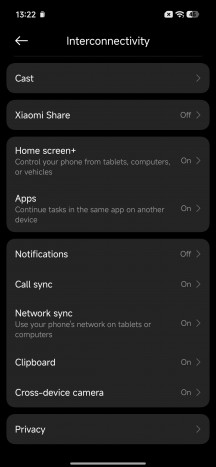
Connectivity features
Interestingly, Xiaomi also claims that you can read notifications and even answer calls directly from devices like an iPad, Mac, or iPhone. We didn't get the chance to test this functionality ourselves, though, so we can't really comment on how well it works in practice.
Benchmarks and performance
The Poco X8 Pro Max is based on a fresh new MediaTek chip - the Dimensity 9500s. Going by its name alone, one would instantly assume it to be, say, a slightly lower-binned version of the flagship Dimensity 9500. However, in reality, the 9500s is much closer in all aspects to the Dimensity 9400 and the 9400+.

The Dimensity 9500s is built on a 3nm TSMC N3E node. In the CPU department, it has the exact same configuration as the Dimensity 9400+: one big Cortex-X925 core, clocked at up to 3.73 GHz, three Cortex-X4 cores, working at up to 3.3 GHz and another four efficiency Cortex-A720 cores, operating at up to 2.4 GHz. The onboard GPU is the Immortalis-G925 @ 1612 MHz, but it lacks a core and is denoted MC11 instead of MC12. As far as we can tell, the MediaTek NPU 890 is identical.
So, what did change between the two then (other than the missing GPU core)? Well, for one, the ISP got an upgrade, and the onboard cellular modem is a tad different.
The Dimensity 9500s is paired with 12GB of fast quad-channel 9600Mbps LPDDR5X RAM and fast UFS 4.1 storage chips. Either 256GB or 512GB of it. Our review unit is the bigger 512GB variant.
Looking at the actual benchmarks, we can clearly see that the Dimensity 9500s is close in performance to the 9400 and 9400+ rather than the "full fat" Dimensity 9500. That said, AnTuTu is pretty kind to the Poco X8 Pro Max. It has plenty of performance to throw around.
GeekBench 6
- Single-core
- Multi-core
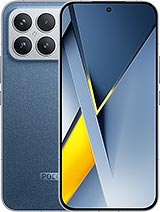 Poco F8 Ultra
 vivo X300
 Oppo Find X9 Pro
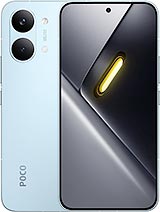 Poco X8 Pro Max
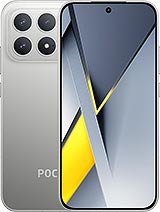 Poco F8 Pro


 Redmi Note 15 Pro+
 Redmi Note 15 Pro 5G
AnTuTu
- v10
- v11
 vivo X300 Pro
 Xiaomi 15T Pro
Poco F8 Pro
Poco X8 Pro Max
vivo X300
Redmi Note 15 Pro+
Redmi Note 15 Pro 5G
3DMark
- Wild Life Extreme (Highest)
- Wild Life Extreme (Lowest)
- Solar Bay (Ray Tracing)
vivo X300
Poco F8 Ultra
Oppo Find X9 Pro
Poco X8 Pro Max
Poco F8 Pro
Redmi Note 15 Pro+
Redmi Note 15 Pro 5G
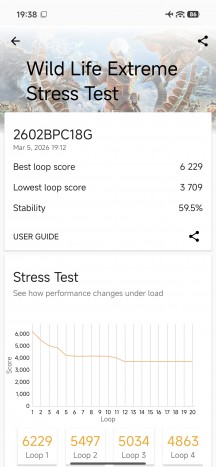
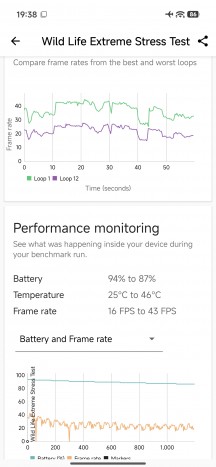
Thermal-throttling
The Poco X8 Pro Max runs a little bit hot. The chipset puts out plenty of heat, and as a consequence, it loses quite a bit of its performance under prolonged loads like most flagship processors.
On a more positive note, at least that happens gradually in a controlled manner without any big jarring dips in performance that could translate to in-game stutters.
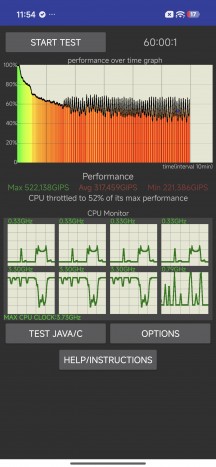
Thermal-throttling
The phone's metal frame gets a bit hot to the touch after prolonged loads, but nothing too bad.


Tip us
2.1m 180k
RSS
EV
Merch
Log in I forgot my password Sign up