Google Pixel 10 Pro XL review
Android 16 from the source
The Pixel 10 series runs Android with Google's own personalized take on visuals and user experience - its evolution from the basic UI of earlier Pixels has gradually turned it into a sleek and feature-rich software package. The Pixel 10 Pro XL launches on Android 16, with the usual promise for 7 years of full software support that the company has been offering recently.

When it comes to design and usability, there are no major changes on the Pixel's Android 16, so you'll feel at home if you've used a Google phone. The vast majority of novelties are AI-related for yet another year.
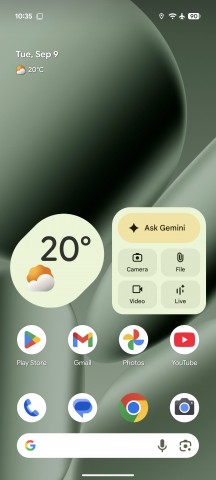
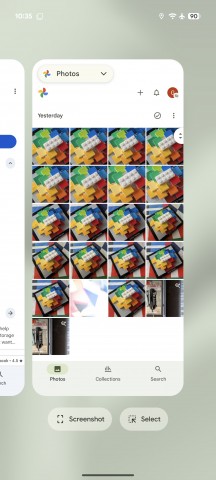
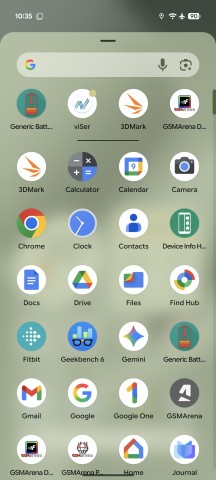
Android 16 on the Pixel 10 Pro XL: Home screen • Recent apps • App drawer
Still, the new OS comes with a bit of a refresh on the basics - Material 3 Expressive UI offers more dynamic and fluid animations and some extra eye candy (of the subtle kind).
The Notification shade now provides real-time updates on things like food delivery or ride status. The system also groups notifications more easily to de-clutter your notification shade.
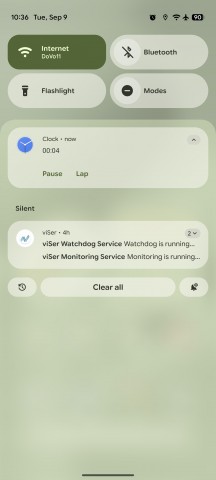
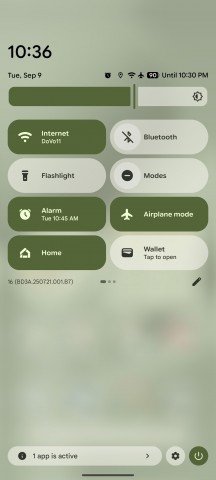
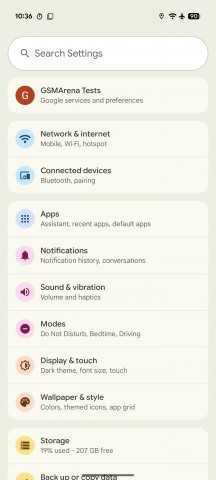
Android 16 on the Pixel 10 Pro XL: Notification shade • Quick toggles • Settings menu
Pixels have been pioneering AI features for some years now, and the latest Magic Cue is among the most useful ones so far. Google's AI tracks your information across apps and connects the dots to provide relevant information no matter which app you are using. It's something like Samsung's Now Brief, but instead of just passively providing contextual information, it offers you to take action.
For instance, Magic Cue should be able to pull up flight data while you are on a call with the airline, or it will offer to send the photos your friend requested from last weekend over chat. It collects information from various apps like Calendar, Photos, chat apps, etc.
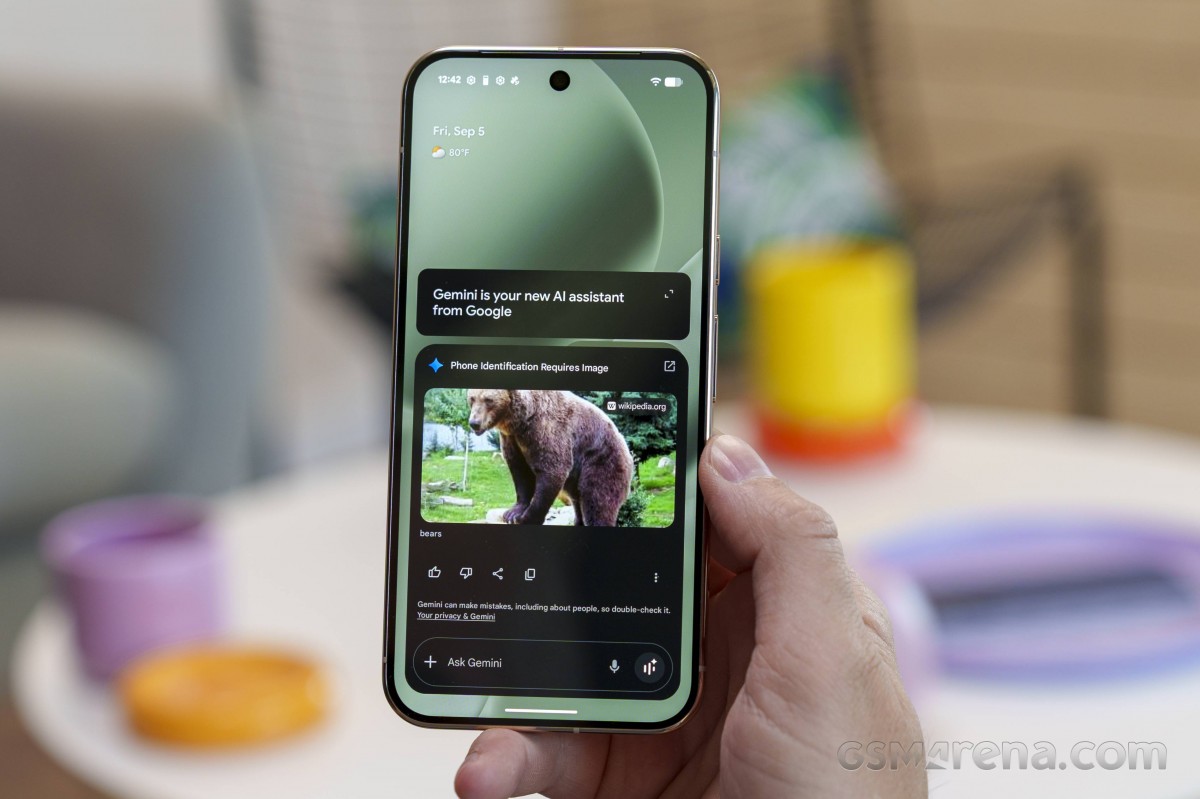
Gemini Live is worth mentioning as one of the latest updates to Google's AI assistant. It's got the ability to understand what's on your camera feed and provide visual guidance. It can highlight objects and provide contextual info. The speech model has been enhanced as well with more expressive audio.
A new AI editing tool built into the Google Photos app allows you to "vibe edit", similar to "vibe coding". Simply describe what you want to edit or remove from the photo, and the AI will handle the rest. However, this feature is currently limited to the US only.
There is also a Camera Coach feature, powered by Gemini, for people who are apparently so bad at taking pictures that they need AI to guide them. You can just point your phone at the subject and fire up the feature, and it will give step-by-step instructions on how to frame your shot. It doesn't actually know when you've done what it asked you to do based on the viewfinder information, so you just have to assume you're doing the right thing and go with the instructions.


Camera Coach
The new bits join the existing list of Pixel-exclusive features, such as Pixel Call Assist, which includes Call Screen, Hold For Me, and Direct My Calls, Add Me in the Camera app, Magic Eraser, Video Boost, and more. Google also keeps adding more features with its Pixel Drop updates, so the list will only keep growing.

We typically ramble on about the subjective appeal of the Google phone software and overall experience, and those superlatives apply in the Pixel 10 Pro XL's case as well. The UI is clean, concise, and effortless, and the new design enhancements don't take away from that. We're talking about subtle things like scaling, size and spacing of menus, toast notifications, fonts, etc., that all feel correct, at least to this bunch over here - in ways that no other maker quite manages to match. This is still a key selling point of the Google phones, and it's not like they have many of those.
Performance and benchmarks
The Pixel 10 series continues to use an in-house-designed chipset, only this year's Tensor G5 is manufactured by TSMC and not Samsung. As is the norm, the company doesn't brag too much about raw performance gains, but it has been mentioned that the new CPU is 34% faster than that in the Tensor G4.
The CPU inside the Tensor G5 is made up of 8 cores, which Google itself doesn't explicitly list, but hardware scanning apps report those as 1x3.78GHz + 5x3.05GHz + 2x2.25GHz. Independent sources claim the cores are 1x Cortex-X4 + 5x Cortex-A725 + 2x Cortex-A520.
The GPU is PowerVR DXT-48-1536 - its name must have come from the engineers, not the marketing team.
Storage options on the Pro XL are 256GB (as reviewed), 512GB, and 1TB, and they're all UFS 4.0 chips. The Pro non-XL starts at 128GB and it's already not looking good, but if the XL also had such a low-spec base version, you wouldn't hear the end of it. RAM is 16GB on all Pixel 10 Pros.
Now, Google does tend to emphasize the "user experience" instead of benchmark performance. So it's no surprise that the company has focused on improving the G5 in other areas like AI - the chip boasts a 60% more powerful TPU, making it the first one capable of running Gemini Nano fully on-device.
Camera performance should also benefit from the new and improved ISP, supporting high-end features like motion deblur and 10-bit video recording by default in both 1080p and 4K.
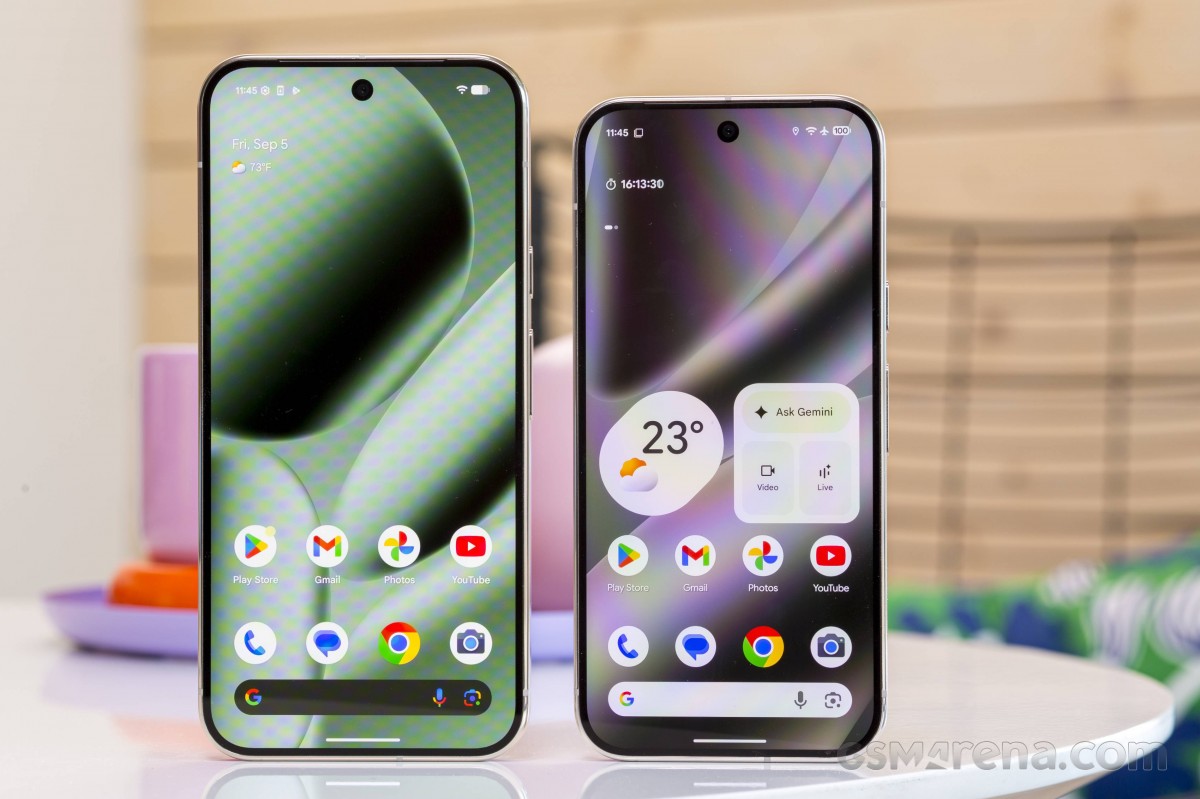 Tensors inside - the Pixel 10 series runs on Google's 5th gen chipset
We know full well by now that the Tensor struggles in benchmarks. Comparisons to Dimensity 9400 and Snapdragon 8 Elite handsets make the Pixel 10 Pro XL look more like a midranger (and maybe not one from this year). You'll get upwards of 30% higher results under single-core CPU load on the competition, and maybe even 50% higher in multi-core tests. The GPU's results are also about half of what other high-end phones can put out.
That's the moment where we cue in the Pixel apologists among us. We'll insist that the Pixel experience is more than the phone's formal results (which are undoubtedly uncompetitive), and there is a ton of subjective appeal to interacting with the Pixel 10 Pro XL, where it does feel effortless and unlike most others. Still, with disappointing battery life and raw performance, we realize it's hard to defend that hill with esoterics alone.
GeekBench 6
- Single-core
- Multi-core
 Sony Xperia 1 VII



 Oppo Find X8 Pro
 vivo X200 Pro
 Pixel 10 Pro
 Pixel 10 Pro XL
 Pixel 10
 Huawei Pura 80 Ultra
AnTuTu
- v10
- v11
 vivo X200 Ultra
 Galaxy S25 Ultra
Sony Xperia 1 VII
Pixel 10 Pro XL
Pixel 10
Huawei Pura 80 Ultra
Pixel 10 Pro
3DMark
- Wild Life Extreme (Highest)
- Wild Life Extreme (Lowest)
vivo X200 Ultra
 Xiaomi 15 Ultra
vivo X200 Pro
Pixel 10 Pro
Pixel 10 Pro XL
Pixel 10
Huawei Pura 80 Ultra
Performance stability under stress
Updated, 28 Oct: We've updated the analysis of the thermal performance of the Google Pixel 10 Pro XL after some further retesting. Our new tests show positive development with far less throttling - possibly due to some newly introduced software changes by Google. The screenshots below reflect our latest test findings.
The Pixel 10 Pro XL did quite all right in our regular CPU Throttling test. It only took about 5 minutes to drop below 70% of its initial result, but overall, it never fell below 57% of its max performance.
In the 3DMark Wild Life stress test, the Pixel recorded a 70+ percent stability rating, which is quite good. Technically, other 2025 flagships are also in that ballpark for stability, only the level they drop to is the level the Pixel starts out at.

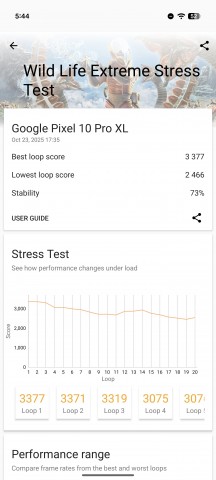
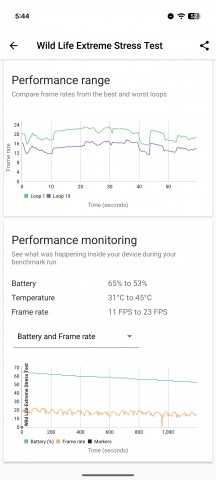
CPU Throttling test • 3DMark Wild Life stress test
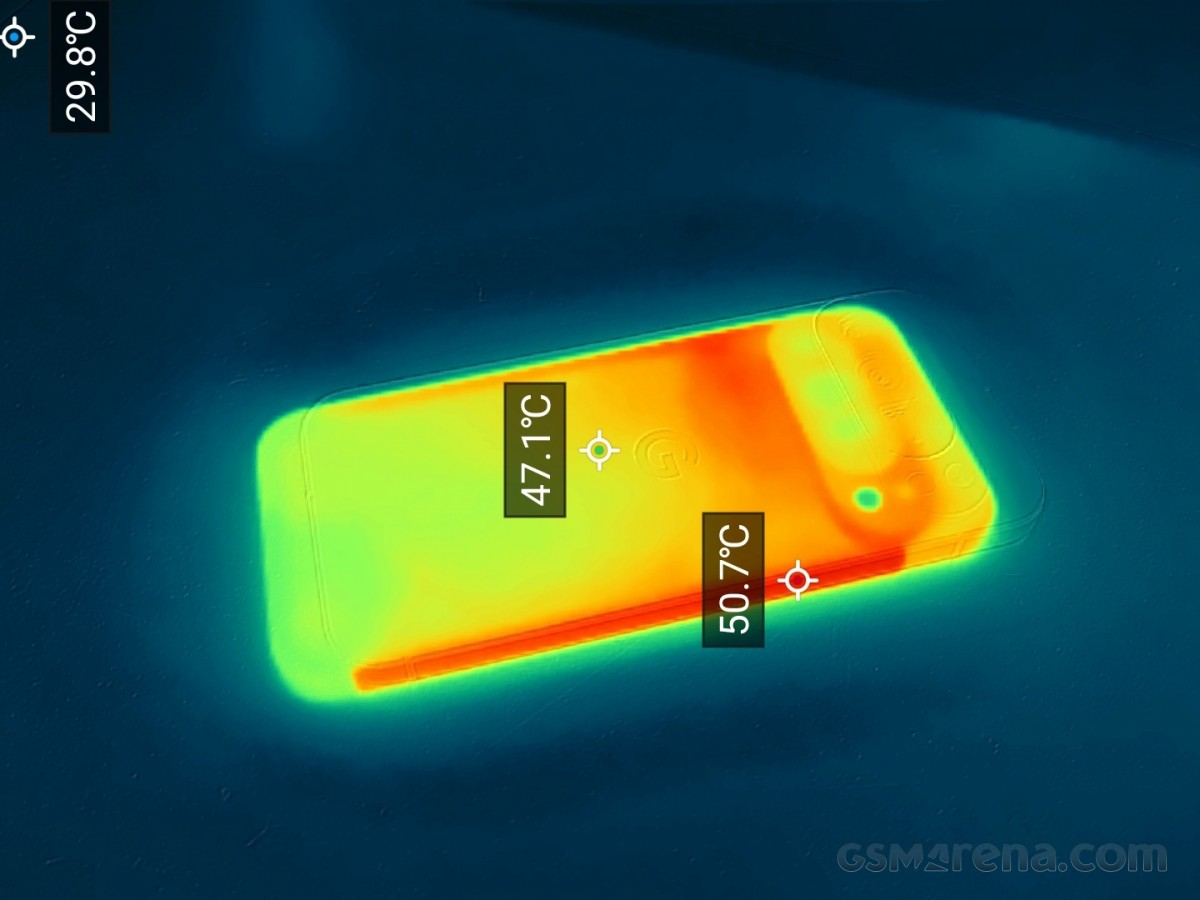
The XL also got pretty hot on the outside, but not necessarily more so than others in the class. The frame reached about 50-ish degrees and that's about it.


Tip us
2.1m 180k
RSS
EV
Merch
Log in I forgot my password Sign up