vivo X200 Ultra review
1.0-inch sensor is gone, but you probably won't miss it
The X100 Ultra was a superb cameraphone overall, but it could use some improvement on the ultrawide end. The X200 Ultra delivers that, plus it spices things up with a new camera inbetween the ultrawide and the telephoto - one with a 35mm equivalent lens. The telephoto itself has been a little touched up too, now getting a brighter lens.
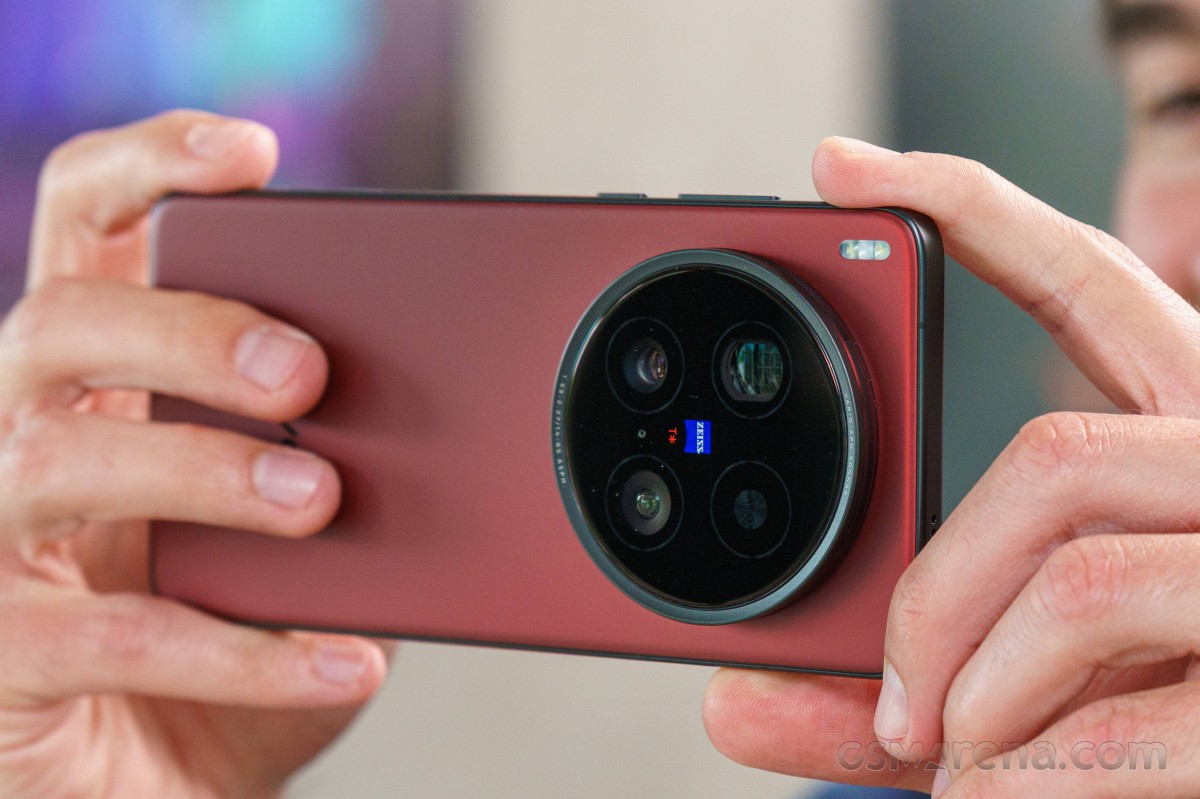
The 'main' camera no longer uses a 1.0-inch type sensor, instead getting one with a 1/1.28" optical format. We generally don't like seeing smaller sensors where previously there were larger ones, but in this case perhaps we can be convinced by the 35mm-equivalent lens that's been paired with it. 35mm smartphone cameras aren't all too common and we can see the appeal of the longer focal length for many photo ops. So it's not really a downgrade, but rather an exploration in a slightly different direction.
What's undeniably an upgrade is the ultrawide camera, whose sensor has grown from 1/2.0" to 1/1.28" - it's the same sensor that's used on the 35mm camera making the whole 'main-vs-ultrawide' differentiation a moot point. And unlike our recent run-in with an unusually good ultrawide camera on the Xperia 1 VII, the one on the vivo is properly ultrawide with an equivalent focal length of 14mm. That's in addition to the sensor being larger than the Sony's (1/1.56").
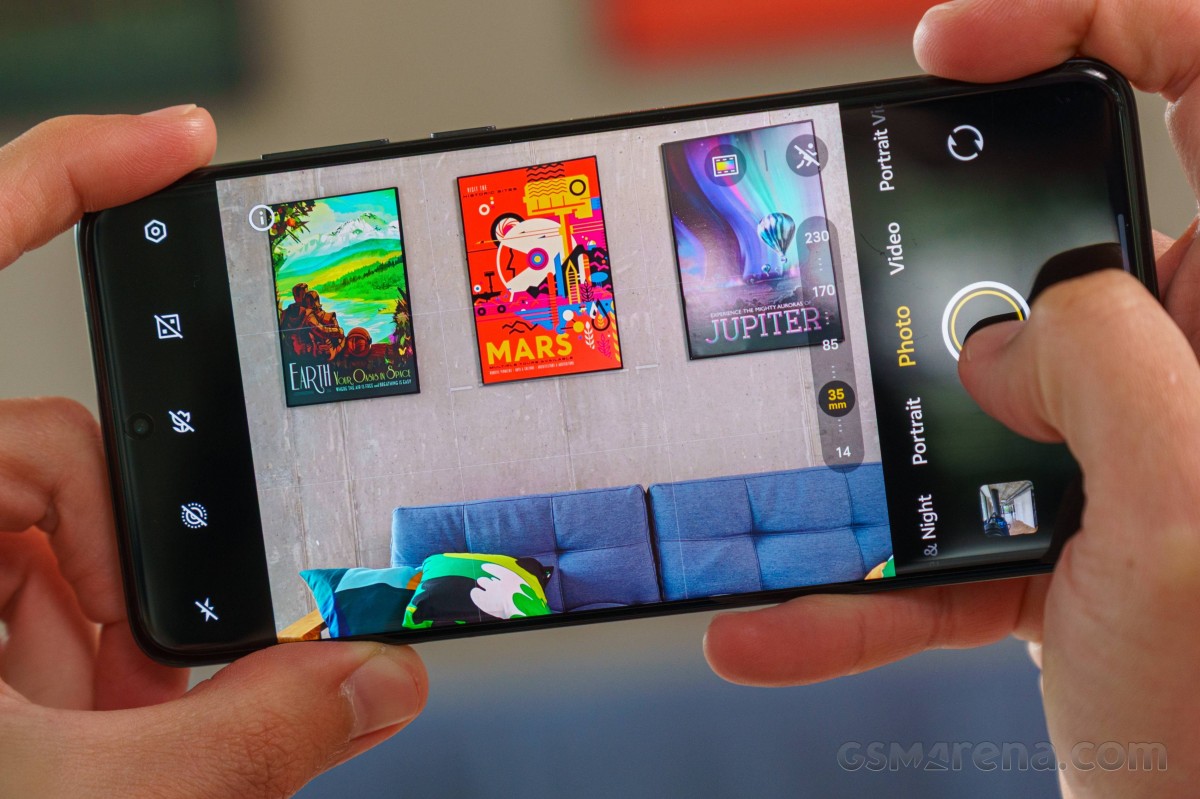
Further muddying the term 'main' camera is the telephoto. Already a top-class piece of kit on the X100 Ultra, it's now gotten some extra light-gathering power thanks to an increase in aperture to f/2.27 (up from f/2.67). And with a 1/1.4" 200MP sensor behind that lens, it's pretty hard to top.
Which is probably why vivo chose to top it themselves - with a 2.35x telephoto extender that brings the equivalent focal length to 200mm. It's part of the Photography kit that's an optional accessory which you purchase separately, but it's still a first-party option that no other maker is offering at this point.
We took an in-depth look at the extender in a separate article.
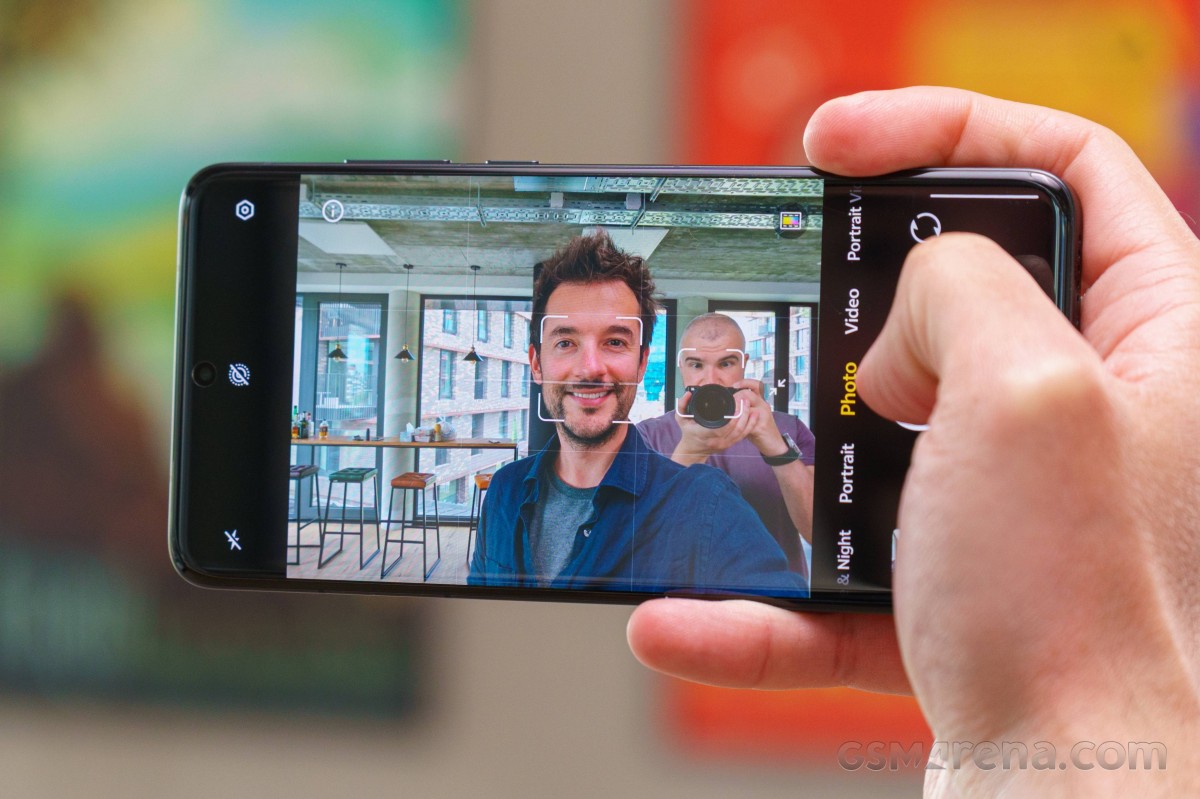
What's left unchanged compared to the previous generation is the selfie camera, but it wasn't in any particular need of improvement. A high-res 50MP sensor with proper 4-to-1 binning and an autofocusing lens - is it really so hard that we can't seem to have those on more flagships?
- Wide (main): 50MP Sony Lytia LYT-818 (IMX 06C, 1/1.28", 1.22µm - 2.44µm), f/1.69, 35mm, dual pixel PDAF (20cm - ∞), Laser AF, OIS; 4K@120fps
- Ultrawide: 50MP Sony Lytia LYT-818 (IMX 06C, 1/1.28", 1.22µm - 2.44µm), f/2.0, 14mm, dual pixel PDAF, Laser AF, OIS; 4K@120fps/8K@30
- Telephoto 3.7x: 200MP Samsung ISOCELL HP9 (1/1.4", 0.56µm-2.24µm), f/2.27, 85mm, multi-directional PDAF (14cm - ∞), OIS; 4K@120fps
- Front camera: 50MP Samsung ISOCELL JN1 (1/2.76", 0.64µm-1.28µm), f/2.45, 24mm, PDAF; 4K@60fps
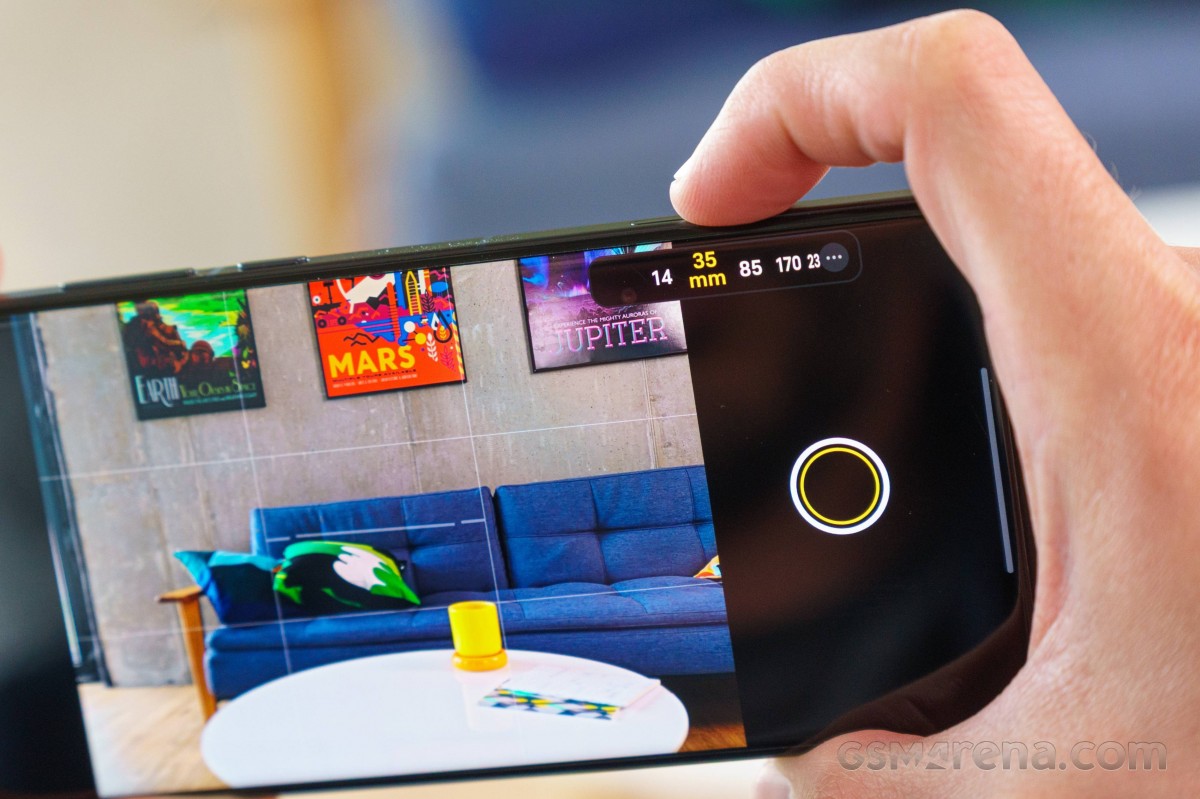
The X200 Ultra sees vivo jump on the camera control key bandwagon. It's where you'd expect it to be to mimic the operation of a shutter release (courtesy of the vibration motor), and it's also a control dial thanks to the touch sensor embedded in it. You can slide to change focal lengths continuously or switch between the four preset zoom levels, or do exposure compensation. You can disable some of these functions too if you'd prefer a more minimalist approach, or disable all of the sliding action.
Separately from the swiping functionality, you can use the double press on the 'button' to launch the camera (in one of a list of modes). That too can be disabled. Overall, it's a nice addition to the feature set if you're the type of person to use it, and if you're not, it can be easily disabled entirely.
Daylight photo quality
Ultrawide camera, 14mm
With the X200 Ultra's 'all main camera' setup, we might as well just start with the ultrawide. At its native 14mm equivalent focal length it produces superb images. Sharpness is excellent, detail is plenty and it's rendered nicely, there's no noise to speak of. Even in indoor conditions with higher ISOs quality doesn't really degrade in any meaningful way.












Daylight samples, ultrawide camera, 14mm
The full-res mode does appear to bring out extra detail in some scenes, while in others the images are looking like upscaled versions of the standard-sized ones.







Daylight samples, ultrawide camera, 14mm, 50MP
Things remain pretty solid at 28mm - the next focal length that the X200 Ultra offers to bridge the gap between the ultrawide and the 35mm camera. Pixel-level detail isn't exactly pin-sharp and probably every flagship-grade 24mm camera will outresolve these shots, if you stare at foliage and fabrics and such (though a 24mm vs. 28mm can complicate such comparisons). Still, if you tone down the pixel-peeping, you should be happy with these photos. Plus, the colors and dynamic range remain delightful.








Daylight samples, ultrawide camera, 28mm
Wide camera, 35mm
Moving on to the 35mm camera, we're getting another round of great images. They have a particular three-dimensional look to them and that's what sets them apart. Other than that, things are predictably excellent in terms of detail, the dynamic range is top-notch, and colors maintain the appealing balance of accuracy and pop we got to see on the ultrawide.











Daylight samples, wide camera (35mm)
Here's how a few of the above scenes look when captured in 50MP.







Daylight samples, wide camera (35mm), 50MP
That 3D feel also shows up in the excellent portrait shots, even in the regular Photo mode. There's a nice hint of separation of the subject from the background, you get to stand a little bit further than with 24mm cameras, and facial features look more natural.
The Portrait mode amplifies the separation, and does it in a natural way, with very competent subject detection.




Daylight samples, wide camera (35mm), Photo mode




Daylight samples, wide camera (35mm), Portrait mode
At 50mm, the photos remain reasonably sharp and detailed, though they do show signs of extra processing plus a bit of a graininess in certain textures. Not bad by any stretch, just not quite as good as the 35mm ones.








Daylight samples, wide camera (50mm)
That applies to people shots too, naturally.




Daylight samples, wide camera (50mm), Photo mode




Daylight samples, wide camera (50mm), Portrait mode
The 70mm images are about as good as the 50mm ones. Perhaps random textures look a bit more artificial at this level, but overall these aren't bad photos.








Daylight samples, wide camera (70mm)




Daylight samples, wide camera (70mm), Photo mode
Telephoto camera, 85mm
From not bad to properly great - switching to the 85mm telephoto is all it takes. A proven performer from the X100 Ultra and a camera that's been labeled as 'transformative' around the office, it takes wonderful photos on the X200 Ultra as well. Detail is superb, dynamic range is excellent, colors are lovely.
If anything, the only 'issue' of this camera is the flipside of the improvement that vivo has cooked up for this generation - the even wider aperture has made depth of field shallower and there may be scenes where you wouldn't get everything you'd like in focus, and not just in close-up shooting - like in the second scene where the focus is in the distance and the nearby building corner is blurry. You can, of course, use that shallow DoF to your advantage to isolate subjects.












Daylight samples, telephoto camera (85mm)
And that does make the X200 Ultra's telephoto a first-class portrait camera, even without resorting to the 200mm-equivalent telephoto extender (more on that later). The quality at these distances is excellent too, facial proportions look natural, and there's very good subject separation. If you want to up the blur levels, there's always Portrait mode, and it too works great.




Daylight samples, telephoto camera (85mm), Photo mode




Daylight samples, telephoto camera (85mm), Portrait mode
At 135mm quality remains very good.




Daylight samples, telephoto camera (135mm)




Daylight samples, telephoto camera (135mm), Photo mode




Daylight samples, telephoto camera (135mm), Portrait mode
At 170mm, you can still count on very detailed outdoor shots, bringing distant subjects closer. Indoors, you can more readily see deterioration in quality, though better lit scenes remain solid.




Daylight samples, telephoto camera (170mm)




Daylight samples, telephoto camera (170mm), Photo mode
230mm is the last zoom level shortcut in the viewfinder and it can still produce very usable results.




Daylight samples, telephoto camera (230mm)
Telephoto camera, closeups
One of the main virtues of the X100 Ultra's telephoto camera was its superb closeup shooting capability and its successor in the X200 Ultra hasn't lost that. You can count on excellent detail though you can also expect very shallow depth of field - it sure looks impressive, but it might be too shallow to capture everything you may want in focus.








Closeup samples, telephoto camera (85mm)




Closeup samples, telephoto camera (135mm)




Closeup samples, telephoto camera (170mm)
Selfies
Selfies out of the X200 Ultra are also top-notch. They have great detail and the autofocus allows for some closeups if you're into making weird faces. Skin tones are accurate and lifelike, though we'd probably like to see a bit more saturation overall.




Selfie samples
Low-light photo quality
Ultrawide camera, 14mm
The X200 Ultra's ultrawide camera does a remarkable job at night and treats us to what are possibly the best photos of its kind. Sharp and detailed, well exposed, with accurate white balance and lively colors - we can't really think of something to complain about.








Low-light samples, ultrawide camera, 14mm
It's not quite as impressive at 28mm, where things get softer, though the results are still fine at fit to screen magnification.




Low-light samples, ultrawide camera, 28mm
Wide camera, 35mm
The 35mm camera is similarly excellent at its native focal length. It captures fine detail, has wide dynamic range and great color output.











Low-light samples, main camera (35mm)
The 50mm and 70mm focal lengths are a notch below, but we'd say they're both very good and superior at 1:1 than the 28mm photos from the ultrawide.




Low-light samples, wide camera (50mm)




Low-light samples, wide camera (70mm)
Telephoto camera, 85mm
Unsurprisingly, the telephoto also shines at its 85mm native focal length. We're looking at crisp detail on distant subjects and closeups alike, and dynamic range and colors are excellent too.










Low-light samples, telephoto camera (85mm)
The telephoto camera holds up well when zooming in further, particularly at 135mm, where images remain very good. At 170mm the photos are probably best described as decent, and 230mm is usable as well.




Low-light samples, telephoto camera (135mm)




Low-light samples, telephoto camera (170mm)




Low-light samples, telephoto camera (230mm)
Video recording
The X200 Ultra records video up to 4K120 with all of its rear cameras, and there's also an 8K30 capability on the ultrawide only (seems a little odd). The selfie camera maxes out at 4K60. There's no immediately available 24fps option, but 4K24 does appear if you go into Pro video mode, where you also get 4K25 and 4K50 modes (is PAL still a thing?), plus 8K24 and 8K25 (still ultrawide only).
The default codec is h.265, but you can flip a toggle and switch to h.264. Pro video mode comes with a selection of two bitrates - High and Standard, which are 150Mbps and 90Mbps for h.264 and 120Mbps and 72Mbps for h.265, all of those being pretty great numbers. In 'regular' video mode 4K30 gets 60Mbps with h.264, and around 46Mbps with h.265, neither of which is too shabby. LOG recording is available in both regular and Pro mode and your regular videos can also be shot in Dolby Vision (up to 4K60).
There's always-on electronic video stabilization in all modes (except for 4K120, where it's just the OIS at play), and then there's Ultra stabilization at up to 2.8K60.
You can check out the playlist below, which includes multiple video samples.
Video sample playlist
The X200 Ultra's video output is very good overall. Starting with what we don't like, sharpness in 4K resolution on all the rear cameras is merely okay - we kind of expected battery clarity and definition. The 120fps modes are a bit sharper, so we're looking at the stabilization algorithms as the potential culprit (there's no EIS at 120fps), but even then it's not entirely ideal. The rest of it is simply great - dynamic range is excellent, white balance is on point, colors are nicely vibrant.
At night, the vivo maintains its excellence from a global perspective, capturing well exposed footage with great development at the tonal extremes. Colors are great too, from a white balance and saturation standpoint alike. In this context, sharpness is looking pretty good, in fact - the X200 Ultra does is on par with the Oppo and Xiaomi Ultras at comparable zoom levels, with the vivo ultrawide being a little better than the others.
Video stabilization is an area where the X200 Ultra truly excels. Both the 14mm and 35mm cameras will give you shake-free capture when you're walking. Pans are smooth from all three cameras without feeling laggy and with no abrupt transitions at the ends. And if you're just pointing the phone in one direction, the steadiness of the footage is almost tripod-like.


Tip us
2.1m 180k
RSS
EV
Merch
Log in I forgot my password Sign up