Razer Phone review
Wrapping it up
The Razer Phone is clearly a new and different breed of device, no doubt about it. Spearheading what could ultimately become an entire gaming hardware niche within an already saturated smartphone market is no easy task. Naturally, some growing pains and a fair bit of pioneer backlash are to be expected. And for those reasons alone, we appreciate Razer's efforts.

That being said, we have to be objective and really judge the Razer Phone for what it is, beyond the loud and frankly at times obnoxious "gamer-y" PR efforts. No matter how hard Razer wants you to believe in the "by gamers, for gamers" mantra and all the "best in the world", "insane" and "1337", at its core, there is no real "secret sauce" to the Razer Phone.
The 120Hz, IGZO panel has important potential future implications for mobile gaming as a whole, but, in its current form, it comes with many limitations and at a high cost to battery life, max brightness and outdoor legibility. Razer's overall design and appearance, while undoubtedly well thought out to cater to gamer needs, has a certain antiquated feel and a deeply polarizing nature in a world of ultrawide, bezel-less and curved aesthetics.
Beyond this carefully crafted image lies yet another 2017 flagship device. Not dramatically different or quantifiably better than its competitors and flawed in its own way.
Razer Phone key test findings
- The Razer Phone has a very particular look and design. It looks a bit industrial and has a retro vibe. However, most layout decisions are logically made to cater to gamer needs.
- The black brushed metal unibody makes for a solid build and a surprisingly subdued look. The speaker grills on the front collect dust easily and quickly start looking worn out.
- The fingerprint reader works reliably but is not really fast. Its side-mounted position works well and feels natural. However, the volume buttons are very inconveniently placed and sized.
- The 120Hz variable refresh rate panel offers an amazing buttery-smooth experience within the UI and during web browsing. Most apps and games, however, are not optimized to push high frame rates and can't really take full advantage of the technology. ULTRAMOTION also makes the panel very power-hungry.
- Update, Nov 13: This point has been updated with better numbers following a re-test. Despite the IGZO TFT technology, the 5.7-inch Razer panel turned out to be one of the dimmest panels we've tested recently, maxing out at 300 nits (230nits in our initial tests). Sunlight legibility is also very poor. Color accuracy is excellent though and we saw a DeltaE of only 2 when measured against the sRGB color space.
- The Razer Phone does not handle its massive 4,000 mAh battery well, with 62 hours of endurance rating. Standby and talk time ratings are solid, thanks to the Snapdragon 835. However, both on-screen tests drain the battery very rapidly. Lowering the panel's refresh rate down to 60Hz does not really help much either. Quick Charge 4+ is awesome and Razer gives you a charger in the box.
- We definitely miss the 3.5mm audio jack. At least there is a dongle in the box. The X16 LTE modem is about as quick as they come. Local connectivity is well covered. Bluetooth is a bit outdated at v4.1. There is only a single SIM model.
- The Snapdragon 835 chip inside the Razer Phone scores very comparable to its similarly-equipped flagship rivals. Despite Razer's lofty claims, it is not better or worse.
- Game Booster offers convenient controls over CPU speeds, resolution and fps caps on a per-app basis. However, there are system-wide resolution and refresh rate controls as well and the two tend to conflict and interfere with each other.
- Few existing Android games can run at more than 60 fps. The OS and their respective engines are simply not designed to do so. Even some of Razer's advertised titles can't take full advantage of the 120Hz panel. Still, 120 fps-capable games do exist, so the future holds some promise.
- Streaming PC games on the Razer Phone at more than 60 fps is a no-go with current solutions as well.
- Razer opted for a near-stock Android Nougat ROM, with a minimal app package. This is beneficial to performance. There is still a powerful theme platform in place, with an online repository of free, high-quality, gaming-inspired themes. Razer's few custom apps are near AOSP in layout and functionality, but do support themes.
- There is no obvious or stable way to play high frame rate video on the Razer Phone, which seems like a missed opportunity. You can manage to trick certain players, like the default Google Photos into working at 120 fps by bringing out the navigation bar during playback, but that is hardly a solution.
- The two front-facing speakers on the Razer are one of the loudest we have ever heard. Having two separate AMPs seems to help. The THX certification and DOLBY ATMOS technology and equalizers also enable incredibly crisp sound, with almost no distortion even at high volume.
- Audio output on the Razer Phone, with the provided Type-C adapter is pretty clear with an external amplifier. Plugging in headphones results in a bit more stereo crosstalk than we would like. Overall, a good performance, but short of most other 2017 flagships.
- The Razer Phone's dual camera setup is not very impressive. The second telephoto snapper uses a very dim f/2.6 lens. Plus, Razer's linear "seamless zoom" feature means you can never use the telephoto without interpolation.
- The camera UI is really bare-bones. There are no modes, no filters, no effects, not even panorama. There is also no Auto HDR, only a manual toggle. Camera settings are also scarce. At least there is a dedicated video mode and viewfinder.
- Stills come out noisy, even in good light and a bit too soft, especially near the edges of the frame. Lots of fine detail is lost and the dynamic range is about average. The Razer Phone is very inconsistent with exposure and easily over or underexposes shots. It is also stubborn about accepting spot metering. Sunlight tends to confuse it a lot and brings out a tendency to opt for a very warm color pallet. HDR is best kept on at all times. Indoor shots come out better.
- Low-light photos are on the noisy side and not exactly impressive.
- The 8MP, fixed focus selfie cam is serviceable, but suffers from the same overall issues as the main snappers. Again, HDR should be kept on to help it get less confused around sunlight.
- 4K quality is good, but not great. Videos are sharp, but could use some more detail. Unreliable exposure metering is still an issue and so is the warmer color pallet. The lack of any stabilization is very apparent at 4K.
- 1080p video retains good quality, compared to its 4K counterpart. Razer did include some form of stabilization at FullHD, but it crops the viewfinder quite a bit and has a tendency to drift horizontally from time to time, especially while using a tripod.
On a more positive note, Razer does seem to have the right marketing idea, especially for a first-time competitor on the smartphone scene. Not only is PR targeted at the right audience, but a $699 (EUR 750) launch price is surprisingly competitive as well. Quite an unexpected turn of events, when you consider most of company's other premium asking rates.
Noteworthy alternatives
Like we said earlier, the Razer Phone is a device quite unlike any other, with its own clear marketing angle. Keeping that in mind, nothing short of a decked-out current flagship will do, as far as raw gaming performance goes. An EUR 750 budget or so actually gives us a lot of wiggle room on a pure pricing basis.
If a solid specs sheet and a spacious display is what you are after, the Huawei Mate 10 can deliver. A 5.9-inch, QHD display, backed up by the company's Kirin 970 top-end chip, means excellent gaming performance. The 16:9 aspect ratio is still the preferred choice as well.


Huawei Mate 10 • HTC U11 • Sony Xperia XZ Premium
Going by the same general logic, both the HTC U11 and the Sony Xperia XZ Premium will chew through modern heavy Android titles with ease thanks to the powerful Snapdragon 835 and the Ardeno 450. And while other high refresh rate mobile panels are hard to come by, opting for the latter Xperia will still net you a specs advantage and potential bragging rights among friends, thanks to the whopping 3840 x 2160 pixel resolution. Just like Razer's ULTRAMOTION panel, however, taking full advantage of that 4K display is not straightforward.
If these options are a bit too boring for your taste, you could also opt to go down the new trendy ultrawide aspect ratio path. Assuming continued proper app optimization by developers, there might just be some future gaming advantages in doing so. The Xiaomi Mi Mix 2 instantly springs to mind. Another Snapdragon 835 beast, but one with an 18:9 aspect ratio. Not to mention a stunning appearance.


Xiaomi Mi Mix 2 • Samsung Galaxy S8+
Speaking of which, we can't overlook Samsung's excellent 2017 lineup. Sadly, the Galaxy Note8 is still way too pricey to compare with the Razer Phone. However, the 6.2-inch, 18.5:9 Galaxy S8+ has come down in price quite nicely since its launch. Its Super AMOLED panel is one of the best the industry currently has to offer and it is backed by either a Snapdragon 835 or the equally capable, if not better Exynos 8895, depending on the market.
Since we are in search of an ultimate gaming device, it is definitely worth mentioning that the latter has support for Samsung's Gear VR platform. The price to entry is quite low and experiences have been constantly growing in number and getting better. The Oculus backing is a nice futureproof reassurance as well.

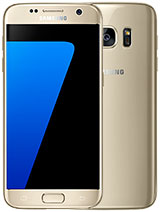

Samsung Galaxy Note5 • Samsung Galaxy S7 • Google Pixel XL
Then again, if you are seriously into mobile VR, you can probably do one better in terms of pure visual experience than the S8+. Since a curved panel is not exactly the best idea for convincing VR, looking into the older Galaxy Note5 or the significantly smaller, but more powerful Galaxy S7 might not be a bad idea. Both have flat Super AMOLED panels - a better bet for VR. Plus, you could save a fair bit of money, in exchange for sacrificing some performance and future-proofing.
Google's Daydream VR platform might be a good alternative to Gear VR as well. It is definitely too early to say which one has better future prospects. While support for Daydream is a lot more widespread and varied across manufacturers, opting for company backed hardware could net some benefits, The Pixel 2 phones are way out of budget, but the original Pixel XL isn't.
And since we are already looking into creative solutions to the gaming dilemma, we might as well throw a few more your way. The Sony Xperia XZ1 Compact, for instance, is a distinctly unique offer in its own right. If you can live with a display diagonal of just 4.6 inches, you can benefit from a Snapdragon 835 pushing pixels on to a panel with 720p native resolution. As we discovered in our respective review, the performance benefits are tangible.


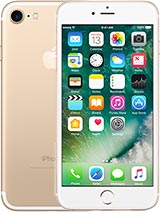
Sony Xperia XZ1 Compact • Motorola Moto Z2 Force • Apple iPhone 7
The Motorola Moto Z2 Force also has a unique trick up its sleeve and a potentially game-changing one (no pun intended). Thanks to its flexible Moto Mod platform, Motorola is offering a Moto gamepad accessory. Dual analog sticks, shoulder buttons, the works. Razer, start taking notes.
Last, but not least, why not look into an iOS device? Apple's platform is renowned for its gaming potential. Sadly, the Razer Phone budget can only stretch as much as a 4.7-inch iPhone 7.
The verdict
So, is the Razer Phone the revolutionary device that will finally shake the smartphone industry, rearrange priorities and change the rules? No. Realistically, it can probably hope to match or best the sales of its Nextbit Robin ancestor and gain some traction with loyal brand fans.

That being said, unless you belong to that group, the shortcomings of the Razer Phone seem to currently vastly outweigh its dubious benefits, making it unfit for a daily driver recommendation for most. In many ways, buying the Razer Phone is similar to picking up a high-end Razer Blade Pro laptop, a first generation one at that: It's a luxury, niche item you want to own, not necessarily one you need, nor the most optimal and functional choice.
Still, we have high hopes that the Razer Phone will be extremely important in its own right as a catalyst for future mobile gaming tech. None of its growing pains are really insurmountable. So, who knows, we just might be lucky enough to be standing on the brink of the next big smartphone trend.


Tip us
2.1m 180k
RSS
EV
Merch
Log in I forgot my password Sign up