Poco M8 Pro review
Display
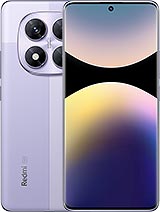
The Poco M8 Pro has the same display as the Redmi Note 15 Pro+ - a 6.83-inch AMOLED with 2,772 x 1,280 pixels (447ppi), 68B colors, 120Hz refresh rate, 480Hz touch sampling, and HDR10+ and Dolby Vision support.
It has a small punch hole for the selfie camera and is protected with a Gorilla Glass Victus 2 sheet.

Poco advertises 1,800 nits in High Brightness mode and up to 3,200 nits of peak brightness. The M8 Pro also supports 3840Hz PWM dimming.
In our own standardized testing in Auto mode, we saw 1,435 nits of max brightness with a 75% white patch and 3,017 nits max with a 10% patch. The maximum manual brightness we could get was 772 nits with the Sunlight boost option and 573 nits without the boost.
The minimum brightness with a white patch was 1.9 nits.
Max display brightness test
White test pattern (nits)
- Manual (75% fill)
- Auto (75% fill)
- Peak Auto (10% fill)
 Redmi Note 15 Pro 5G
 Honor Magic8 Lite
 Redmi Note 15 Pro+
 Poco M8
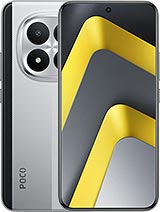 Poco M8 Pro
 Redmi Note 15 Pro 4G
 Galaxy A56
 Redmi Note 14 Pro+
 Poco M7 Pro
 Redmi Note 14 Pro 5G
Refresh rate
The Poco M8 Pro has two refresh rate modes in Display Settings - Default and Custom. The default one switches between 60Hz and 120Hz dynamically, while the Custom one allows you to set a cap at 60Hz or force apps to saturate the 120Hz refresh rate.

It turns out that the Default mode and the 120Hz mode have the same behavior and switch down to 60Hz when the screen is idling or when it's video streaming or showing any other app that does not support HRR. The web browser always runs at 120Hz in both modes too.
HDR
The Poco M8 Pro supports both HDR10+ and Dolby Vision streaming standards. It is successfully recognized by all popular apps, including Netflix and YouTube.
Battery life
The Poco M8 Pro is powered by a rather large 6,500mAh battery - the same as the cell inside the Redmi Note 15 Pro+.
The phone scored an Active Use Score of 16:04h, which is a solid score. It did great across all screen-on tests. The results are quite similar to the Redmi Note 15 Pro+, which was expected, of course.
Charging speed
The Poco M8 Pro supports up to 100W HyperCharge fast charging and up to 22.5W reverse wired charging.
To get the advertised speed of 40min for a full charge, you will need Xiaomi's own 100W HyperCharge adapter, a 6A-rated USB cable, and to enable Top Speed in Battery Charging settings.

Upon meeting these conditions, you will get some pretty impressive times considering the large 6,500mAh capacity. We captured 46% of charge on the 15min mark, 83% on the 30min mark, and 100% took 47 minutes, which is in the ballpark of the advertised time, we'd say.
Charging speed
- in 15 min
- in 30 min
- Time to full charge (from 0%)
Redmi Note 14 Pro+ (Global)
Poco M8 Pro
Redmi Note 15 Pro+
Galaxy A56
Redmi Note 14 Pro 5G
 Galaxy A36
Poco M7 Pro
Poco M8
Redmi Note 15 Pro 5G
Redmi Note 15 Pro 4G
HyperOS gives you the options to limit the charging to 80% capacity, turn on smart charging that adapts to your charging habits or turn off the fast-charging feature altogether.
Speakers
The Poco M8 Pro packs two stereo speakers - one at the bottom, and the earpiece pulling a double duty together with a top-facing secondary sound outlet.

When it comes to loudness and sound quality, the Poco M8 Pro puts in a strong performance, closely matching the Redmi Note 15 Pro+. It achieved an Excellent score of -19.5 LUFS, placing it among the loudest phones in its class. This result was recorded with the loudness boost enabled, which extends the volume slider to 400% rather than the standard 100%.
However, sound quality deteriorates significantly at 400%, so the recorded tracks below were recorded at 100%, and the assessment on audio quality is also done at 100% volume.
The speakers deliver a balanced and full-bodied sound, with solid bass, and more than decent high-frequency range. However, the strong bass can sometimes overpower the vocals. It's worth noting that at 100% volume, the phone scored -25.0 LUFS, earning just a "Very Good" rating.
Use the Playback controls to listen to the phone sample recordings (best use headphones). We measure the average loudness of the speakers in LUFS. A lower absolute value means a louder sound. A look at the frequency response chart will tell you how far off the ideal "0db" flat line is the reproduction of the bass, treble, and mid frequencies. You can add more phones to compare how they differ. The scores and ratings are not comparable with our older loudspeaker test. Learn more about how we test here.


Tip us
2.1m 180k
RSS
EV
Merch
Log in I forgot my password Sign up