Poco M8 5G review
HyperOS 2 on top of Android 15
The Poco M8 boots HyperOS 2 based on Android 15 out of the box. That said, it's hard not to feel slightly underwhelmed, as some newer Xiaomi models have already moved on to HyperOS 3 and Android 16, raising expectations in this area.

As far as software support goes, the Poco M8 comes with the same support promise as the Redmi Note 15 family. It will receive 4 major OS updates and 6 years of security patches. That's pretty good for this price segment.
HyperOS 2 will feel instantly familiar to anyone coming from a HyperOS 1 device or an older MIUI-based Xiaomi phone. The interface brings some additional polish, a handful of new AI-driven features, and Xiaomi also promises various under-the-hood optimizations.
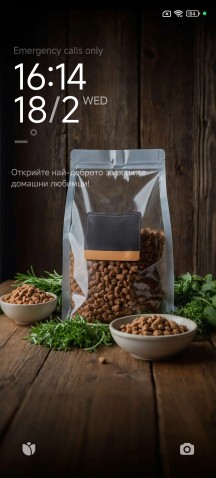
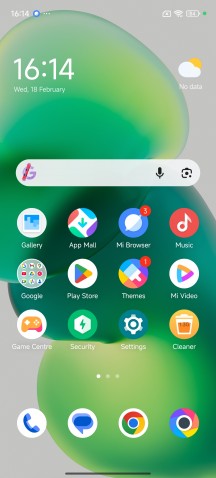
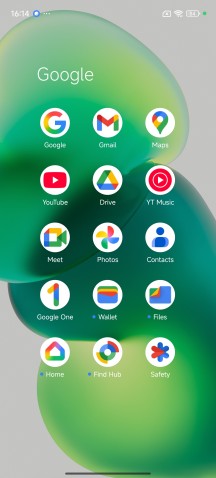
HyperOS 2 on the Redmi Note 15 5G
On our Poco M8 unit, you can choose between a traditional app drawer or placing all apps directly on the home screens - an option we always appreciate. Some HyperOS variants skip the app drawer entirely, so it's good to see the flexibility here. There's also a third "light" interface mode available, which enlarges icons and simplifies access to certain features.
HyperOS 2 continues with Xiaomi's split layout for notifications and controls, offering separate Notification and Control Center panels with no option to combine them into a single view. The home screens support the usual mix of apps and widgets, along with two styles of large folders.
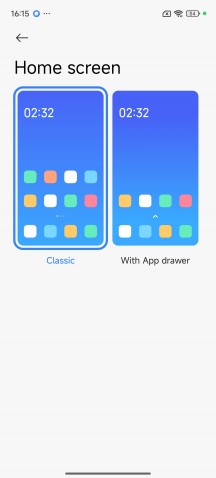
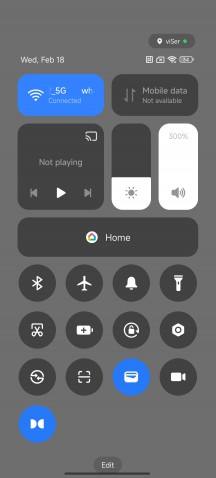
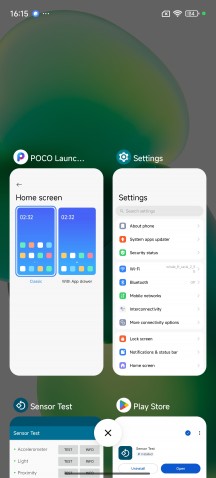
More HyperOS 2.0
Our Poco M8 unit is fairly light on AI features. Google Gemini comes preinstalled, and you also get Circle to Search, but that's about where the list ends. Xiaomi's own AI tools, such as AI Writing, AI Interpreter, AI Translate, and AI Speech Recognition, are notably missing.
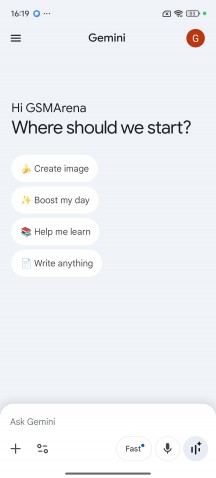

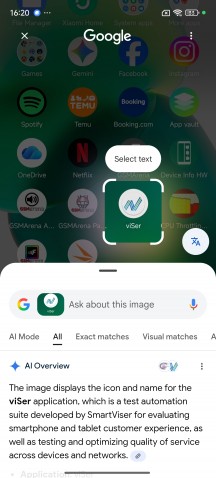
Gemini • Gemini • Circle to Search
You do still get a handful of AI image editing tools inside the Gallery app, though the selection is far from complete. Features like AI beauty filters and basic erase tools are present, but more advanced options, such as object or reflection removal, are missing.
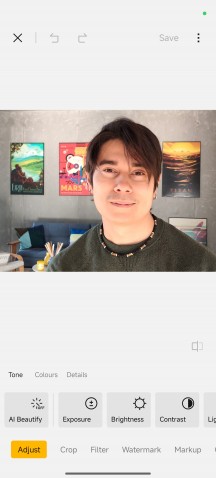
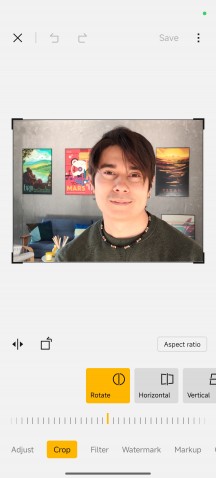

Image editing in Gallery app
It's also possible that this limitation applies only to our review unit, as Xiaomi's official promotional materials paint a different picture. The company explicitly lists an "AI image-editing tools, including AI Beautify, AI Remove Reflection, and AI Sky. Advanced AI portrait algorithms intelligently refine facial details to capture your true beauty, while upgraded Dynamic Shots 2.0 brings every moment to life with new features, including Mi Video Editor support and video-to-dynamic-shot conversion."
If those tools are indeed absent on certain units, the omission is likely a deliberate cost- or segmentation-driven decision rather than a technical one.
Benchmarks and performance
The Poco M8 is based on the Snapdragon 6 Gen 3 chipset. While not a chart-topper in any way, it is still a well-equipped chip that doesn't cut any obvious corners, like say 4K video capture.

The Snapdragon 6 Gen 3 is a relatively modern Qualcomm chipset built on Samsung's 4nm process. It features a symmetrical CPU layout with two four-core clusters - one made up of Cortex-A78 cores clocked at up to 2.4GHz and another using Cortex-A55 cores running at up to 1.8GHz. The latter dates back to 2017, so they're not exactly cutting-edge. An Adreno 710 GPU handles graphics duties.
The chip is paired with LPDDR4X RAM, available in configurations ranging from 6GB to 12GB. Storage is handled by UFS 2.2 chips, with memory tiers including 128GB/6GB, 128GB/8GB, 256GB/8GB and 512GB/8GB. There is no 512GB/12GB option, which is a thing on the Redmi Note 15 5G. Availability varies by market, however. Our review unit comes with 512GB of storage and 8GB of RAM.
Looking at the benchmark results, the Snapdragon 6 Gen 3 delivers CPU performance roughly in line with chips like the MediaTek Dimensity 7300 and 7400. It's clearly ahead of the Helio G100 and G200, though there are still alternatives in this price range that offer stronger processing power overall. The same trend carries over to the GPU - while the Adreno 710 holds a clear advantage over the Helio G100 and G200 graphics, it's far from class-leading in the broader midrange landscape.
GeekBench 6
- Single-core
- Multi-core
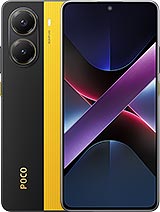 Poco X7 Pro
 Motorola Edge 60 Fusion
 Poco X7
 Poco M8
 Redmi Note 15 5G
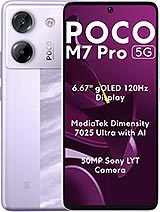 Poco M7 Pro
 Redmi Note 14 5G
AnTuTu 10
Poco X7 Pro
 Infinix Note Edge
Redmi Note 15 5G
Poco M8
 Galaxy A36
Poco M7 Pro
Redmi Note 14 5G
3DMark - Wild Life Extreme (Highest)
Poco X7 Pro
 Poco M8 Pro
Galaxy A36
Poco M8
Redmi Note 15 5G
Poco X7
Infinix Note Edge
In day-to-day use, the Poco M8 feels smooth and responsive, with no noticeable hiccups or slowdowns. It's not exactly a performance powerhouse, but as long as you keep gaming expectations in check, it handles just about everything else without issue.
Thermal-throttling
The Snapdragon 6 Gen 3 isn't particularly powerful, but the upside is that it doesn't generate much heat either. Whatever heat it does produce is handled very well by the Poco M8's cooling setup, to the point where thermal throttling is virtually nonexistent, even under extended stress testing.
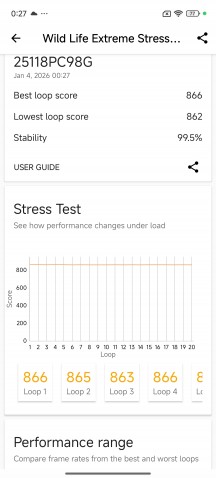
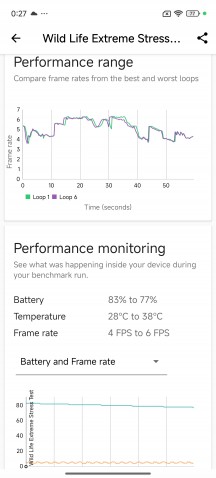
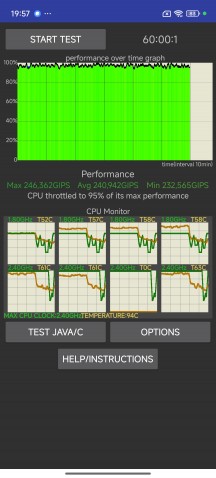
Thermal-throttling
The phone's surface barely gets lukewarm and remains perfectly comfortable to touch and hold.


Tip us
2.1m 180k
RSS
EV
Merch
Log in I forgot my password Sign up