GSMArena.com GSMArena.com

Tip us

2.1m
180k
RSS

EV

Merch

Log in

Login

I forgot my password
Sign up
  • Home
  • News
  • Reviews
  • Videos
  • Featured
  • Phone Finder
  • Deals
  • Merch
  • Coverage
  • Contact
ADVERTISEMENT
GSMArena Team, 22 February 2026

Poco M8 5G review

  • Comments (29)
  • User reviews
  • Poco M8
  • 3.8

3. Our lab tests - display, battery life, charging speed, speaker
  1. 1. Introduction, specs, unboxing
  2. 2. Design, build quality, handling
  3. 3. Our lab tests - display, battery life, charging speed, speaker
  4. 4. Software and performance
  5. 5. Camera, photo and video quality
  6. 6. Final words, our verdict, pros and cons
  7.  
  8. Xiaomi Poco M8 specification
  9. User opinions and reviews
  10. Review comments (29)

Xiaomi Poco Android

Display

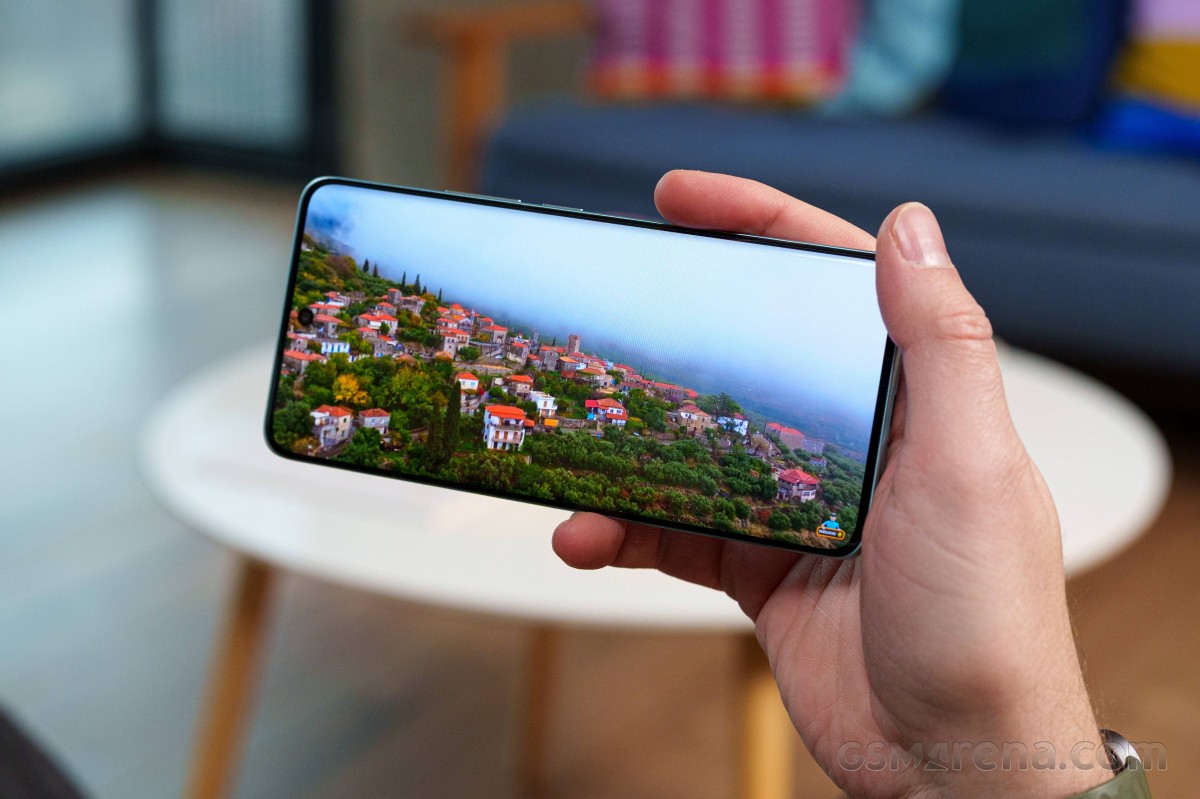
The Poco M8 practically has the same curvy display as the Redmi Note 15 5G. We wouldn't be surprised if it's the same panel, in fact, since they only differ slightly in HDR support. The display is no slouch either. It is a spacious 6.77-inch AMOLED panel. While it is far from the best class of display Xiaomi currently has in circulation, it has a lot going for it, like an impressive advertised peak brightness of 3,200 nits, a 120Hz refresh rate and HDR10 support.
Poco M8 review

You are limited to a FullHD+ resolution of 1080 x 2392 pixels, but at this screen size, that still works out to a sharp 388 ppi, so there's little to complain about.

In our standard display testing, the Poco M8 posted some very solid results. We recorded around 590 nits with the manual brightness slider maxed out and up to 1,473 nits in auto mode under strong ambient light. The measured peak in a 10% window reached an impressive 3,501 nits. Altogether, this makes the panel perfectly usable even under harsh sunlight and well-suited for HDR video playback.

Max display brightness test

White test pattern (nits)

  • Manual (75% fill)
  • Auto (75% fill)
  • Peak Auto (10% fill)
Poco X7 Pro Poco X7 Pro
883
6.67" AMOLED 1220 x 2712 px
Redmi Note 15 Pro 5G Redmi Note 15 Pro 5G
835
6.83" AMOLED 2772 x 1280 px
Poco M8 Pro Poco M8 Pro
772
6.83" AMOLED 1280 x 2712 px
vivo V60 vivo V60
759
6.77" AMOLED 1080 x 2392 px
Infinix Note Edge Infinix Note Edge
747
6.78" AMOLED 1208 x 2644 px
Infinix GT 30 Pro Infinix GT 30 Pro
718
6.78" AMOLED 1224 x 2720 px
Honor 400 Honor 400
613
6.55" AMOLED 1264 x 2736 px
Redmi Note 15 5G Redmi Note 15 5G
605
6.77" AMOLED 1080 x 2392 px
Poco M8 Poco M8
590
6.77" AMOLED 1080 x 2392 px
Redmi Note 14 Pro 5G Redmi Note 14 Pro 5G
532
6.67" AMOLED 1220 x 2712 px
Poco X7 Poco X7
527
6.67" AMOLED 1220 x 2712 px
Motorola Edge 60 Fusion Motorola Edge 60 Fusion
469
6.67" LTPO OLED 1220 x 2712 px
Redmi Note 14 5G Redmi Note 14 5G
463
6.67" AMOLED 1080 x 2400 px
Galaxy A36 Galaxy A36
429
6.7" Super AMOLED 1080 x 2340 px
Redmi Note 15 Pro 5G Redmi Note 15 Pro 5G
1901
6.83" AMOLED 2772 x 1280 px
Infinix GT 30 Pro Infinix GT 30 Pro
1897
6.78" AMOLED 1224 x 2720 px
Honor 400 Honor 400
1550
6.55" AMOLED 1264 x 2736 px
Redmi Note 15 5G Redmi Note 15 5G
1524
6.77" AMOLED 1080 x 2392 px
Poco M8 Poco M8
1473
6.77" AMOLED 1080 x 2392 px
vivo V60 vivo V60
1456
6.77" AMOLED 1080 x 2392 px
Poco M8 Pro Poco M8 Pro
1435
6.83" AMOLED 1280 x 2712 px
Motorola Edge 60 Fusion Motorola Edge 60 Fusion
1376
6.67" LTPO OLED 1220 x 2712 px
Infinix Note Edge Infinix Note Edge
1342
6.78" AMOLED 1208 x 2644 px
Poco X7 Pro Poco X7 Pro
1265
6.67" AMOLED 1220 x 2712 px
Galaxy A36 Galaxy A36
1233
6.7" Super AMOLED 1080 x 2340 px
Redmi Note 14 5G Redmi Note 14 5G
1168
6.67" AMOLED 1080 x 2400 px
Redmi Note 14 Pro 5G Redmi Note 14 Pro 5G
1138
6.67" AMOLED 1220 x 2712 px
Poco X7 Poco X7
1111
6.67" AMOLED 1220 x 2712 px
Poco M8 Poco M8
3501
6.77" AMOLED 1080 x 2392 px
Redmi Note 15 Pro 5G Redmi Note 15 Pro 5G
3352
6.83" AMOLED 2772 x 1280 px
Redmi Note 15 5G Redmi Note 15 5G
3317
6.77" AMOLED 1080 x 2392 px
Poco M8 Pro Poco M8 Pro
3017
6.83" AMOLED 1280 x 2712 px
Infinix Note Edge Infinix Note Edge
1662
6.78" AMOLED 1208 x 2644 px

The panel Xiaomi has gone with looks excellent in person. Its 12-bit color depth helps minimize visible banding, and it offers solid DCI-P3 coverage for richer, more vibrant colors.

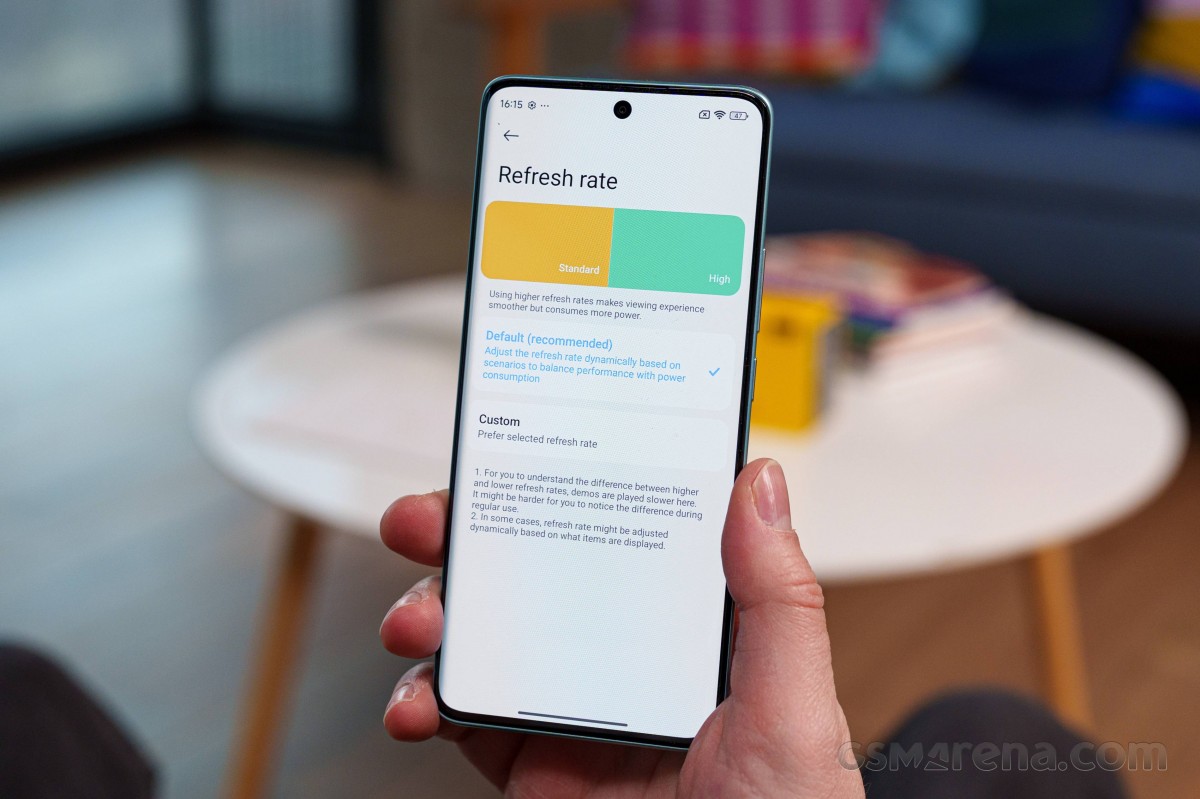
As mentioned, the display supports a 120Hz refresh rate and offers two modes. The default adaptive option adjusts dynamically based on on-screen content and app support, switching between 30Hz, 60Hz, 90Hz, and 120Hz. Since this is an LTPS panel, however, the behavior is limited to these fixed steps rather than the more granular scaling you'd get from LTPO technology.
Poco M8 review

Alternatively, there is a "Custom" refresh rate mode that lets you either lock the panel at 60Hz or select the 120Hz mode, which acts the same as the default adaptive mode. Unfortunately, the per-app refresh rate selector found on the Redmi Note 15 5G is nowhere to be found on the Poco M8. This makes the whole system a lot less versatile. We tried high refresh rate gaming and got very mixed results. It is not a dependable use case.

Xiaomi claims the Poco M8 has HDR video support. However, on a software level, the phone does not report any HDR decoder support, which means that you won't be able to decode HDR video even if the display might technically be able to display it. Hence, effectively, there is no HDR video support here.

As expected, the Poco M8 also comes with Widevine L1 DRM certification, enabling streaming services such as Netflix to deliver high-resolution content and fully take advantage of the panel's native resolution.

Battery life

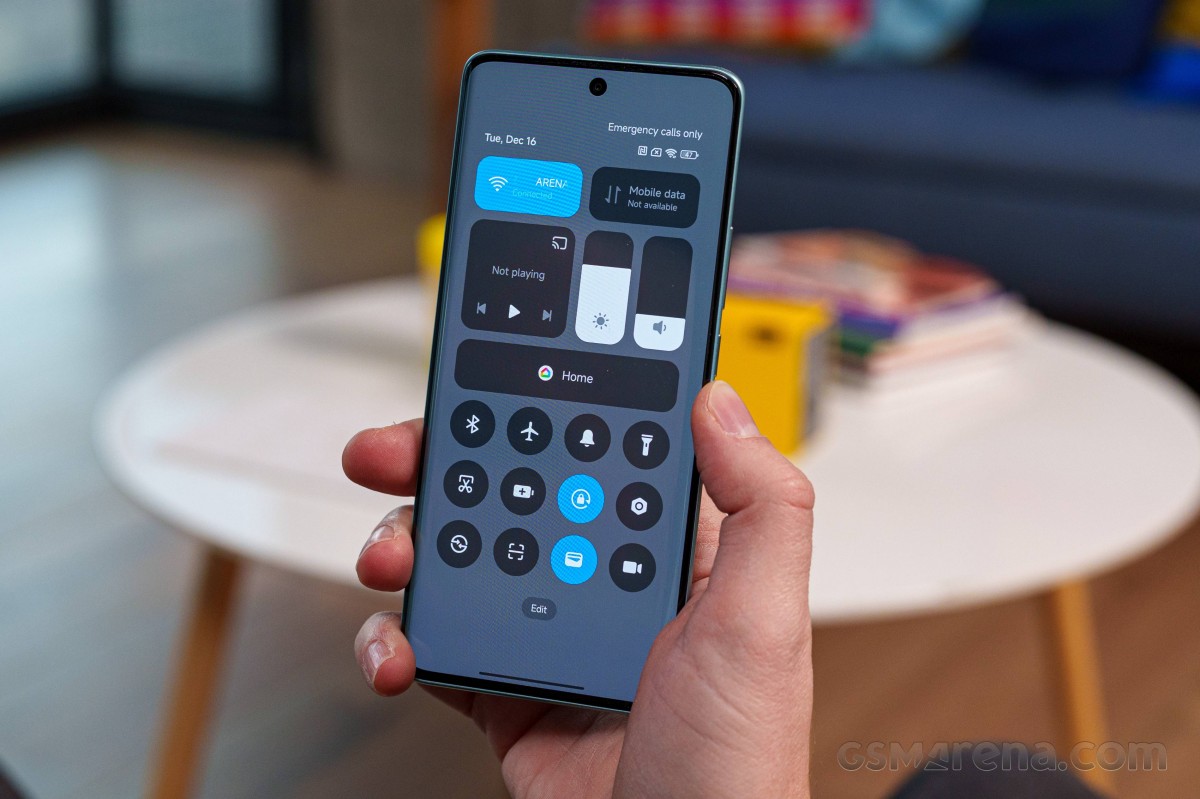
The Poco M8 has a 5,520 mAh battery, which is pretty decent-sized, but definitely not a chart leader with some modern devices pushing 7,000 mAh. On the plus side, the battery uses modern Si/C chemistry.
Poco M8 review

The Poco M8 is pushing about 14 hours of Active Use Score, just as expected, like the Redmi Note 15 5G. It's a solid result, but nothing to phone home about.

Charging speed

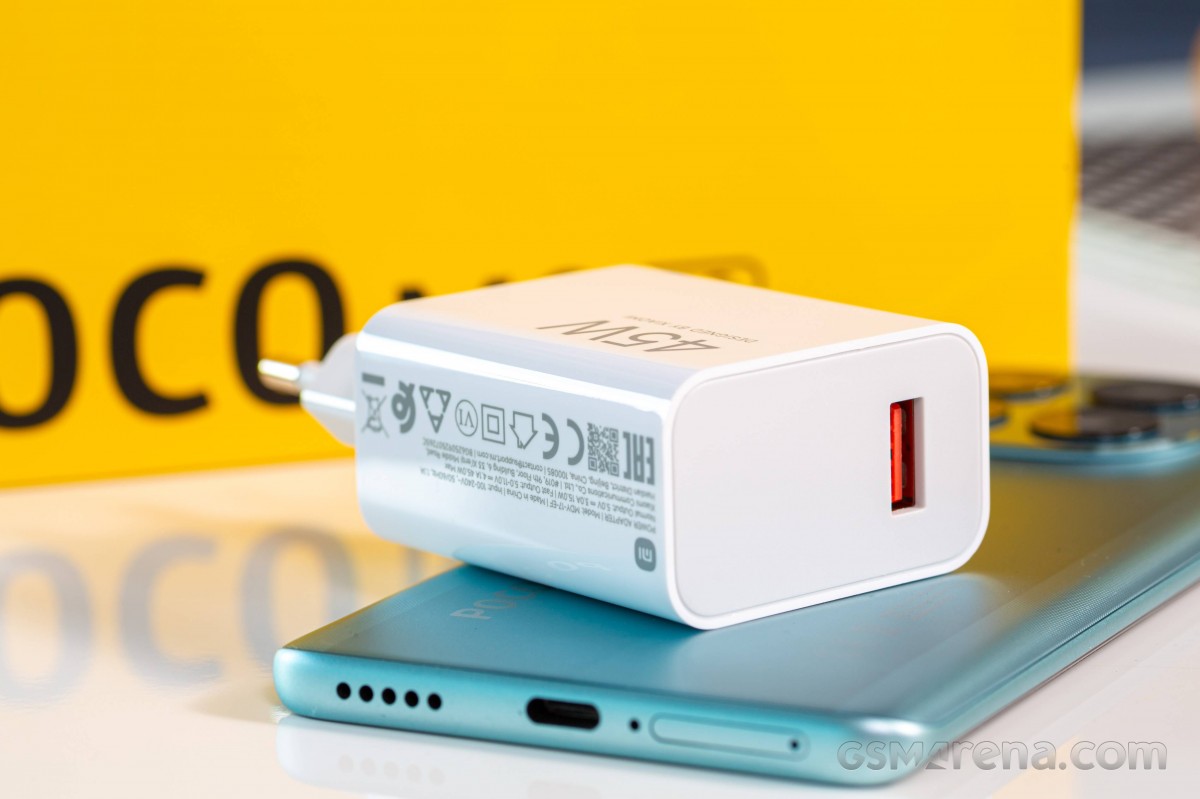
The Poco M8 supports 45W wired fast charging. While that is far from the fastest charging available out there, it is still very solid in our books. Fifteen minutes on the charger got us from empty to 36%, and thirty minutes resulted in 63%. A full charge took just over an hour.
Poco M8 review

The Poco M8 can also be used as a power bank in a pinch, thanks to its 18W reverse wired charging support. That's a bit below the 22.5W some other Redmi Note 15 devices are capable of providing.

Charging speed

  • in 15 min
  • in 30 min
  • Time to full charge (from 0%)
Poco X7 Pro Poco X7 Pro
49%
6000 mAh 90W Xiaomi HyperCharge
Motorola Edge 60 Fusion Motorola Edge 60 Fusion
48%
5200 mAh 68W USB PD
Honor 400 Honor 400
48%
5300 mAh 66W SuperCharge
Poco M8 Pro Poco M8 Pro
46%
6500 mAh 100W Xiaomi HyperCharge
vivo v60 vivo v60
38%
6500 mAh 90W FlashCharge
Redmi Note 14 Pro 5G Redmi Note 14 Pro 5G
36%
5110 mAh 45W Xiaomi HyperCharge
Galaxy A36 Galaxy A36
36%
5000 mAh 45W USB PD
Poco M8 Poco M8
36%
5520 mAh 45W Xiaomi HyperCharge
Poco X7 Poco X7
35%
5110 mAh 45W Xiaomi HyperCharge
Redmi Note 14 5G Redmi Note 14 5G
34%
5110 mAh 45W Xiaomi HyperCharge
Redmi Note 15 5G Redmi Note 15 5G
32%
5520 mAh 45W Xiaomi HyperCharge
Infinix GT 30 Pro Infinix GT 30 Pro
27%
5500 mAh 45W Infinix Fast Charging
Redmi Note 15 Pro 5G Redmi Note 15 Pro 5G
27%
6580 mAh 45W Xiaomi HyperCharge
Infinix Note Edge Infinix Note Edge
24%
6500 mAh 45W Infinix Fast Charge
Poco X7 Pro Poco X7 Pro
83%
6000 mAh 90W Xiaomi HyperCharge
Poco M8 Pro Poco M8 Pro
83%
6500 mAh 100W Xiaomi HyperCharge
Motorola Edge 60 Fusion Motorola Edge 60 Fusion
81%
5200 mAh 68W USB PD
Honor 400 Honor 400
80%
5300 mAh 66W SuperCharge
vivo v60 vivo v60
69%
6500 mAh 90W FlashCharge
Redmi Note 14 Pro 5G Redmi Note 14 Pro 5G
63%
5110 mAh 45W Xiaomi HyperCharge
Poco M8 Poco M8
63%
5520 mAh 45W Xiaomi HyperCharge
Poco X7 Poco X7
62%
5110 mAh 45W Xiaomi HyperCharge
Redmi Note 14 5G Redmi Note 14 5G
60%
5110 mAh 45W Xiaomi HyperCharge
Galaxy A36 Galaxy A36
60%
5000 mAh 45W USB PD
Redmi Note 15 5G Redmi Note 15 5G
55%
5520 mAh 45W Xiaomi HyperCharge
Infinix GT 30 Pro Infinix GT 30 Pro
50%
5500 mAh 45W Infinix Fast Charging
Redmi Note 15 Pro 5G Redmi Note 15 Pro 5G
47%
6580 mAh 45W Xiaomi HyperCharge
Infinix Note Edge Infinix Note Edge
44%
6500 mAh 45W Infinix Fast Charge
Honor 400 Honor 400
0:41h
5300 mAh 66W SuperCharge
Poco X7 Pro Poco X7 Pro
0:44h
6000 mAh 90W Xiaomi HyperCharge
Motorola Edge 60 Fusion Motorola Edge 60 Fusion
0:45h
5200 mAh 68W USB PD
Poco M8 Pro Poco M8 Pro
0:47h
6500 mAh 100W Xiaomi HyperCharge
vivo v60 vivo v60
0:48h
6500 mAh 90W FlashCharge
Poco M8 Poco M8
1:01h
5520 mAh 45W Xiaomi HyperCharge
Redmi Note 14 5G Redmi Note 14 5G
1:02h
5110 mAh 45W Xiaomi HyperCharge
Infinix GT 30 Pro Infinix GT 30 Pro
1:03h
5500 mAh 45W Infinix Fast Charging
Redmi Note 14 Pro 5G Redmi Note 14 Pro 5G
1:04h
5110 mAh 45W Xiaomi HyperCharge
Poco X7 Poco X7
1:05h
5110 mAh 45W Xiaomi HyperCharge
Redmi Note 15 5G Redmi Note 15 5G
1:07h
5520 mAh 45W Xiaomi HyperCharge
Redmi Note 15 Pro 5G Redmi Note 15 Pro 5G
1:13h
6580 mAh 45W Xiaomi HyperCharge
Galaxy A36 Galaxy A36
1:14h
5000 mAh 45W USB PD
Infinix Note Edge Infinix Note Edge
1:14h
6500 mAh 45W Infinix Fast Charge

The Redmi Note 15 5G offers a couple of battery protection features for charging. You can either set a fixed 80% charge limit or opt for the "Intelligent Charging" mode, which is supposed to learn your usage habits and intelligently cap charging at 80% when it makes sense.

Speakers - loudness and quality

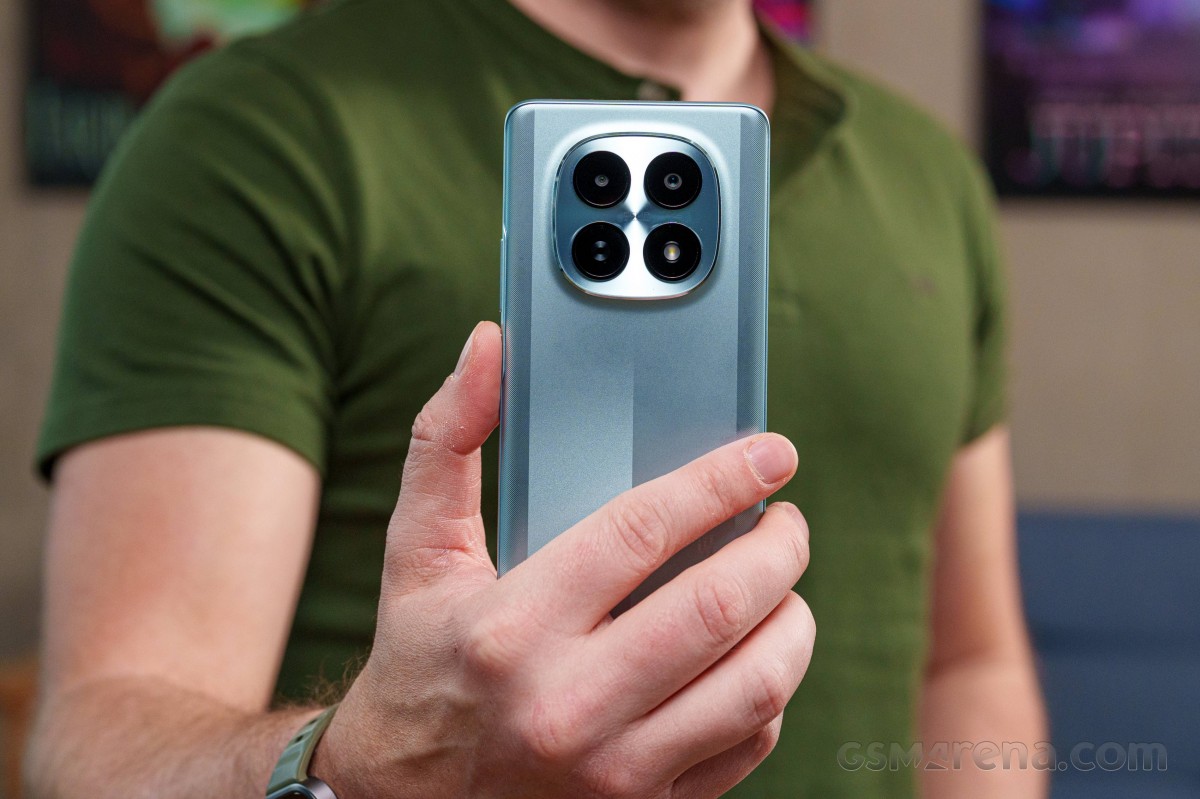
The Poco M8 is equipped with a stereo speaker setup, combining a bottom-firing main unit with a secondary top-firing speaker. The two aren't identical in size, and that imbalance is noticeable in real-world output as well.
Poco M8 review

Even so, channel balance remains fairly good overall. The soundstage is pleasantly wide, and the mids come through with reasonable body. As expected, bass is practically nonexistent, while cranking the volume towards the upper end introduces audible high-frequency distortion, giving the sound a somewhat harsh edge. Xiaomi appears to have favored outright loudness over pure fidelity here.

The volume slider can be boosted all the way up to an aggressive 300% here, whereas the Redmi Note 15 Pro 5G and 4G push things even further to 400%.

For the cleanest listening experience, we recommend sticking to 100% or below. At maximum boost, the phone certainly gets very loud, but clarity takes a clear hit.

Our recorded audio sample is captured at 100% volume, while the loudness score reflects the boosted 300% setting.

On the software front, the Poco M8 supports Dolby Atmos, complete with a graphic equalizer and multiple presets. Alternatively, you can switch to Xiaomi's in-house audio tuning if you prefer a different sound profile.

Connectivity

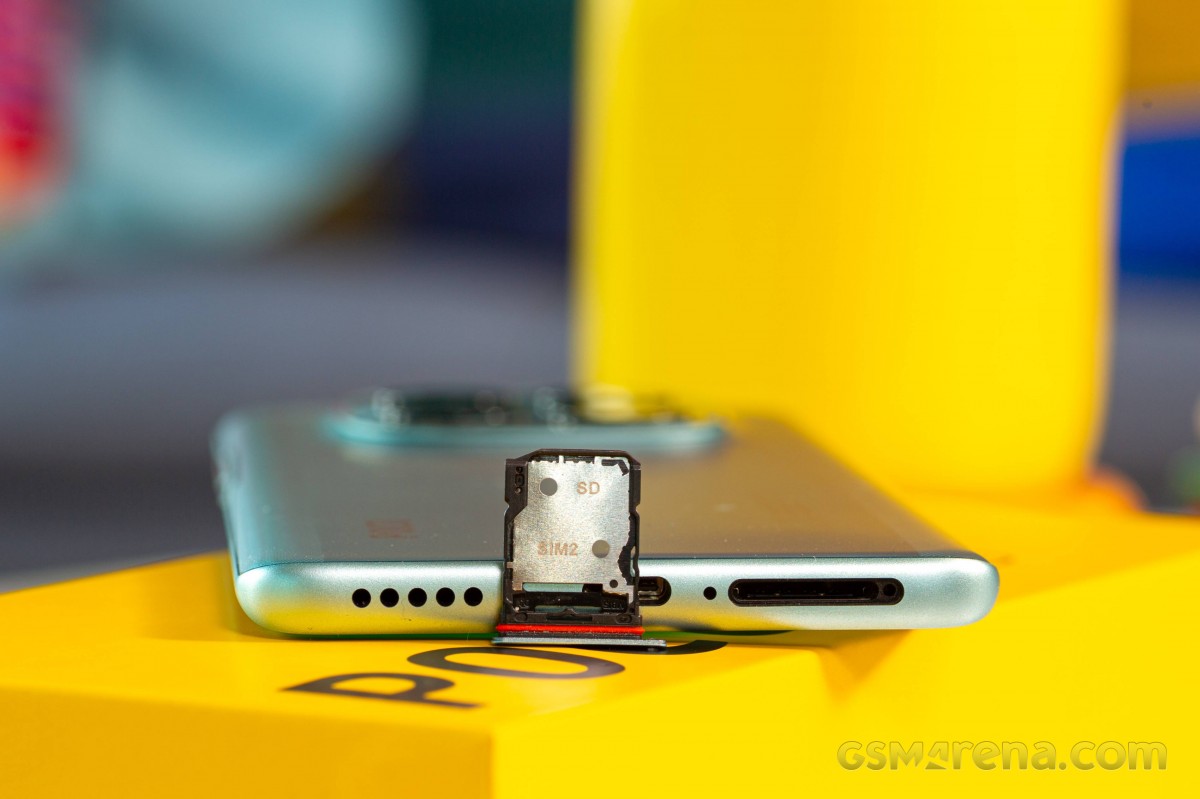
The Poco M8 is a dual Nano-SIM device, with SA/NSA Sub-6 5G support on both of its SIM slots simultaneously. Unfortunately, there is no eSIM support, just like it is lacking on the Redmi Note 15 Pro 4G and the Redmi Note 15 5G. You do get expandable storage. Though it is a hybrid slot, you have to choose between a second SIM or a microSD.

Positioning includes GPS, GLONASS, BDS, QZSS and GALILEO support. Local connectivity is pretty solid, though not exceptional in any way. You only get dual-band Wi-Fi 5 (ac) and Bluetooth 5.1 with LE support. Some markets get NFC as well, but you have to check with your retailer of choice for that.

There is no 3.5 mm audio jack and no FM radio receiver. You do, however, get an IR blaster located on the top frame, rather than in the camera island, which is the latest trend.
Poco M8 review

The USB Type-C port is limited to a basic USB 2.0 connection, capping theoretical transfer speeds at 480 Mbps. USB OTG/Host Mode is supported, but there are no extras like video output via USB Alt Mode.

For sensors, the Poco M8 gets an STMicro lsm6dso accelerometer and gyroscope combo, a QST qmc630x magnetometer and compass combo and an SI sip1328 light sensor positioned in the frame right above the display.

Unfortunately, there's no onboard barometer or dedicated hardware proximity sensor. Instead, Xiaomi relies on a virtual solution. In practice, though, it seems reliable enough for tasks like turning off the display during calls.

Next Page » 4. Software and performance
3. Our lab tests - display, battery life, charging speed, speaker
  1. 1. Introduction, specs, unboxing
  2. 2. Design, build quality, handling
  3. 3. Our lab tests - display, battery life, charging speed, speaker
  4. 4. Software and performance
  5. 5. Camera, photo and video quality
  6. 6. Final words, our verdict, pros and cons
  7.  
  8. Xiaomi Poco M8 specification
  9. User opinions and reviews
  10. Review comments (29)

Reviews Poco M8 5G reviewPage 3
  • Comments (29)
  • User reviews
  • Poco M8

Phone finder

  • Samsung
  • Apple
  • Huawei
  • Nokia
  • Sony
  • LG
  • HTC
  • Motorola
  • Lenovo
  • Xiaomi
  • Google
  • Honor
  • Oppo
  • Realme
  • OnePlus
  • Nothing
  • vivo
  • Meizu
  • Ulefone
  • Alcatel
  • ZTE
  • RugOne
  • Umidigi
  • Fairphone
  • Oscal
  • Sharp
  • Micromax
  • Infinix
  • Asus
  • Tecno
  • Doogee
  • Blackview
  • Cubot
  • Oukitel
  • Itel
  • TCL

All brands Rumor mill

ADVERTISEMENT

Popular reviews

Apple iPhone 18 Pro Max review
Apple iPhone 18 Pro review
Galaxy Tab S12 Ultra review
ADVERTISEMENT

ELECTRIC VEHICLES

Volkswagen takes the slow road to hands-off driving in China Volkswagen takes the slow road to hands-off driving in China XPeng sends Mona L05 to customers abroad ahead of Chinese launchAudi announces major restructuring of China operations with brand split
ADVERTISEMENT
Ads by Playwire

Home News Reviews Compare Coverage Glossary FAQ RSS Youtube Instagram TikTok Facebook Twitter

© 2000-2026 GSMArena.com Mobile version Android app Tools Contact us Merch store Privacy Terms of use