Motorola Razr 2025/Razr 60 review
Pretty nice pair of displays
The Razr 2025 is staying true to the Razr formula and pairs an excellent internal panel with a reasonably sized and well-matched in terms of specs cover display to deliver a modern-day clamshell experience just a notch below the company's Ultra models. This vanilla model's displays numbers are unchanged compared to the previous generation, which is when the big cover screen overhaul happened, while the main panel had been more or less dialed in another year prior.

So the main display is a 6.9-inch LTPO OLED with a 1,080x2,640px resolution in a tallish 22:9 aspect, while the refresh rate maxes out at 120Hz. The Razr Ultras get a bit more resolution (1,224x2,912px), a bit higher refresh rate (165Hz), and some more HDR support (Dolby Vision too, not just HDR10+), but it's not like the plain Razr is missing out on anything too important. The Razr+ 2025 will get you Ultra-grade HDR support and refresh rate, as the middle option.
The cover screen is also carried over from the Razr 2024/Razr 50, where it was a major upgrade over the tiny ticker-style solution of the Razr 40. We're looking at a 3.6-inch panel with a 1,056x1,066px resolution and a 90Hz maximum refresh rate, and those funky cutouts for the cameras.

With all the talk of how little has changed from last year's models, it shouldn't be a surprise to see that the Razr 2025's brightness results in our testing are very similar to those we got out of the Razr 50, though this time they are consistently that little bit lower. Still, with roughly 1,200nits in auto mode you shouldn't be left wanting when out in the sun. The 506nits in manual operation do look a little bit low - 600 would have been better.
Max display brightness test
White test pattern, 75% fill (nits)
- Manual mode
- Auto mode
 Motorola Edge 60 Pro
 Motorola Razr 50
 Motorola Razr 50 Ultra
 Motorola Razr 2025
 vivo X Flip
 Infinix Zero Flip
 Oppo Find N3 Flip
On the cover display, we got a slightly higher result than on the inside, which was, in turn, slightly lower than what we measured on the Razr 50.
Max display brightness test
White test pattern, 75% fill (nits)
- Manual mode
- Auto mode
 Motorola Razr 60 Ultra (Cover display)
 Xiaomi Mix Flip (Cover display)
Motorola Razr 50 (Cover display)
Motorola Razr 50 Ultra (Cover display)
Motorola Razr 2025 (Cover display)
 Tecno Phantom V Flip2 (Cover display)
Refresh rate
The refresh rate handling is the same straightforward implementation that we saw on the Razr 50. You get two modes with the same adaptive behavior, but different ceilings - 120Hz in High mode and 60Hz in Standard. Regardless of mode, the Razr will dial all the way down to 1Hz, when left idling.

High frame rate gaming is also possible. You can force the display to maintain 120Hz by selecting the 'Turbo' performance profile from the gaming utility.
Streaming and HDR
There's no Dolby Vision support on the Razr 2025, but HDR10 and HDR10+ are supported. The Widevine L1 compliance ensures high-res playback of DRM-protected content.
HDR didn't work in Netflix though, but it did in YouTube, so long as you have your HDR video in full-screen mode - no windowed HDR playback is possible.

The previous model had some issues with its implementation of the Android Ultra HDR photo standard, but they seem to have been resolved now and you'll get the characteristic brightness boost in Google Photos and Google Chrome for compatible images taken on this Razr, or other compliant devices.
Motorola Razr 2025/Razr 60 battery life
The Razr 2025 is powered by a 4,500mAh battery - it's gained some 300mAh over the previous generation's capacity. The development is made possible at least partially thanks to the switch to a silicon carbon anode type of battery, which has let the engineers cram more juice into the same size and weight. The Ultra still has a slightly larger powerpack (4,700mAh), while the Razr+ 2025 has nothing plus about it in this respect, with just a 4,000mAh battery capacity.
In our testing, the new Razr actually clocked in shorter runtimes across the board, adding up to a relatively unremarkable Active Use Score of 9:28h. Mind you, we're comparing this year's North American version to last year's international one and it just might turn out that the internationalRazr 60 actually does better than the US Razr 2025 for one reason or another. Still, we don't have a Razr 60 for proper head-to-head testing.
Our new Active Use Score is an estimate of how long the battery will last if you use the device with a mix of all four test activities. You can adjust the calculation based on your usage pattern using the sliders below. You can read about our current battery life testing procedure here. For a comprehensive list of all tested devices so far, head this way.
Charging speed
The Razr 2025 charges at up 30W according to its specs pages but it doesn't ship with a charger so it's up to you to supply your own. We tested with one of Motorola's higher-spec adapters (68W TurboPower) as well as a nice third-party 100W USB Power Delivery unit.

In our testing, using either adapter, the Razr 2025 took 55 minutes to get from just above empty to 100%, with the indicator showing 61% at the half hour mark. It's a tiny bit quicker than the Razr 50, which is ultimately a decent improvement, given the increase in capacity.
Some of that improvement might be due to the overly enthusiastic indicator though, since it takes upwards of 10 minutes after the phone reaches a reported 100% before it actually stops drawing significant power (which is a relatively normal behavior anyway). Either way, the maximum power the phone would take was around 23-24W.
Charging speed
- in 15 min
- in 30 min
- Time to full charge (from 0%)

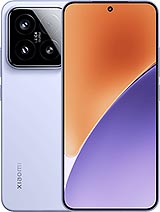 Xiaomi 15
Xiaomi Mix Flip
Oppo Find N3 Flip
Motorola Razr 2025
Motorola Razr 50
 Galaxy S25
 Galaxy Z Flip6
Just like the previous model, the Razr 2025 supports wireless charging up to 15W - pretty standard stuff, and the same as the Razr+ 2025. If you'd want faster wireless charging, the Razr Ultra 2025 offers a 30W rating (if you get the right charging pad, of course).
Other Motos have a Charge boost option where you get to choose whether you want the absolute fastest charging, or take it a notch down to preserve the battery in the long run. Well that option isn't present on the Razr 2025 - it charges as fast as it charges and that's that.
You do get some battery health features, of course. You can set an 80% hard limit on the charging, which might come in handy if you always have the phone hooked up to a charger. There's also the usual 'Optimised charging' that will only top off the battery just before the time you typically unplug the phone from the charger, so that it spends as little time at 100% as possible.
Speaker test
The Razr 2025 has a stereo speaker system with one bottom-firing unit and another one up top that's also the earpiece. Each speaker is only assigned one of the tracks and the phone will adjust which track that is, based on the orientation.


Bottom speaker • Top speaker doubles as earpiece
The Razr 2025 earned a 'Very Good' rating for loudness in our testing - on par with the Razr 60 Ultra and louder than the Galaxy Z Flip6. It sounds nice and clean, has pleasing vocals and a bit of a thump in the low end. We'd say it's better than both its Ultra stablemate and the Galaxy.
Use the Playback controls to listen to the phone sample recordings (best use headphones). We measure the average loudness of the speakers in LUFS. A lower absolute value means a louder sound. A look at the frequency response chart will tell you how far off the ideal "0db" flat line is the reproduction of the bass, treble, and mid frequencies. You can add more phones to compare how they differ. The scores and ratings are not comparable with our older loudspeaker test. Learn more about how we test here.


Tip us
2.1m 180k
RSS
EV
Merch
Log in I forgot my password Sign up