Infinix GT 30 Pro review
Display
The display is definitely one of the highlights of the Infinix GT 30 Pro package. It is a 6.78-inch panel with 10-bit color and a 144Hz refresh rate. It is also perfectly flat, which is arguably better for gaming. The display resolution is a crisp 1224 x 2720 pixels, which works out to around 440 ppi of density at this diagonal. The display is covered with Corning Gorilla Glass 7i.

We did our standardized measurements on the GT 30 Pro, and it turns out that the display is also very bright. We managed to register a maximum of 718 nits on the slider. However, there is also an optional extra brightness toggle. After enabling it and subjecting the phone to a bright light, we got a very impressive 1,897 nits. That's more than usable outdoors, even in direct sunlight.
Max display brightness test
White test pattern, 75% fill (nits)
- Manual mode
- Auto mode
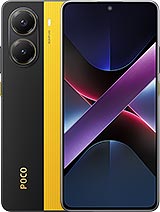
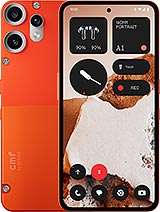
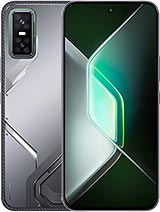 Infinix GT 30 Pro
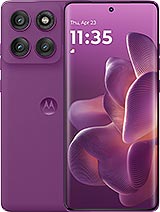 Motorola Edge 60 Pro
 Infinix Hot 50 Pro+ 4G
 Redmi Note 14 Pro 5G
 Infinix Note 50 Pro 4G
 Infinix Note 50 Pro+
 Galaxy A16 5G
At the lowest end of the brightness slider, the screen puts out around 2.9 nits, which is okay, though we've seen phones regularly go as low as 2 nits.
As mentioned, the GT 30 Pro supports up to 144Hz refresh rate. It can operate at 60Hz, 90Hz, 120Hz, and 144Hz and switch between these modes at will. In terms of actual refresh rate modes, there are three in settings. The regular one just locks the refresh rate to 60Hz.
There is also an auto-switching one that automatically switches between 60Hz, 90Hz and 120Hz. To access the 144Hz mode, there is a third display setting. However, in our testing, the third setting behaves absolutely identically to the auto-switching mode. That is to say that you get 120Hz briefly while interacting with the phone and 60Hz while it is idling or playing video. That's pretty standard behavior, but we never actually managed to trigger the 144Hz mode. We tried a few games that we know can push higher frame rates with no success. Most games we tried just ran in 90Hz mode for some reason.
So, even though the GT 60 Pro is marketed as having a 144Hz refresh rate, we never actually managed to get more than 120Hz out of it and even less in gaming.

The Infinix GT 30 Pro can decode HDR10, HDR10+ and HLG video streams, but displaying them will be limited by the screen, which lacks any official HDR video support. It is a shame, really, given that it definitely has the maximum brightness. At least, we are happy to report that it supports the highest possible Google Widevine L1 DRM certification.
Battery life
The Infinix GT 30 Pro is equipped with a decently large 5,500 mAh battery. It cones with 5,200 mAh in some markets. We ran our standardized battery tests and got some solid results. While the phone won't be winning any endurance awards, it is still pretty decent, with an Active Use Score of 13:24 hours.
Charging speed
The GT 30 Pro supports 45W wired proprietary fast charging. You get the compatible charger in the box, which is a nice touch. It is hardly the fastest-charging device out there, but it still holds its own well enough. You can expect to get around 27% charge in fifteen minutes, followed by 50% at the half-hour mark. A full charge takes just over an hour, which is not too bad at all.
Charging speed
- in 15 min
- in 30 min
- Time to full charge (from 0%)
 Redmi Note 14 Pro+ (Global)
 Nothing phone (3a)
 Galaxy A36
Infinix GT 30 Pro
Galaxy A16 5G
Infinix Hot 50 Pro+ 4G
 Redmi Note 14 Pro 4G
Beyond wired charging, the GT 30 Pro also supports wireless charging for extra convenience. It is rated at a respectable 30W.
Also, on the charging front, there is support for bypass charging, which is great to see on a gaming device since it reduces both heat and wear and tear on the battery.
Finally, you can also do reverse charging from the GT 30 Pro - 10W wired and 5W wireless.
Speakers - loudness and quality
The GT 30 Pro has a stereo speaker setup, with one speaker facing down and the other facing up. This ensures much better stereo separation and output balance, which we can appreciate. Unlike other Infinix models that feature a JBL setup for their speakers, it appears to be absent from the GT 30 Pro. You go get DTS equalizers, which is something.

Each speaker plays its own track plus the opposite channel's track at a lower volume, and the phone adjusts the channels depending on its orientation. The bottom speaker is a bit more powerful, as usual.

The speakers on the GT 30 Pro scored a Very Good mark on our loudness test. Their audio quality is average, though. The high frequencies are very well presented, the vocals are alright, though nothing impressive, and the bass is almost non-existent.
Use the Playback controls to listen to the phone sample recordings (best use headphones). We measure the average loudness of the speakers in LUFS. A lower absolute value means a louder sound. A look at the frequency response chart will tell you how far off the ideal "0db" flat line is the reproduction of the bass, treble, and mid frequencies. You can add more phones to compare how they differ. The scores and ratings are not comparable with our older loudspeaker test. Learn more about how we test here.
Connectivity
The Infinix GT 30 Pro is a dual Nano-SIM device that simultaneously supports both slots' SA/NSA Sub-6 5G connectivity. Unfortunately, there is no eSIM support, at least not in our review unit.
The phone has GPS, GLONASS and GALILEO support for positioning. Local connectivity is covered by dual-band Wi-Fi 6 alongside Bluetooth 5.4 with LE support. There is also an NFC on board and an IR blaster. You even get an FM radio receiver. No 3.5mm audio jack, though.

A simple USB 2.0 data connection backs up the Type-C port on the GT 30 Pro. That means a theoretical maximum transfer rate of 480 Mbps. You don't get additional features like video output, but the port supports Host/OTG.
In terms of sensors, the Infinix GT 30 Pro has an ST LSM6DSO accelerometer and gyroscope combo, a QST QMC6308 magnetometer and compass combo, a sensortek STK35F62 light sensor and what looks to be a virtual proximity sensor - Elliptic Labs Proximity. Even so, turning off the phone screen during calls works quite reliably. There is no barometer on board.


Tip us
2.1m 180k
RSS
EV
Merch
Log in I forgot my password Sign up