Asus ROG Phone review
Speed-binned Snapdragon 845
Yes, you read that correctly. While overclocking is not unheard of in the mobile phone realm, especially among flagship devices, binning is a little bit more "out-there". Again, to be fair, practically all chip manufacturers have at least some binning process in place and corresponding quality grades for their chips, but if the Asus PR is to be believed, what we have here goes one step beyond. If you are a PC gamer enthusiast then the term "silicon lottery" should be fairly familiar. If not, it simply boils down to inherent variances in quality and performance from unit to unit, usually referring to chips and processors in particular.

Winning the "silicon lottery" thus refers to getting a chip that can be pushed to perform sustainably past its specification. Essentially overclocked beyond the values that the manufacturer deemed safe and average enough to apply to all of its chips, thus adhering to the lowest common denominator of quality. This "winning" could, of course, be a matter of chance for an enthusiast end user. However, in the PC realm, there are also companies who make a living out of cherry-picking the highest grade chips and then selling them at a premium.
All this intricacy from the overclocking scene is not really relevant to the mobile realm, since modifying clock speeds and multipliers on a mobile device is far more difficult, not to mention risky due to the passive cooling nature of the devices and fairly limited in the potential performance gains that can be achieved. Hence, it is hardly a thing anybody bothers to do. That is, unless you decide to do it on the manufacturing side of things - another prime example of Asus taking a page out of its PC business experience and transferring it over to mobile and the emerging "gaming" hardware niche.

So, what did Asus do in particular? Well, a standard Snapdragon 845 chipset has a big.LITTLE CPU configuration featuring four Kryo 385 Silver cores, clocked at a maximum of 1.8 GHz and another four Kryo 385 Gold, going up to 1.8 GHz. In the ROG Phone, the latter cluster of powerful cores can go up to 2.96GHz. That is not an insignificant difference, at least of paper, especially when carried over four cores. The impressive bit is that this is a mobile device and for multiple reasons, some of which we already mentioned, you don't really see overclocked CPU's that often. Especially not ones the manufacturer guarantees are binned and verified to be stable at these sustained clocks. As far as how much of a difference that makes to performance, though, you can read on and find out.
In the meantime, let's look at how our review unit tacked standard benchmarks. Just to clarify, beyond the overclock we already mentioned, Asus has seemingly done nothing else to the Snapdragon 845. Its Adreno 630 GPU is working at stock speeds of 710 MHz, which is kind of odd, seeing how most overclocks we have seen in the past from manufacturers like Samsung typically meddle with GPU clocks. But, we digress. Beyond this our review unit has 8GB of RAM and 128GB of storage - the lower of the two tiers, but probably the one most buyers will go for anyway.
GeekBench 4.1 (single-core)
Higher is better
-
Samsung Galaxy S9+
3771 -
Samsung Galaxy Note9
3642 -
Huawei Mate 20 Pro (perf.)
3390 -
Huawei Mate 20 Pro
3291 -
ASUS ROG Phone X mode
2573 -
ASUS ROG Phone X mode (Fan on)
2556 -
ASUS ROG Phone
2514 -
ASUS ROG Phone (Fan on)
2504 -
Asus ZenFone 5z
2488 -
Sony Xperia XZ3
2486 -
vivo NEX S
2466 -
HTC U12+
2456 -
Xiaomi Pocophone F1
2438 -
Xiaomi Mi 8
2431 -
OnePlus 6T
2431 -
Razer Phone 2
2424 -
Razer Phone 2 (cooled)
2421 -
LG V40 ThinQ
2408 -
OnePlus 6T McLaren Edition
2376 -
Google Pixel 3 XL
2363 -
Oppo Find X
2322 -
Oppo Find X Lamborghini Edition
2315 -
Samsung Galaxy S9+ (Snapdragon)
2199 -
Motorola Moto Z3
1924
Starting with a pure CPU test and GeekBench, we can get a feel of just how much of a difference the bump in clock speed provides. In single-threaded workloads, we can clearly see the ROG Phone pulling ahead of the Snapdragon 845 pack, although not nearly enough to catch up the the Kirin 980 and the Exynos 9810. Frankly, not an unexpected result.
GeekBench 4.1 (multi-core)
Higher is better
-
Huawei Mate 20 Pro (perf.)
10110 -
Huawei Mate 20 Pro
9712 -
ASUS ROG Phone X mode (Fan on)
9406 -
ASUS ROG Phone X mode
9375 -
ASUS ROG Phone (Fan on)
9309 -
ASUS ROG Phone
9230 -
vivo NEX S
9160 -
Razer Phone 2 (cooled)
9110 -
Asus ZenFone 5z
9030 -
Samsung Galaxy Note9
9026 -
OnePlus 6T McLaren Edition
9005 -
Xiaomi Pocophone F1
9003 -
HTC U12+
9001 -
OnePlus 6T
8977 -
Razer Phone 2
8923 -
Samsung Galaxy S9+
8883 -
Sony Xperia XZ3
8607 -
LG V40 ThinQ
8568 -
Xiaomi Mi 8
8494 -
Samsung Galaxy S9+ (Snapdragon)
8349 -
Google Pixel 3 XL
8088 -
Oppo Find X Lamborghini Edition
8032 -
Oppo Find X
8018 -
Motorola Moto Z3
6614
Engage all the cores and the ROG Phone and its overclocked Snapdragon 845 pull ahead of the Exynos 9810 and surprisingly even manage to come close to the Kirin 980 and its 7nm prowess.
We should probably reference the fact that there are four entries for the ROG Phone. These are clearly marked and yes, we did go through the trouble of testing the handset with all available combinations of its "X Mode" performance toggle and the active fan attachment. It is also worth noting that the ROG Phone gets its CPU overclock regardless of performance mode or fan, so even the plain entry has the higher clock working for it.
AnTuTu 7
Higher is better
-
Huawei Mate 20 Pro (perf.)
308050 -
OnePlus 6T
293994 -
OnePlus 6T McLaren Edition
292716 -
ASUS ROG Phone (Fan on)
292371 -
Oppo Find X
291218 -
ASUS ROG Phone
290975 -
ASUS ROG Phone X mode (Fan on)
288821 -
ASUS ROG Phone X mode
288176 -
vivo NEX S
287081 -
Oppo Find X Lamborghini Edition
286938 -
Razer Phone 2 (cooled)
286076 -
Razer Phone 2
285051 -
Sony Xperia XZ3
284555 -
Huawei Mate 20 Pro
273913 -
Asus ZenFone 5z
266590 -
Xiaomi Pocophone F1
265314 -
Samsung Galaxy S9+ (Snapdragon)
264044 -
HTC U12+
263696 -
Google Pixel 3 XL
258244 -
LG V40 ThinQ
254304 -
Samsung Galaxy Note9
248823 -
Samsung Galaxy S9+
246660 -
Xiaomi Mi 8
217298 -
Motorola Moto Z3
207903
Heat is always a concern for electronics and especially passively cooled phones. Since, no matter how good of an internal cooling solution you have in place, heat will inevitably build up over time, since there is no was to actively pull it away from the silicon.

Hence, practically all smartphones thermal-throttle sooner or later. The real challenge is to do this as gracefully as possible - gradually lowering clock speeds in hopes of sustaining smoother and higher average performance for as long as possible.


ROG Phone thermal-throttling test: No Fan
Here is another interesting visualization oh just how well the ROG Phone manages to handle thermal-throttling with and without the fan attached.


ROG Phone thermal-throttling test: With Fan
We can clearly see a lot less dips in frame rate, which is ultimately what you are after. Just for reference, here is how well the Razer Phone faired with the same test.
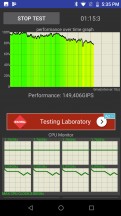
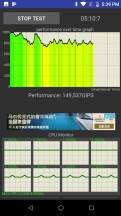
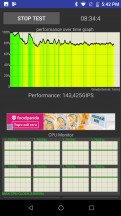
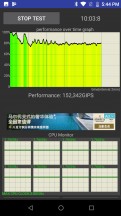
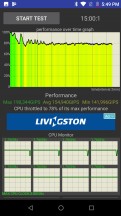
Razer Phone 2 CPU throttling test
It is worth noting that higher benchmark scores with active cooling is not a new revelation. In fact, we have been cooling certain phones for quite some time now, mostly to point out poor thermal performance. And, like we said, every phone is going to thermal-throttle sooner or later, even the ROG Phone with its active fan. But since the latter is actually part of the retail package and hence available to every ROG Phone user, we thought it's curious to see how the performance is affected in all of our benchmarks.
Basemark OS 2.0
Higher is better
-
ASUS ROG Phone X mode (Fan on)
4702 -
ASUS ROG Phone X mode
4700 -
ASUS ROG Phone (Fan on)
4684 -
ASUS ROG Phone
4614 -
Huawei Mate 20 Pro (perf.)
4610 -
OnePlus 6T
4452 -
Asus ZenFone 5z
4309 -
HTC U12+
4300 -
Samsung Galaxy S9+ (Snapdragon)
4196 -
Razer Phone 2 (cooled)
4189 -
vivo NEX S
4167 -
Razer Phone 2
4163 -
LG V40 ThinQ
4003 -
Huawei Mate 20 Pro
3939 -
Google Pixel 3 XL
3895 -
Xiaomi Mi 8
3858 -
Xiaomi Pocophone F1
3713 -
Sony Xperia XZ3
3700 -
Oppo Find X
3636 -
Motorola Moto Z3
3432 -
Samsung Galaxy S9+
3354 -
Samsung Galaxy Note9
3064
Graphics
Now let's turn our eyes to the graphics benchmarks.
GFX 3.1 Manhattan (1080p offscreen)
Higher is better
-
Samsung Galaxy S9+ (Snapdragon)
61 -
OnePlus 6T McLaren Edition
61 -
ASUS ROG Phone
60 -
ASUS ROG Phone (Fan on)
60 -
ASUS ROG Phone X mode
60 -
ASUS ROG Phone X mode (Fan on)
60 -
HTC U12+
60 -
Xiaomi Pocophone F1
60 -
Oppo Find X
60 -
Oppo Find X Lamborghini Edition
60 -
OnePlus 6T
60 -
vivo NEX S
60 -
Asus ZenFone 5z
60 -
Razer Phone 2 (cooled)
60 -
Sony Xperia XZ3
56 -
LG V40 ThinQ
56 -
Huawei Mate 20 Pro (perf.)
54 -
Huawei Mate 20 Pro
53 -
Xiaomi Mi 8
53 -
Razer Phone 2
51 -
Samsung Galaxy S9+
47 -
Samsung Galaxy Note9
45 -
Google Pixel 3 XL
44 -
Motorola Moto Z3
42
GFX 3.1 Manhattan (onscreen)
Higher is better
-
vivo NEX S
55 -
Asus ZenFone 5z
55 -
ASUS ROG Phone
54 -
ASUS ROG Phone (Fan on)
54 -
ASUS ROG Phone X mode
54 -
ASUS ROG Phone X mode (Fan on)
54 -
OnePlus 6T McLaren Edition
54 -
Xiaomi Pocophone F1
53 -
Oppo Find X Lamborghini Edition
53 -
OnePlus 6T
53 -
Xiaomi Mi 8
50 -
Oppo Find X
50 -
Motorola Moto Z3
37 -
Razer Phone 2 (cooled)
37 -
Samsung Galaxy S9+ (Snapdragon)
34 -
HTC U12+
33 -
Razer Phone 2
33 -
Sony Xperia XZ3
31 -
LG V40 ThinQ
29 -
Huawei Mate 20 Pro
27 -
Huawei Mate 20 Pro (perf.)
27 -
Samsung Galaxy Note9
25 -
Samsung Galaxy S9+
24 -
Google Pixel 3 XL
24
As you can clearly see, having the fan on or off, as well as "X Mode" for that matter makes no actual difference to the results. This is true across the board for the various GFXBench tests we ran. In fact, even when we did record some GPU performance differences in Basemark X these did not align perfectly with the expected results, so we can easily write them off as margin of error.
Basemark X
Higher is better
-
ASUS ROG Phone X mode
60713 -
ASUS ROG Phone X mode (Fan on)
60171 -
ASUS ROG Phone (Fan on)
59983 -
ASUS ROG Phone
59072 -
Razer Phone 2
54750 -
Razer Phone 2 (cooled)
53273 -
Huawei Mate 20 Pro (perf.)
44780 -
HTC U12+
44390 -
LG V40 ThinQ
44260 -
Samsung Galaxy S9+ (Snapdragon)
44013 -
Asus ZenFone 5z
43911 -
OnePlus 6T
43886 -
Sony Xperia XZ3
43843 -
vivo NEX S
43810 -
Xiaomi Pocophone F1
43652 -
Xiaomi Mi 8
43285 -
Google Pixel 3 XL
43073 -
Samsung Galaxy S9+
42134 -
Samsung Galaxy Note9
41994 -
Oppo Find X
40537 -
Huawei Mate 20 Pro
40269 -
Motorola Moto Z3
34848
Digging through the various results a bit deeper did reveal somewhat of a patter regarding "X Mode" though. We noticed that having it on does seem to boost GPU performance a tiny bit - a fact only visible in the newest and most difficult OpenGL ES 3.1 and Vulkan GFXBench runs.
Aztek Vulkan High (onscreen)
Higher is better
-
ASUS ROG Phone X mode
22 -
ASUS ROG Phone X mode (Fan on)
22 -
ASUS ROG Phone
21 -
ASUS ROG Phone (Fan on)
21 -
OnePlus 6T
21 -
Razer Phone 2
13 -
Razer Phone 2 (cooled)
13 -
Sony Xperia XZ3
12 -
Google Pixel 3 XL
10 -
Huawei Mate 20 Pro
7.5
Aztek OpenGL ES 3.1 High (onscreen)
Higher is better
-
ASUS ROG Phone X mode
22 -
ASUS ROG Phone X mode (Fan on)
22 -
OnePlus 6T
22 -
ASUS ROG Phone
21 -
ASUS ROG Phone (Fan on)
21 -
Razer Phone 2
15 -
Razer Phone 2 (cooled)
15 -
Sony Xperia XZ3
14 -
Google Pixel 3 XL
14 -
LG V40 ThinQ
13 -
Huawei Mate 20 Pro
11
Basemark X naturally registered this fact as well. Its results are probably the most comprehensive and comparable of the bunch since other tests, especially the on-screen GFX runs are very dependent on resolution, which is all over the place with the current tall display trend.
GFX 3.0 Manhattan (onscreen)
Higher is better
-
ASUS ROG Phone
74 -
ASUS ROG Phone (Fan on)
74 -
ASUS ROG Phone X mode
74 -
ASUS ROG Phone X mode (Fan on)
74 -
Xiaomi Pocophone F1
59 -
Oppo Find X Lamborghini Edition
59 -
OnePlus 6T
59 -
vivo NEX S
59 -
Asus ZenFone 5z
59 -
Oppo Find X
58 -
Xiaomi Mi 8
57 -
Razer Phone 2 (cooled)
56 -
Samsung Galaxy S9+ (Snapdragon)
51 -
Huawei Mate 20 Pro
50 -
Huawei Mate 20 Pro (perf.)
50 -
HTC U12+
50 -
Motorola Moto Z3
49 -
Samsung Galaxy Note9
46 -
LG V40 ThinQ
46 -
Samsung Galaxy S9+
45 -
Sony Xperia XZ3
45 -
Razer Phone 2
44 -
Google Pixel 3 XL
39
Last, but not least, we should make a few notes on the high refresh rate aspect of the ROG Phone. First off, all the benchmark runs were done at the full 90Hz of the display, which is the reason for certain glorious scores like the above fairly low-stress on-screen Manhattan GFX 3.0 run.
Mind you, since this is still a benchmark, it is hardly indicative of real-world rendering difficulty.
The ROG Phone is an amazing performer, currently setting the bar for what the Snapdragon 845 can do through some hardware and software optimization and love. It is also more than capable of chewing through practically any Android game out there, likely even maxing out its frame rate.
And that is actually a thing to consider if you plan on taking full advantage of that glorious, smooth 90Hz refresh rate since not all games can go past 60fps, even if you have the horsepower for it. Unfortunately, it is largely going to be a hit-and-miss affair finding titles that can saturate the refresh rate of the ROG Phone.

Thankfully, after finding itself in the unfavourable early-adopter position with its two handsets, competitor Razer did start compiling a list of titles that are know to be able to push past the 60fps mark. You can check it out at this link.


Tip us
2.1m 180k
RSS
EV
Merch
Log in I forgot my password Sign up