Apple iPhone 17e review
Same single camera on the back, old-style selfies too
The iPhone 17e straight-up reuses the 16e's camera system and it's a pretty basic camera system for a €700 phone, iPhone as it may be. There are just two cameras - a single rear one, and a selfie camera - and they're Apple's most modest imaging hardware on sale.
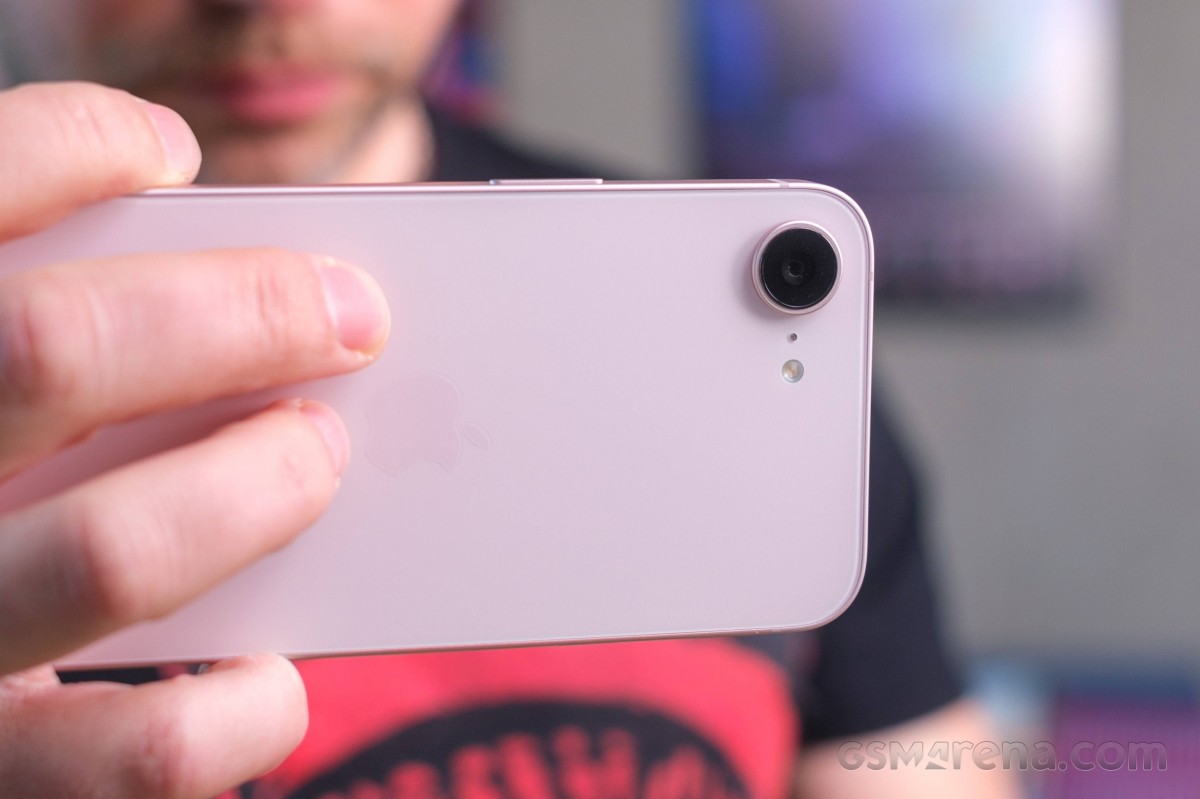
The rear 48MP unit isn't the same one that you'll find on the 17 Pros and not even the smaller one that plain 17s gets. Instead, it is, by all accounts, the 1/2.55" imager that higher-tier models in the lineup have on their ultrawide cameras. Meanwhile, the 17e doesn't even have an ultrawide camera - the newest small-letter-series model from across the OS divide, the Pixel 10a, does have one.
Similarly, the selfie camera isn't using the company's latest 18MP multi-aspect octagonal sensor, but the old and conventionally rectangularly shaped 12MP unit of pre-17 models.
- Rear (main): 48MP (1/2.55", 0.7µm-1.4µm); 26mm, f/1.6, OIS, dual-pixel PDAF (8.5cm - ∞); 4K60 video recording.
- Front camera: 12MP (1/3.6", 1.0µm); 23mm, f/1.9, PDAF; 4K60.
The 17e comes with the iOS 26 simplified camera interface with just Photo and Video modes immediately visible and the other modes accessed by swiping left or right. You kind of have to know it works like that - it's hardly intuitive - but if you're into iPhones, you know, or you learn eventually.
It's the same thing with capture options like flash and exposure - you don't have a visual clue for those either, unless they're in a sort of an active state in which case they show up as contextual indicators/buttons in the far corner of the viewfinder. Other indicators also show up there, like the auto Night mode crescent, and there's also an always featured flash toggle there in addition to it being present in the swipe-up menu.
The 17e is the only one of the 17s not to have the Camera Control key - e-models don't get such niceties.

Daylight photo quality
Rear camera
The 17e, as all recent iPhones with a 48MP main camera, lets you choose between a 12MP and a 24MP regular resolution in settings, with the nominal 48MP available as an option in the viewfinder either way. We embraced the 24MP mode as default, but we also shot a few of the scenes in 12MP and 48MP on top of that.
The 1x photos in bright daylight are pretty solid without really shining. There's plenty of detail, rendered with a bit of gritty quality to it. Even slightly dimmer indoor scenes can get a bit grainier, but they're not bad after all. White balance is on point and colors are quite likeable - not too vivid (as if), not too bland. Dynamic range is wide, contrast is great.








Daylight samples, rear camera (1x), 24MP
Here's the first few scenes saved in 12MP and 48MP - you're a bit spoiled for choice here. We'd say the 48MP mode is more easily dismissed - while the shots are relatively good, they're not as good as on more premium iPhones and soft-ish in the shadows, and ultimately not worth the storage space unless you insist on doing some after-the-fact processing. The 12MP counterparts, on the other hand, will save you some space and still deliver good detail, though here you might be faced with some fear of missing out on some potential detail. We'd stick to 24MP.




Daylight samples, rear camera (1x), 12MP




Daylight samples, rear camera (1x), 48MP
The f/1.6 aperture may sound promising for subject isolation, but let's not forget it relates to a relatively small sensor, so you won't be getting a whole lot of background blur in portrait shooting after all. That is, unless to resort to some Portrait mode action. Skin tones are nice either way.








Human subjects, rear camera (2x): Photo mode • Portrait mode
The 17e's 2x zoom shots are alright in terms of sharpness, but not quite on an iPhone Pro level - maybe about as good as on an iPhone 17. Let's call it an acceptable mid-tier performance.








Daylight samples, rear camera (2x)
Here's a handful of portraits at 2x as well - again, nothing remarkable, but not bad either.








Human subjects, rear camera (2x): Photo mode • Portrait mode
Close-ups are also pretty okay with the 17e at 2x - it achieves good magnification thanks to the 8.5cm minimum focusing distance, and detail is decent.



Close-up samples, rear camera (2x)
Low-light photo quality
Main camera
The 17e's rear camera isn't afraid of the dark, and captures good photos. Night mode kicked in in less than half of our scenes, meaning we got 24MP shots in those instances. They are reasonably detailed in the better lit areas, but shadows are on the soft side. Dynamic range is wide and the white balance is dependable.







Low-light samples, rear camera (1x), auto Night mode
You could dial up the Night mode action to the Max setting and that will ensure you do actually get the enhanced processing. That way, the photos come out at 12MP, but they're cleaner and have better-defined shadows and midtones. In the scenes where the auto handled things on its own, there's no real difference between the auto and max setting.
One sort of issue is that the max Night mode capture time can reach 10s if your scene is particularly dark, and it can be annoying to wait for it. It feels like Apple could do better with its Night mode logic - with all the processing power iPhones have.







Low-light samples, rear camera (1x), max Night mode
At 2x zoom, you'll get pretty decent results from the 17e, particularly given the smallish sensor. Detail is alright, global properties remain unchanged.



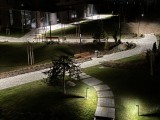




Low-light samples, rear camera (2x), auto Night mode
Maximum night mode doesn't make a world of difference in most cases since here you'll be getting 12MP shots either way. Some scenes do clean up a little - the facades in the first and second ones have better definition.



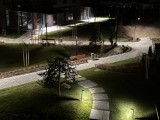


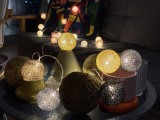

Low-light samples, rear camera (2x), max Night mode
Selfies
The 17e's selfies are easy to like, even if the hardware might look unassuming. Sure, you don't get the new multi-aspect sensor of the proper 17 models, but the old one does just fine and captures plenty of detail, even if it might be a little pixelated in its rendition. The white balance is right most of the time, and ski tones and colors look great. Dynamic range is excellent. The autofocusing ensures sharp shots at close range too.








Selfie samples
Video recording
Both of the iPhone 17e's cameras can record video up to 4K60. 30fps and 24fps modes are also on the menu, of course, as well as 25fps PAL option, but there's no 4K120 like you'd find on the higher-end models. If you want to capture in 4K60, you must do so in the 'high-efficiency' format (h.265/HEVC), while for lesser modes you can choose between that and the h.264 option. Dolby Vision recording is also on the menu (requires HEVC too).
Spatial audio recording is also on the menu. If you enable it, the phone will record two audio tracks - stereo AAC and four-channel APAC. You can also set it to simple stereo, or mono.
Stabilization is always on in all modes and quality settings - you can't turn it off even if you had other means of ensuring stable footage. That's the Apple way.
You can check out the playlist below, which includes multiple video samples.
Daylight video quality from the 17e's rear camera is pretty solid, when you take into account the hardware. Detail is good at 1x and softer but still usable at 2x. Dynamic range is great, colors are nice too. Stabilization is very good, whether you're out walking and shooting, or just filming from a fixed position.
Low-light 1x clips are already pretty soft, and zooming in to 2x just might make your footage unusable.




Apple iPhone 17e video screengrabs, daylight: Daylight, 1x • Daylight, 2x • Low light, 1x • Low light, 2x
Camera quality verdict
The 17e delivers an iPhone experience in terms of photo and video quality with the cameras that it has - it just doesn't have many of them. The rear camera captures good photos across most shooting scenarios and it does alright at 2x as well. Selfies are great too, even if you have to rotate your phone to get a shot in the other aspect (as opposed to the 17 non-e models' multi-aspect sensor). Video recording is alright in daylight and not-so-great at night, while stabilization is great as always.


Tip us
2.1m 180k
RSS
EV
Merch
Log in I forgot my password Sign up