Sony Xperia 1 VIII review
Clean Android 16 experience
In keeping with tradition, Sony runs a pretty much AOSP build on the Xperia 1 VIII with very few customizations and extra features here and there. The styling hasn't substantially changed since last year, nor has the feature set, for that matter.

Another thing that hasn't changed is the software support promise. Sony still commits to four years of Android OS upgrades and an additional two years of security patches. This is still pretty decent in our book, but a far cry from the impressive seven years some competitors offer. Essentially, the stakes have changed, but Sony is still sticking to its guns.
The homescreen setup is about as straightforward as it gets, with a fairly stock launcher experience and no support for large folders. Google's Discover feed occupies the leftmost pane by default, though it can be turned off if you prefer a cleaner layout.
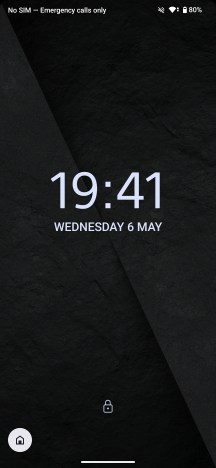
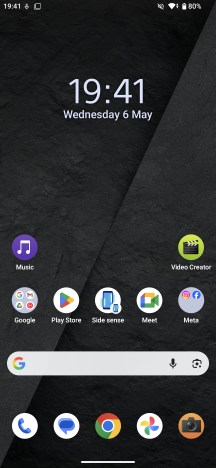
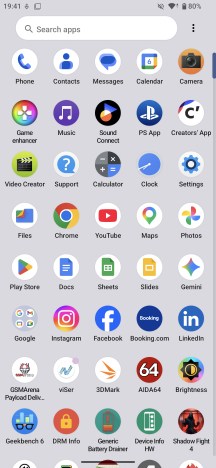
UI basics on the Sony Xperia 1 VIII
One of the more distinctive custom touches comes in the form of the quick settings panel. The toggles here are all square and uniformly sized, which gives the interface a more rigid and orderly appearance compared to the bubbly layouts and differently sized switches commonly seen in stock Android and most competing skins.

One of the more distinctive custom touches comes in the form of the quick settings panel. The toggles here are all square and uniformly sized, which gives the interface a more rigid and orderly appearance compared to the bubbly layouts and differently sized switches commonly seen in stock Android and most competing skins.
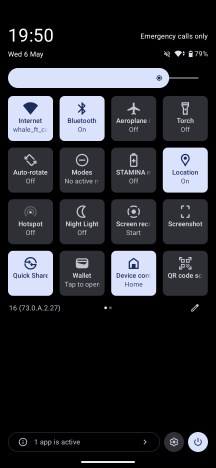
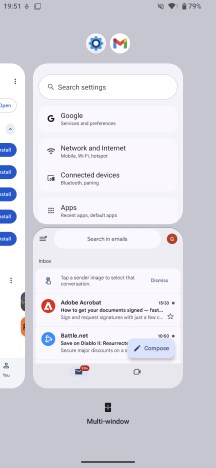
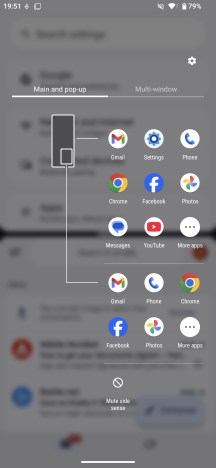
Quick settings • Task switcher • Multi-window manager
Side sense remains one of Sony's signature in-house features. A small handle along the edge of the display brings up a customizable shortcut panel with quick access to apps and various functions. This is also where you can configure multi-window app pairs for easier multitasking. A newer addition to the panel is a dedicated control widget for Sony's Headphones app, which is particularly convenient if you're already using a pair of Sony earbuds or headphones.
Sony also includes a fairly comprehensive gaming suite called Game Enhancer. It consists of two main parts - a dedicated game launcher/hub and a side overlay that can be summoned while gaming. Performance profiles can be configured individually for each title, and this is also where you can force the display to operate at 120Hz, even in games that don't officially support high refresh rate rendering - though unsupported titles will still remain capped at 60fps. And even some games that are capable of higher frame rates will still not accommodate this toggle. Additional controls allow you to tweak touch response speed and touch tracking accuracy.
Another standout feature is H.S. power control, Sony's heat management solution for gaming sessions. When enabled and the phone is plugged in, the system bypasses battery charging and instead powers the device directly to match current consumption. This helps reduce heat buildup and minimizes battery wear over extended gameplay sessions - H.S. stands for Heat Suppression.
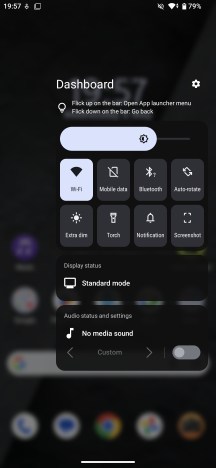
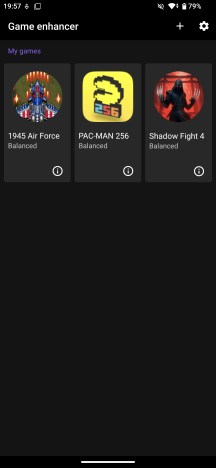
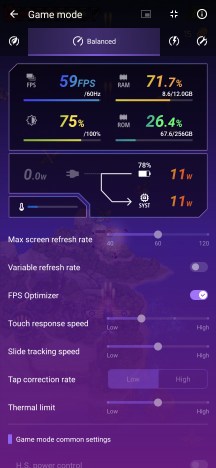
Side sense • Game Enhancer
Somewhat surprisingly for a modern flagship, Sony's software experience is relatively light on flashy AI features. The expected staples like Google's Gemini assistant and Circle to Search are present, but those have effectively become standard Android fare at this point. Beyond that, there isn't much in the way of AI-powered editing tools or system-wide smart features - even the gallery lacks the sort of generative editing options many competitors now offer, aside from Google's recently added AI Enhance functionality in Photos.
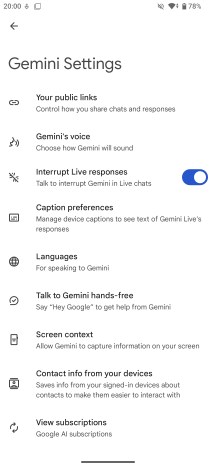
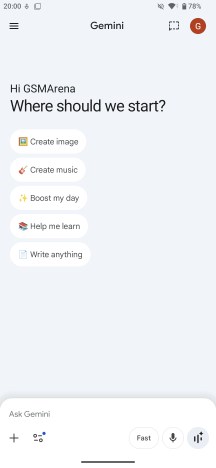
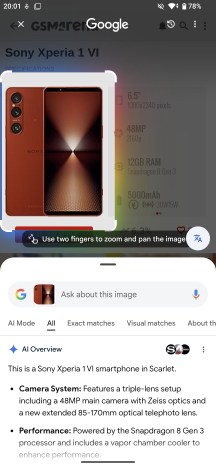
Gemini • Circle to search
Instead, Sony seems to have focused its AI efforts more behind the scenes, particularly within the camera app, where various intelligent shooting enhancements operate quietly in the background. In a way, that more restrained approach arguably feels more purposeful than the increasingly common "AI everywhere" strategy adopted by many other manufacturers.
Benchmarks and performance
One upgrade that kind of comes with the flagship territory is getting the latest and greatest chip available. Naturally, currently, that means a Snapdragon 8 Elite Gen 5. That's what the Xperia 1 VIII has.

On the CPU side of things, you are looking at two Oryon V3 Phoenix L cores, clocked at up to 4.6 GHz and another six Oryon V2 Phoenix M cores, working at up to 3.62 GHz. The onboard GPU is a powerful Adreno 840.
This chipset is paired with either 12GB or 16GB of RAM, and you can get the phone in either 256GB, 512GB or 1TB of expandable storage. The available memory and storage tiers vary from market to market.
Our review unit is the 12/256GB one.
Looking at the benchmark numbers, the burst performance on offer is mostly as expected. Though, that said, we know that more can be squeezed from the Snapdragon 8 Elite Gen 5, so the Xperia 1 VIII is holding it back a bit.
GeekBench 6
- Single-core
- Multi-core
 iPhone 17 Pro Max
 Xiaomi 17 Ultra
 Oppo Find X9 Ultra
 OnePlus 15
 Xperia 1 VIII
 Sony Xperia 1 VII
 Pixel 10 Pro XL
AnTuTu
- v10
- v11
 Realme GT 8 Pro
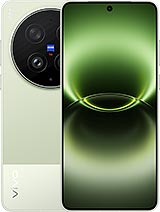 vivo X300 Ultra
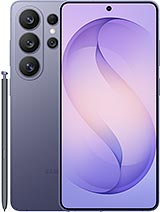 Galaxy S26 Ultra
iPhone 17 Pro Max
Xperia 1 VIII
Sony Xperia 1 VII
Pixel 10 Pro XL
3DMark
- Wild Life Extreme (Highest)
- Wild Life Extreme (Lowest)
Galaxy S26 Ultra
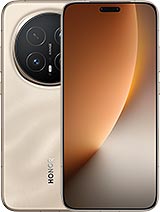 Honor Magic8 Pro
vivo X300 Ultra
Xperia 1 VIII
Xiaomi 17 Ultra
iPhone 17 Pro Max
Pixel 10 Pro XL
Thermal-throttling
Unfortunately, the Xperia 1 VIII doesn't do particularly well with thermal management. Sony says there is a large vapor chamber inside the phone, but apparently, it's not enough to handle the heat output of the Snapdragon 8 Elite Gen 5.
In our testing, the Xperia 1 VIII lost a very substantial chink of its performance during our CPU Throttling test. At least the drop in performance we recorded was mostly gradual, with no jarring drops that could cause stutters in-game.
The GPU stress test's result is in line with what we'd expect from this high-performance chipset, so no issues there.
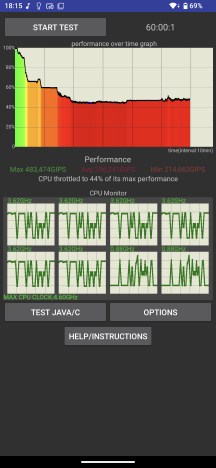
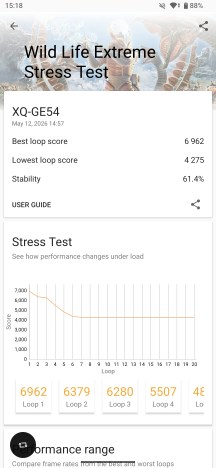
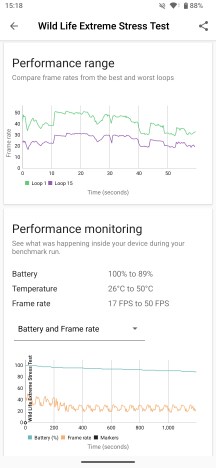
Thermal-throttling
The phone's surface also got fairly toasty during this torture-testing. Not impossible to hold or anything, but still rather uncomfortable.


Tip us
2.1m 180k
RSS
EV
Merch
Log in I forgot my password Sign up