Samsung Galaxy Z Flip7 review
No hardware changes in the camera system
Samsung is apparently alternating which foldable gets a camera upgrade each year - in 2024 it was the Flip, this time around it's the Fold. So the Z Fold7 gets a new main camera and a new ultrawide, but the Z Flip7 here doesn't really get anything fresh.

Indeed, it was last year's Galaxy clamshell that brought in a new main camera, the 50MP Tetrapixel unit being an overdue replacement for the aging 12MP conventional sensor that preceded it. That allowed for improved zoom action - not beyond 2x, realistically, but still pretty good at 2x at least. So this year it's that same sensor in charge.
The ultrawide camera remains the same as last year too, and it's still missing autofocus - it's almost a big deal that the Z Fold7 gets an AF-capable ultrawide instead of Samsung keeping it for the Ultras as they did until now. Well, the Flip is no Fold, so it's still on the fixed-focus ultrawide branch.
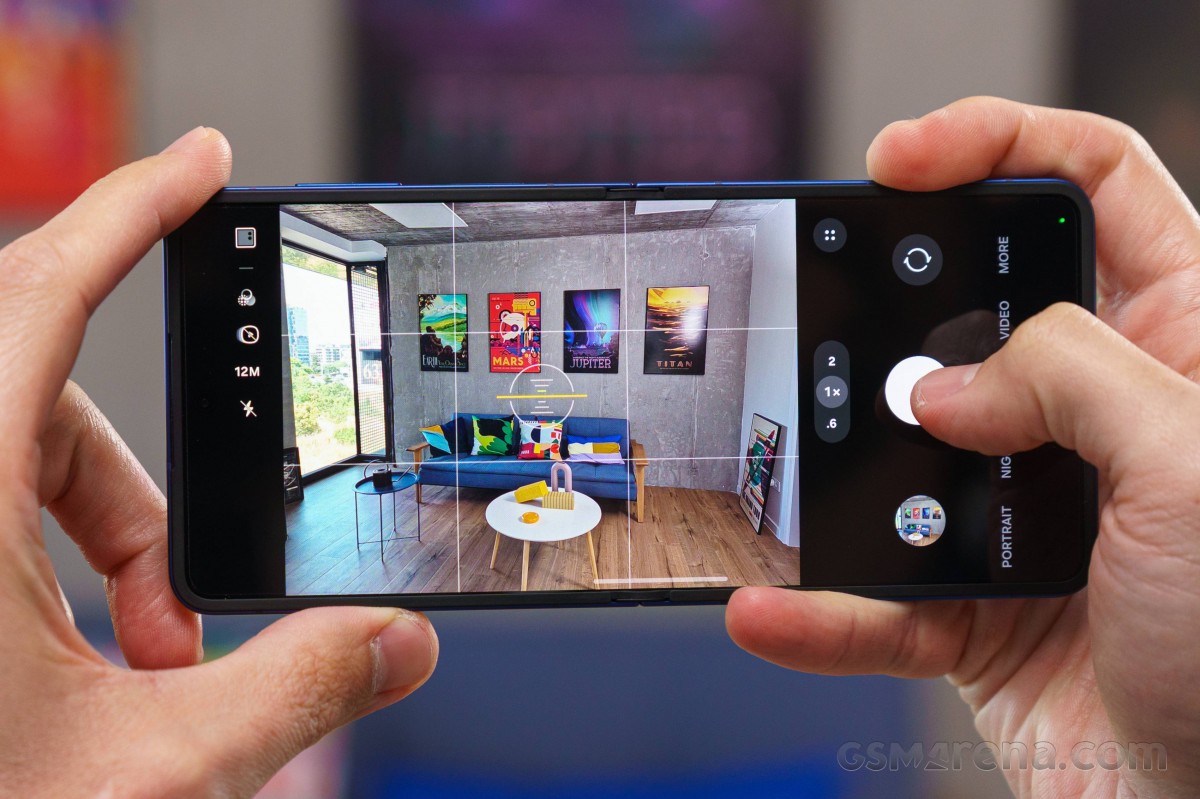
- Wide (main): 50MP Samsung ISOCELL GN3 (1/1.57", 1.0µm - 2.0µm), f/1.8, 23mm, dual pixel PDAF, OIS; 4K@60fps
- Ultrawide: 12MP Samsung ISOCELL 3LU (1/3.2", 1.12µm), f/2.2, 13mm, fixed focus; 4K@60fps
- Internal camera: 10MP Samsung ISOCELL 3J1 (1/3.0", 1.22µm), f/2.2, 23mm, fixed focus; 4K@60fps
The selfie camera on the inside is unchanged too, which isn't exactly a bad thing - it was pretty great in a context where it didn't have to be. It could be argued that the Z Flip7 is even less in need of a capable internal camera, with the upgraded cover display making rear camera selfies an even more appealing proposition, but having a decent internal unit can't hurt.
The Z Flip7 comes with all the benefits of the form factor. The cover screen implementation is possibly the best on the market for camera use - you can switch modes and zoom in as well (unlike Motorola Razrs, which can't go to 2x). On the internal screen, you get UIs for waist level or overhead shooting too.

Daylight photo quality
Main camera
In broad daylight, the Z Flip7's main camera captures pretty great photos. It's got very good detail with reasonably natural rendition and well-controlled noise. The auto white balance is immune to blunders but it does have slightly warm-ish leanings. Colors are generally pleasing, if almost a bit too conservative in terms of saturation. Exposures are on point and dynamic range is good too.









Daylight samples, main camera (1x)
People shots are looking great too, with natural skin rendition and well-tuned exposure. Again though, perhaps a nudge in saturation wouldn't hurt.




Daylight samples, main camera (1x), Photo mode




Daylight samples, main camera (1x), Portrait mode, 1x
Full-res 50MP images from the main camera have a somewhat grainy and noisy quality, but they do pack some extra detail too and if you start out with those and process them down to 12MP yourself, you'd stand to get some better definition, compared to the default output. Dynamic range in particularly contrasty scenes wouldn't be as good though.
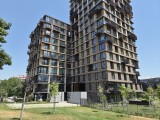
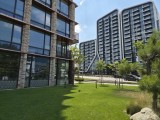
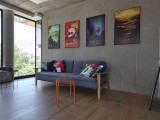





Daylight samples, main camera (1x), 50MP
Shooting at 12.5MP at the 2x zoom level will get you solid results too, from a detail standpoint, if not as pin-sharp on a pixel level. It's probably your best bet for closeups too, especially if the 1x results at minimum focusing distance don't make your subject fill the frame quite as much as you'd like.

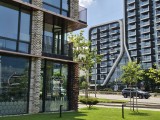
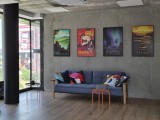






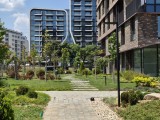


Daylight samples, main camera (2x zoom)
Photos of people at 2x comes with the predictable trade-off of slightly inferior detail at 1:1, but a much better perspective and more comfortable shooting distance. Portrait mode defaults to 2x anyway, which says where Samsung stands when it comes to this balance and we'd be inclined to agree.




Daylight samples, main camera (2x zoom), Photo mode




Daylight samples, main camera (2x zoom), Portrait mode
Ultrawide camera
The ultrawide camera is missing autofocus, so you won't be getting sharp results with nearby subjects, but that aside it's doing a fine job. More distant scenery is otherwise plenty sharp, with only the corners suffering a bit, but we do enjoy the extreme coverage that's on the other end of that balance. Dynamic range is good and the colors are well matched to the main camera's output.
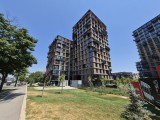

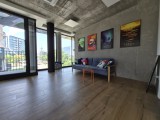






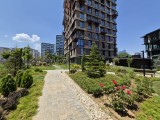


Daylight samples, ultrawide camera (0.6x)
Selfies
As is the norm with clamshells, the Z Flip7 offers a number of options for capturing selfies, starting with the internal selfie camera that punctures the foldable display. It will get you nicely detailed 10MP shots that are a bit low on contrast and saturation, but still pretty great.




Selfie samples, internal camera
The larger new cover screen makes rear camera selfies even easier than before so you'll probably be doing those when image quality matters. Indeed, these come with better detail, a bit more of a background separation, and the added benefit of being able to focus far and near alike.






Selfie samples, rear camera, 1x
You also get to do 2x zoom selfies, which, at around 46mm equivalent focal length, can almost fit your entire head in landscape orientation when shot from arm's length distance. Portrait orientation will work better, of course, plus you'll also be getting good results if you prop up the phone on a table across the room.




Selfie samples, rear camera, 2x
You won't be doing close-up selfies with the ultrawide, but it could work for large groups or placing you in the middle of an expansive vista. Just make sure you look out for pesky fingers near the camera because they have a habit of making their way into the extremely wide field of view.




Selfie samples, ultrawide camera, 0.6x
Low-light photo quality
Samsung's low-light processing has been giving us pause recently because of a fairly obvious disconnect between Photo mode photos and Night mode photos - we've gotten used to getting results that just look good in full auto from other makers. That's not to say the Z Flip7 doesn't take nice low-light photos, but rather that Samsung isn't exactly at the forefront of the industry in this respect.
Main camera
The Photo mode results from the main camera are on the grainier side of the spectrum and with slightly murky shadows, though overall there's very good detail. Dynamic range holds up well in most cases and white balance is reliable even with difficult street lights.








Low-light samples, main camera (1x)
Night mode smoothens the grain so images look cleaner but it also dials up the sharpening robbing them of some of their natural appeal. There's no dramatic effect on dynamic range.








Low-light samples, main camera (1x), Night mode
2x zoom results look very good too - up to that level you'll be perfectly fine without a dedicated zoom camera. There's again a difference between the Photo mode and Night mode images, so it's up to you to pick the look you prefer.








Low-light samples, main camera (2x)








Low-light samples, main camera (2x), Night mode
Ultrawide camera
The ultrawide isn't too convincing in the dark, somehow a little less so than the previous generation. Perhaps in trying to do miracles with dynamic range, the phone sacrifices detail in the shadows. Indeed, if you take a step back, the images have excellent tonal development and great colors. But at 1:1, things can be quite mushy in the darker areas.







Low-light samples, ultrawide camera (0.6x)
Night mode cleans up the noise once again and makes things look a little better.







Low-light samples, ultrawide camera (0.6x), Night mode
Video recording
The Galaxy Z Flip7 can record video up to 4K60 with all three of its cameras including the internal selfie camera. Additionally, in the Pro Video mode you can set the frame rate at 24fps.
The default codec is h.265 with further options - you can set it to quality priority or file size priority, and when in quality priority, you can flip an extra toggle for high(-er) bit rate recording. You can also enable HDR10+ capture when using the h.265 codec, and you also get the option for Log recording in Pro Video mode. Or you can keep things simple and switch back to the good old h.264 codec.
Electronic stabilization is available up to 4K30 on all cameras (but not 4K60) and it can be switched off in settings, if you'd like to stabilize your footage otherwise.
Video sample playlist
You can check out the playlist below, which includes multiple video samples.
The Z Flip7's video quality is nothing special but not too bad either. The main camera is pretty unremarkable in terms of sharpness in 4K at 30fps (but noticeably better at 60fps). 2x at 4K30 is quite usable too. The ultrawide is also alright without aspiring for any real excellence. Dynamic range is very good and colors are mostly likeable as well, despite a faint warm white balance shift (or thanks to it).
The Z Flip7's electronic stabilization is also alright, but not quite great. There are some faint tremors left over from walking shake, and the lack of stabilization in 4K60 surprised us too. Panning is trouble-free though, on both the main and the ultrawide cameras, and things are generally very stable when you're standing in one place instead of walking.
In the dark, main camera footage is uncharacteristically noisy and you can see the grain even from afar, so it's hard to make excuses even if exposure and color rendition are pretty great. The ultrawide's results at night are not amazing, though it somehow fares better in the context of ultrawides.


Tip us
2.1m 180k
RSS
EV
Merch
Log in I forgot my password Sign up